McDonald’s Workers Could Lose Their Jobs

Photo of Douglas A. McIntyre
By Douglas A. McIntyre Published
This post may contain links from our sponsors and affiliates, and Flywheel Publishing may receive compensation for actions taken through them.
McDonald’s Workers Could Lose Their Jobs

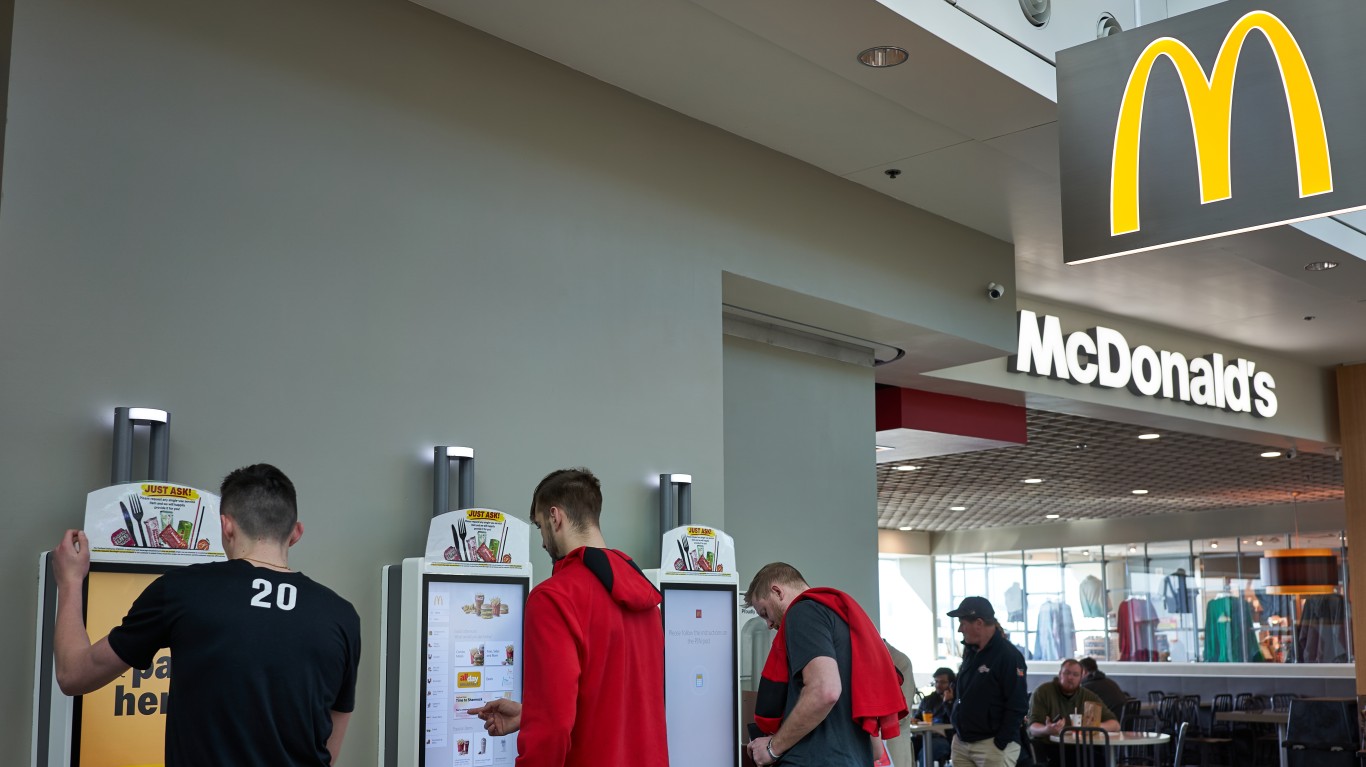
© McDonaldu00c3u00a2u00c2u0080u00c2u0099s order taking kios... (CC BY 2.0) by Mr. Blue MauMau

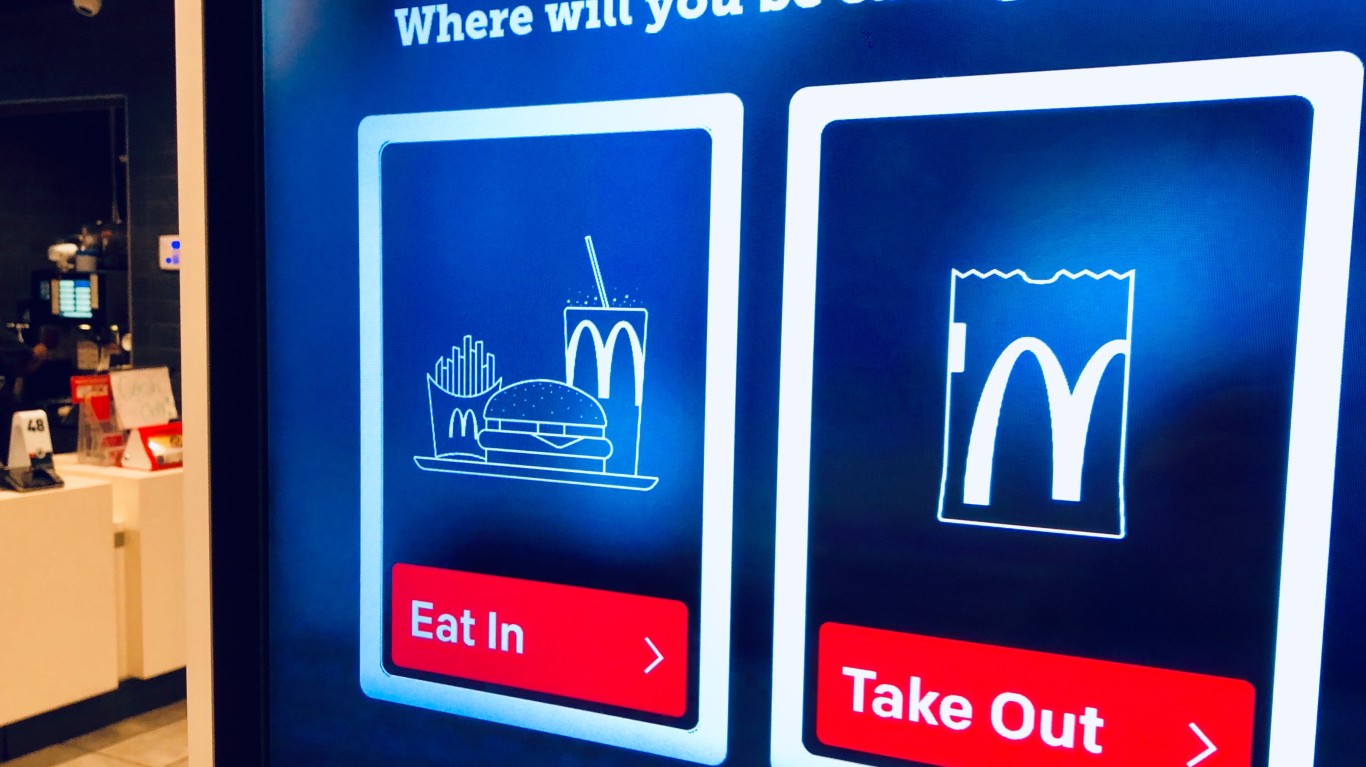
Go into most Home Depot locations, some of the large pharmacy chains or Walmart. Humans do not handle most of the checkout. Inventory management is done partially by scanners that do not require humans. Data collected by scanners may be more accurate. Go into a McDonald’s. In most locations, people can order from a kiosk. Part of the work done by McDonald’s workers has been replaced. (These 20 jobs are vulnerable to automation and AI takeover.)

The ability to order food could soon be done entirely by machines with sophisticated software. All payments could be made via credit cards that people do not run. AI-controlled machines can make food and send it on a conveyor belt to where it is served. Keeping a McDonald’s location open 24 hours will become easier.

Cleanliness is always a food issue. Do employees wash their hands? Are counters clean? Are bathrooms checked regularly?

Machines already do some work better than humans. Security of stores is among them. Machines can eliminate the shoplifting of food and ingredients by store employees and people who deliver inventory. Probably, shoplifting could be curtailed completely, which would save McDonald’s tens of millions of dollars, if not more.
[nativounit]
Low-level retailers are often on the list when analysts forecast how AI will affect the workplace. It makes sense. AI software can allow companies to replace many relatively simple tasks. It is not as if the AI software used will be as sophisticated as that created to drive a truck on a crowded highway or to do open heart surgery.
[wallst_email_signup]
McDonald’s and its franchises have about 200,000 workers worldwide. Not all of them are in stores, but the majority are. Worker pay is one of the largest, if not the most considerable, expenses that McDonald’s has.
[recirclink id=569171]
In the future, people will go to McDonald’s and not see a company-employed worker. Orders will always be correct. There will be no workers to take breaks. Where the people who have lost their jobs will go is another matter.

Photo of Douglas A. McIntyre
About the Author Douglas A. McIntyre →

Douglas A. McIntyre is the co-founder, chief executive officer and editor in chief of 24/7 Wall St. and 24/7 Tempo. He has held these jobs since 2006.

McIntyre has written thousands of articles for 24/7 Wall St. He is an expert on corporate finance, the automotive industry, media companies and international finance. He has edited articles on national demographics, sports, personal income and travel.

His work has been quoted or mentioned in The New York Times, The Wall Street Journal, Los Angeles Times, The Washington Post, NBC News, Time, The New Yorker, HuffPost USA Today, Business Insider, Yahoo, AOL, MarketWatch, The Atlantic, Bloomberg, New York Post, Chicago Tribune, Forbes, The Guardian and many other major publications. McIntyre has been a guest on CNBC, the BBC and television and radio stations across the country.

A magna cum laude graduate of Harvard College, McIntyre also was president of The Harvard Advocate. Founded in 1866, the Advocate is the oldest college publication in the United States.

TheStreet.com, Comps.com and Edgar Online are some of the public companies for which McIntyre served on the board of directors. He was a Vicinity Corporation board member when the company was sold to Microsoft in 2002. He served on the audit committees of some of these companies.

McIntyre has been the CEO of FutureSource, a provider of trading terminals and news to commodities and futures traders. He was president of Switchboard, the online phone directory company. He served as chairman and CEO of On2 Technologies, the video compression company that provided video compression software for Adobe’s Flash. Google bought On2 in 2009.

Continue Reading

Top Gaining Stocks

CBOE Vol: 1,568,143
PSKY Vol: 12,285,993
STX Vol: 7,378,346
ORCL Vol: 26,317,675
DDOG Vol: 6,247,779

Top Losing Stocks

LKQ
LKQ Vol: 4,367,433
CLX Vol: 13,260,523
SYK Vol: 4,519,455
MHK Vol: 1,859,865
AMGN Vol: 3,818,618