



Two years ago, Goldman Sachs said that 300 million jobs would be lost or “degraded” by AI. People with AI skills may find that there are other job opportunities available in the economy. Other companies that have analyzed the effects put the number lower than that of Goldman Sachs. For example, MIT put the number at two million. However, this is only for manufacturing jobs.
Companies have begun to eliminate jobs that AI can automate. Microsoft (NASDAQ: MSFT | MSFT Price Prediction) recently cut several thousand workers. Its management said AI does 30% of internal coding.
These are the jobs that will be destroyed mainly by AI:
People who work on assembly lines are at extreme risk. Manufacturing can replace many jobs in factory facilities with AI, which uses robotics. Those at particular risk have positions that involve repetitive work, and those at risk of “on-the-job” injuries. These jobs have also been described as “routine and predictable.
Associates at legal firms are at risk. Many of the documents they write for court cases can be researched by AI. Additionally, the first draft of many briefs can also be generated by AI. Partners will need to review the work, but tasks that typically take days can be completed in hours. This is particularly true of appellate briefs, which are mostly based on gathering data from past briefs and older documents.
Software coders are at risk. Much of the work they already do can be replaced by AI. This is basically what Microsoft has said. IBM (NYSE: IBM) and Meta (NASDAQ: META) have both stated that AI can perform lower-level coding, and in many cases, this has already begun.
Anthropic CEO Dario Amodei said that AI will replace nearly half of entry-level white-collar jobs within the next five years. His company is one of the world’s leading AI software companies. The definition of a “white collar” job is one in which people work in an office and do management or administrative work. Human resource jobs face particular jeopardy because much of this work involves screening potential new employees. Ford CEO Jim Farley recently mentioned a similar level of white-collar job cuts.
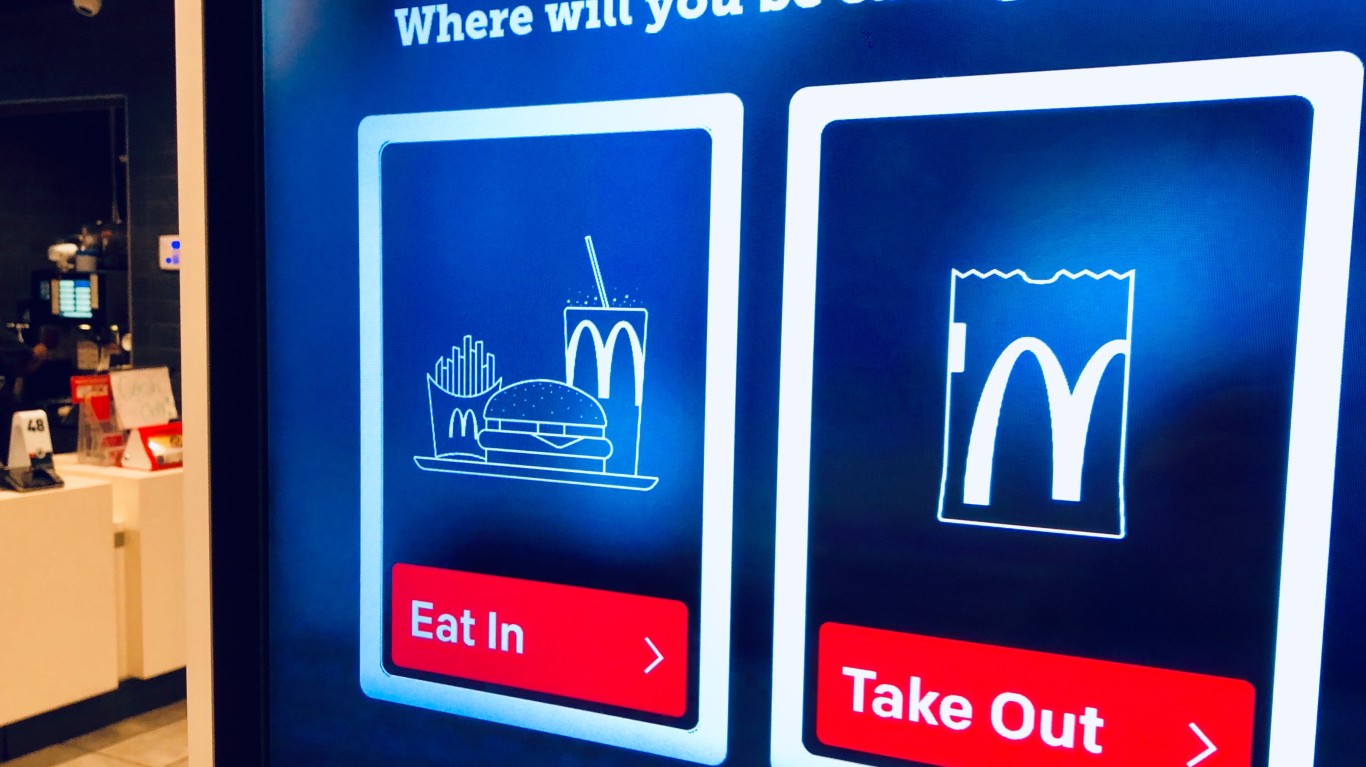
People who work at the checkout and those who work at counters are also at particularly significant risk. This includes millions of people who work at places like McDonald’s (NYSE: MCD), major banks and stores like Walmart. Some of this has already started. At many stores, people can check themselves out using bar code scanners and credit cards. People can make orders from the McDonald’s menu using an app. Many McDonald’s stores already have self-ordering kiosks, allowing customers to place their orders while in the store.
A McKinsey report recently said AI could replace telemarketing jobs. Several companies already use tech-based chat to replace humans in answering simple questions online. AI software can be programmed to solicit customers. It can also be used to answer questions on the phone. This process has already begun, as many people call with basic customer service questions.
AI will likely create new jobs in the economy. Jensen Huang, CEO of AI chip company Nvidia, recently said, “Since AI makes companies more productive, he believes it will end up creating more jobs than cutting them.”













 Top Gaining Stocks
 Top Losing Stocks