



June 29, 2007, will forever be remembered in the tech world as the day that Apple Inc. (NASDAQ: AAPL) debuted the first iPhone. Since then, Apple’s market cap has increased by $437 billion, mostly on iPhone sales. What gets much less attention is that the camera industry was forever changed that very week.
It was only three days before the original iPhone 3 release that Canon Inc. (NYSE: CAJ) topped at $60.16 a share. The stock is down 53% since, with its imaging system segment down 13% since 2013 alone. Sony Corp (NYSE: SNE) topped exactly one month before the historic iPhone debut on May 22, 2007, at $59.84. Since then, Sony is down 56%, with its digital imaging segment down nearly 50% since 2009. Those who were bullish on the iPhone in 2007 certainly have nothing to complain about now, but they could have done even better had they shorted camera makers at the same time.
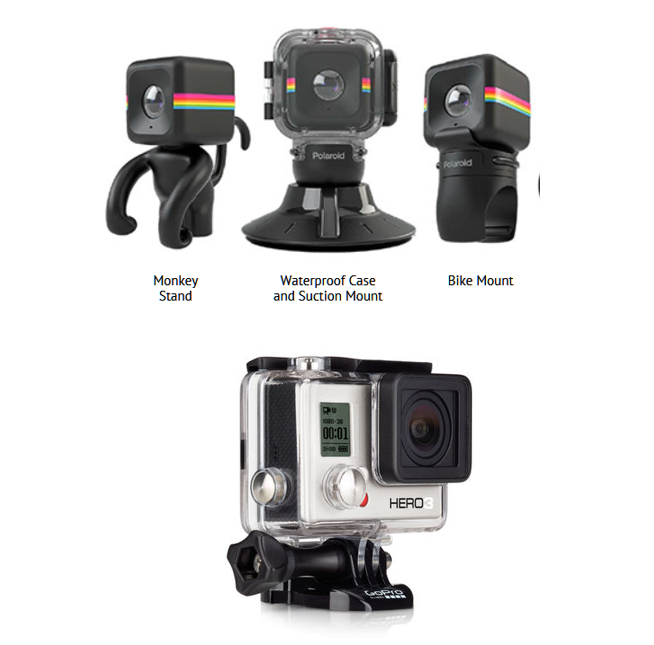
Even newer firms that initially showed promise in more niche camera markets have crashed and burned, most notably GoPro Inc. (NASDAQ: GPRO). It is currently one of the worst performers on Wall Street, down 90% from its own top out of the gate in 2014. The idea to focus on cameras not supplied by smartphones may have been good, but the execution wasn’t.
The problem isn’t the demand for cameras, which is certainly there. The problem is a supply and demand imbalance, and it will only be solved once the cost of manufacture and distribution comes down to a level below the equilibrium price point. In other words, we’re going to have to see a ramp up in efficiency for camera makers, most probably by significant consolidation and roll-up of the survivors.
The gloomy conditions though do present opportunity, because despite the shrinking companies in the space, niche markets like action cameras are still expected to grow at a compound annual growth rate of over 22% by 2023. And the big names are still trying to regroup and focus on areas not overlapped by smartphones. Sony’s new HDR-AS50 for example only weighs 58 grams and is effective at 60 meters underwater at 11 megapixels. You’re not going to get that from a smartphone. Canon for its part has its own line of newly minted extremely high-tech cameras that can record color images in near complete darkness.
[recirclink id=333738]
GoPro’s fall from grace is due to a combination of bigger, more efficient firms with much better economies of scale, like Sony and Canon, concentrating on the very same niche that GoPro was trying to master, taking its market share and squeezing its profit margins. Even smaller firms like LifeClips, which trades over the counter, are converging on the very same space. LifeClips is attempting to one-up Sony’s latest model with its SoloVu, which has similar features but with 16 megapixels instead of Sony’s 11. There simply are no other obvious growth opportunities in the camera space, so everyone is converging in the same area.
24/7 Wall St. previously speculated that Apple may acquire GoPro at some point so it can enter this market itself, but whether or not Apple ends up being the acquirer or GoPro the acquired, there is going to have to be some sort of consolidation if the companies want to see growth along with the niche market they serve. From Sony and Canon all the way to GoPro and LifeClips, it’s all up for grabs.








 Top Gaining Stocks
 Top Losing Stocks