


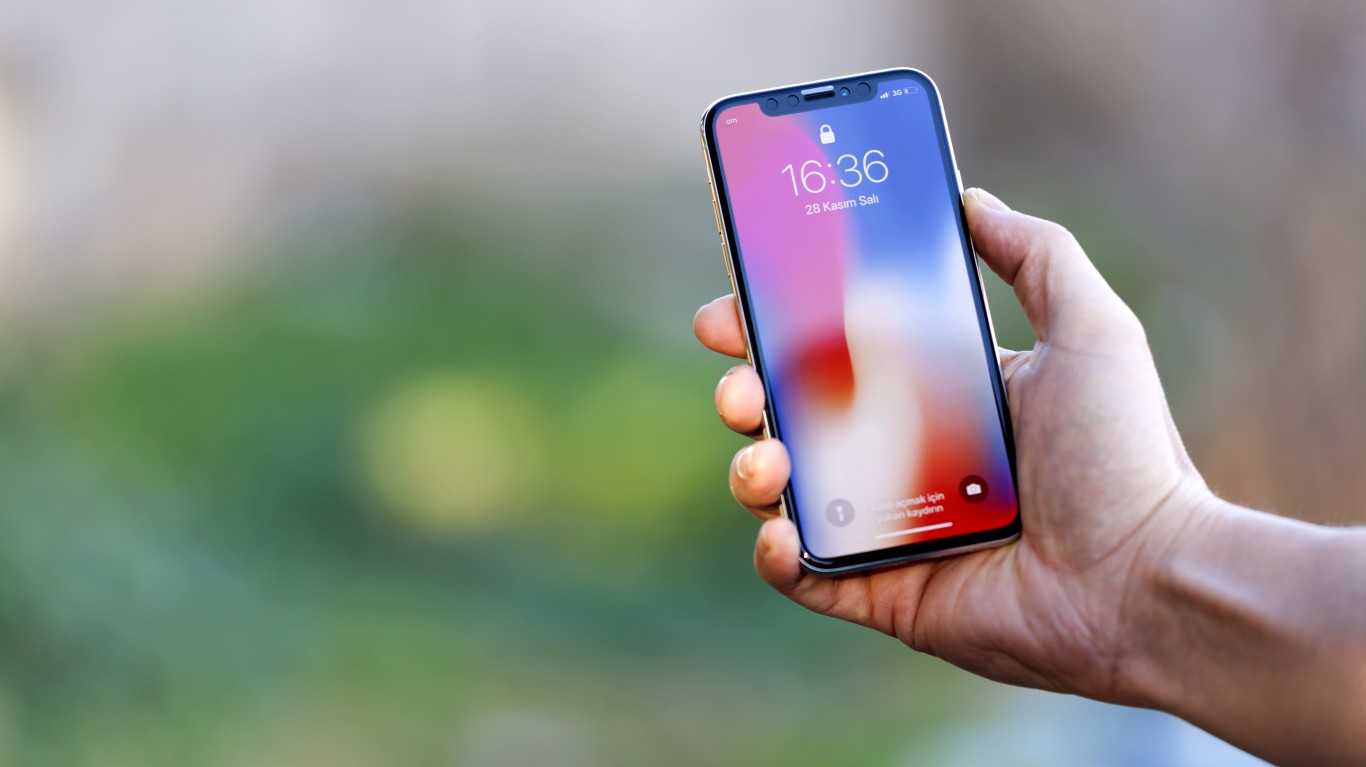
New data about global smartphone shipments in the final quarter of last year show two things. First, the overall global shipments have stopped rising, which threatens the entire industry. And Apple Inc.’s (NASDAQ: AAPL | AAPL Price Prediction) market share is in a hard reverse, another sign that iPhone shipments have dropped at a pace that means they will not recover for some time.
Research firm Gartner reported that worldwide shipments in the fourth quarter of 2018 were 408.4 million units. That is just 0.1% higher than in the same period in 2017.
Gartner said companies that rely heavily on expensive smartphones sufferer against the advantage of those that make midpriced and low-priced products. The largest of these are based in China. Anshul Gupta, senior research director at Gartner, said “Slowing incremental innovation at the high end, coupled with price increases, deterred replacement decisions for high-end smartphones. This led to a flat-growth market in the fourth quarter of 2018.” People have lost some interest in products that cost a lot of money but have features upgraded very little from the prior generation of those products. Most critics say that Apple and its newest iPhones fall squarely into that category. Gartner pointed out that Apple posted its largest quarterly decline, at 11.8%, since the first quarter of 2016.
[nativounit]
Apple iPhone shipments were 64.5 million in the last quarter of the year. That was the worst performance among the five largest smartphone makers in the world. While most regions were a problem, trouble in China was the harshest. Apple management has stated several times that the largest smartphone market in the world is critical to its success. iPhone demand dropped off in most regions, with the exception of North America and mature Asia/Pacific, which includes Japan. Apple’s sales decline was the biggest in Greater China, where its market share fell to 8.8% in the fourth quarter of 2018. This was down from 14.6% in the fourth quarter of 2017.
A look at the full year indicates Apple was in trouble for that period as well. Gartner data show Apple shipped 209 million units, down from 220 million in 2017. That dropped its market share against global industry shipment in 2018 for 1.555 billion to 13.4%, down from 14.0% the year earlier. Samsung, the largest smartphone maker, also posted a dip in share from 20.9% in 2017 to 19.0% last year.
Finally, the market share number of China-based manufacturers Huawei, Xiaomi and Oppo surged.
[recirclink id=529641]
Worldwide Smartphone Sales to End Users by Vendor in 4Q18 (Thousands of Units)
| Vendor | 4Q18 Units | 4Q18 Market Share (%) | 4Q17 Units | 4Q17 Market Share (%) |
|---|---|---|---|---|
| Samsung | 70,782.50 | 17.3 | 74,026.60 | 18.2 |
| Apple | 64,527.80 | 15.8 | 73,175.20 | 17.9 |
| Huawei | 60,409.80 | 14.8 | 43,887.00 | 10.8 |
| OPPO | 31,589.90 | 7.7 | 25,660.10 | 6.3 |
| Xiaomi | 27,843.60 | 6.8 | 28,187.80 | 6.9 |
| Others | 153,205.00 | 37.5 | 162,908.80 | 39.9 |
| Total | 408,358.50 | 100 | 407,845.40 | 100 |
Source: Gartner (February 2019). Due to rounding, numbers may not add up precisely to the totals shown.
For Apple, worries that its iPhone is in trouble were born out by the data.
[wallst_email_signup]











 Top Gaining Stocks
 Top Losing Stocks