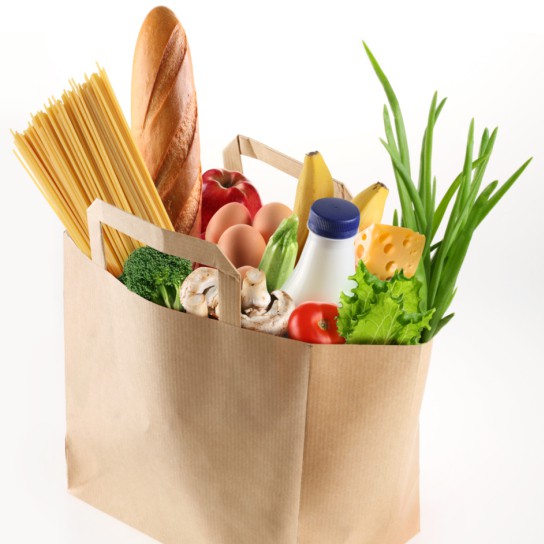
Price of a Carton of Milk Hits $4

Photo of Douglas A. McIntyre
By Douglas A. McIntyre Published
This post may contain links from our sponsors and affiliates, and Flywheel Publishing may receive compensation for actions taken through them.

The price of a half-gallon of 2% milk has reached $4, which was unimaginable a year ago. The price of organic milk is 60 cents higher. If dairy prices continue to soar at current rates, it would not be astonishing if the price hits $5 by the end of the year.

Most of the reason that milk prices have reached nearly $25 per 100 gallons (the way the dairy industry measures prices) is the persistent drought, across almost a third of the country, that has affected many farmers. Most of these farmers are excited by the high prices. The farmers get a chance to make significant profits. As one farmer told The Seattle Times:

I can’t speak for other farmers, but we are now able to start digging out of a hole. I do see a lot of optimism (among farmers). This gives many a chance to do maintenance on things that had been put off.

If the same farmer could speak for consumers, he would have something less pleasant to say.

Four dollar milk prices probably don’t do much damage to consumer spending the way $4 gas prices do. But when combined with near record highs for beef and many vegetables, the cost to feed a family altogether begins to become a painful part of a household budget, particularly for households with poor families who can barely buy enough food at all.

ALSO READ: The 10 Fastest Growing Food Prices

The price of milk and other food is a not large enough part of the economy to trigger high inflation, at least as the federal government measures it. The prices of most other things people buy have not gone up enough. That could change if food prices continue to soar. And, without wage increases, inflation of food prices will begin to pinch more and more people — moving up through lower class income homes to ones that are middle class.

Milk at $4 might look like nothing more than a symbol of higher food prices. For some Americans, it is worse than that.


ALSO READ: States Where the Most Children Go Hungry

Photo of Douglas A. McIntyre
About the Author Douglas A. McIntyre →

Douglas A. McIntyre is the co-founder, chief executive officer and editor in chief of 24/7 Wall St. and 24/7 Tempo. He has held these jobs since 2006.

McIntyre has written thousands of articles for 24/7 Wall St. He is an expert on corporate finance, the automotive industry, media companies and international finance. He has edited articles on national demographics, sports, personal income and travel.

His work has been quoted or mentioned in The New York Times, The Wall Street Journal, Los Angeles Times, The Washington Post, NBC News, Time, The New Yorker, HuffPost USA Today, Business Insider, Yahoo, AOL, MarketWatch, The Atlantic, Bloomberg, New York Post, Chicago Tribune, Forbes, The Guardian and many other major publications. McIntyre has been a guest on CNBC, the BBC and television and radio stations across the country.

A magna cum laude graduate of Harvard College, McIntyre also was president of The Harvard Advocate. Founded in 1866, the Advocate is the oldest college publication in the United States.

TheStreet.com, Comps.com and Edgar Online are some of the public companies for which McIntyre served on the board of directors. He was a Vicinity Corporation board member when the company was sold to Microsoft in 2002. He served on the audit committees of some of these companies.

McIntyre has been the CEO of FutureSource, a provider of trading terminals and news to commodities and futures traders. He was president of Switchboard, the online phone directory company. He served as chairman and CEO of On2 Technologies, the video compression company that provided video compression software for Adobe’s Flash. Google bought On2 in 2009.

Continue Reading

Top Gaining Stocks

CBOE Vol: 1,568,143
PSKY Vol: 12,285,993
STX Vol: 7,378,346
ORCL Vol: 26,317,675
DDOG Vol: 6,247,779

Top Losing Stocks

LKQ
LKQ Vol: 4,367,433
CLX Vol: 13,260,523
SYK Vol: 4,519,455
MHK Vol: 1,859,865
AMGN Vol: 3,818,618