


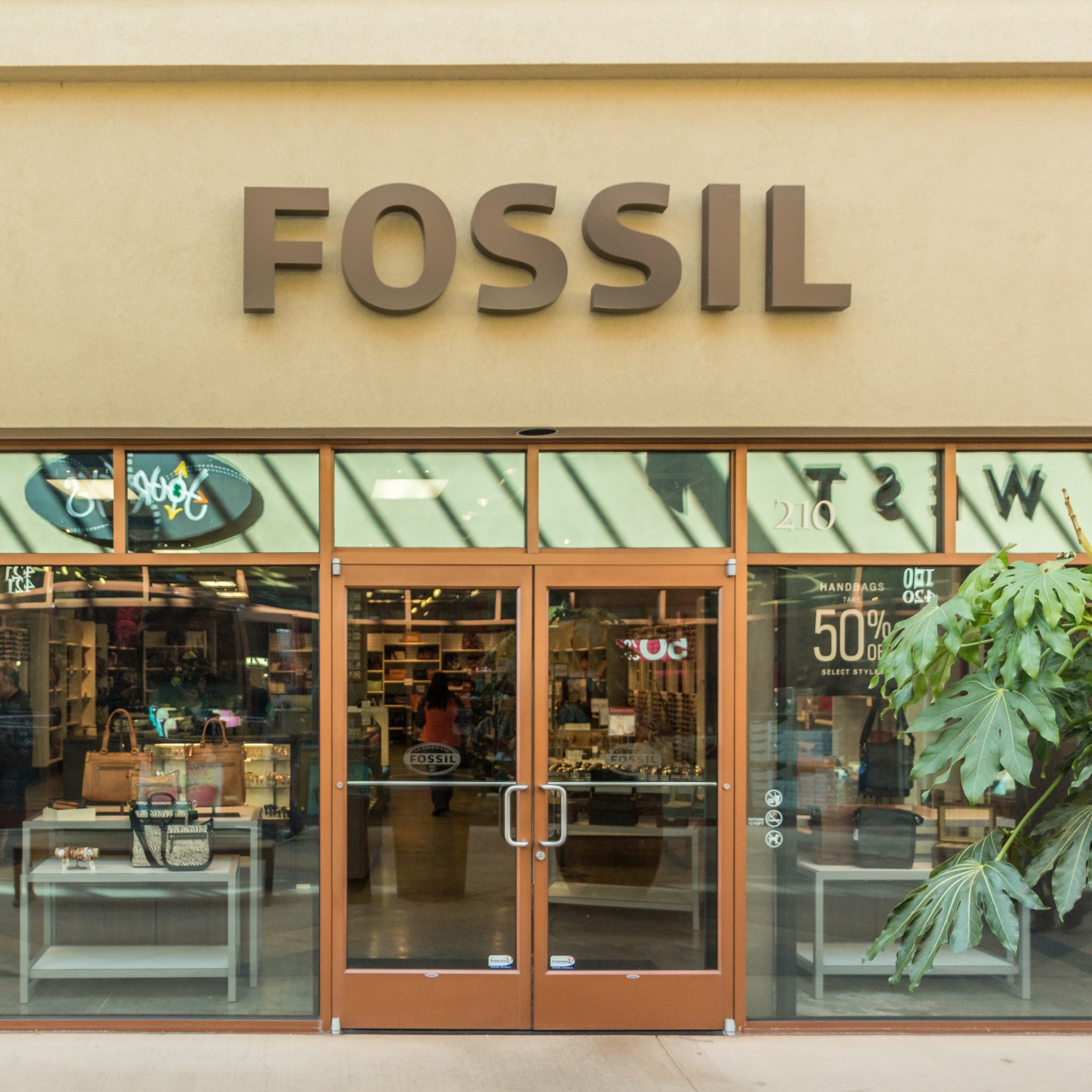
Fashion accessory maker Fossil Group Inc. (NASDAQ: FOSL) announced Tuesday morning that the company plans to introduce more than 100 new wearable products under eight different brands in time for the 2016 holiday season. Products include display and non-display watches and fitness trackers stamped with Chaps, Diesel, Emporio Armani, Fossil, kate spade new york, Michael Kors, Misfit and Skagen brands.
Fossil said that wearable categories will vary by brand and that the company plans to support the new wearables “with unique and branded apps across all brands, three product categories, and two operating systems.”
Traditional watchmakers have to do something. They are losing business to tech biggies like Apple Inc. (NASDAQ: AAPL) and Samsung that own the market for smartwatches. None of the watchmakers is any kind of force in the fitness tracker business, which includes Fitbit Inc. (NYSE: FIT) and Garmin Ltd. (NASDAQ: GRMN).
But Fossil Group’s chief strategist Greg McKelvey isn’t worried:
One of the distinct advantages of a fashion company over traditional consumer electronics manufacturers is our product cycle. We demonstrate remarkable speed to market, from development to launch, in order to meet the retail industry’s seasonal new product deadlines. The industry has been slow to adapt to growing consumer desires for new styles and options for wearables. With the diversity of major fashion brands we offer, customers will be delighted with the sheer volume of styles and options available when shopping for a wearable that fits their personal style.
[recirclink id=318518]
Maybe. But it will be an uphill climb. Apple has put a stake in the fashion ground and the company’s strong history of design excellence and technical innovation gives its brand a strong starting position. According to Strategy Analytics, Apple’s share of the fourth-quarter smartwatch market totaled 63% of 8.1 million smartwatches sold in the quarter. Samsung was a distant second with 16%, but the quarter marked the first time that smartwatches outsold traditional watches.
Fossil needs to get a piece of a market that IDC estimates will grow from 80 million wearable devices shipped in 2015 to 111 million this year, reaching nearly 215 million by 2019. Smartwatches are expected to ship 34.3 million units in 2016, up from 21.3 million last year. By 2019, smartwatch shipments are poised to total 88.3 million units.
The other point IDC makes is where Fossil is likely to face the biggest hurdle:
Smartwatch platforms will lead the evolution. As the brains of the smartwatch, platforms manage all the tasks and processes, not the least of which are interacting with the user, running all of the applications, and connecting with the smartphone. Once that third element is replaced with cellular connectivity, the first two elements will take on greater roles to make sense of all the data and connections.
Fossil Group did acquire Misfit, a wearables maker, in November of last year, and that does increase the company’s chances of success. In addition to products, Misfit brought to Fossil a scalable cloud and app platform that the company thinks can compete with Apple and Alphabet Inc. (NASDAQ: GOOGL). Again, maybe, but that’s another uphill slog, especially if IDC is right about connectivity with smartphones.
Fossil shares closed down about 0.3% on Monday, at $49.57 in a 52-week range of $28.26 to $86.50. The stock is up more than 35% from that multiyear low, but still well short of its all-time high near $136 posted in March of 2012. The consensus price target on the stock is $40.08, and the two most recent ratings actions on the stock were downgrades from Buy to Hold.







 Top Gaining Stocks
 Top Losing Stocks