


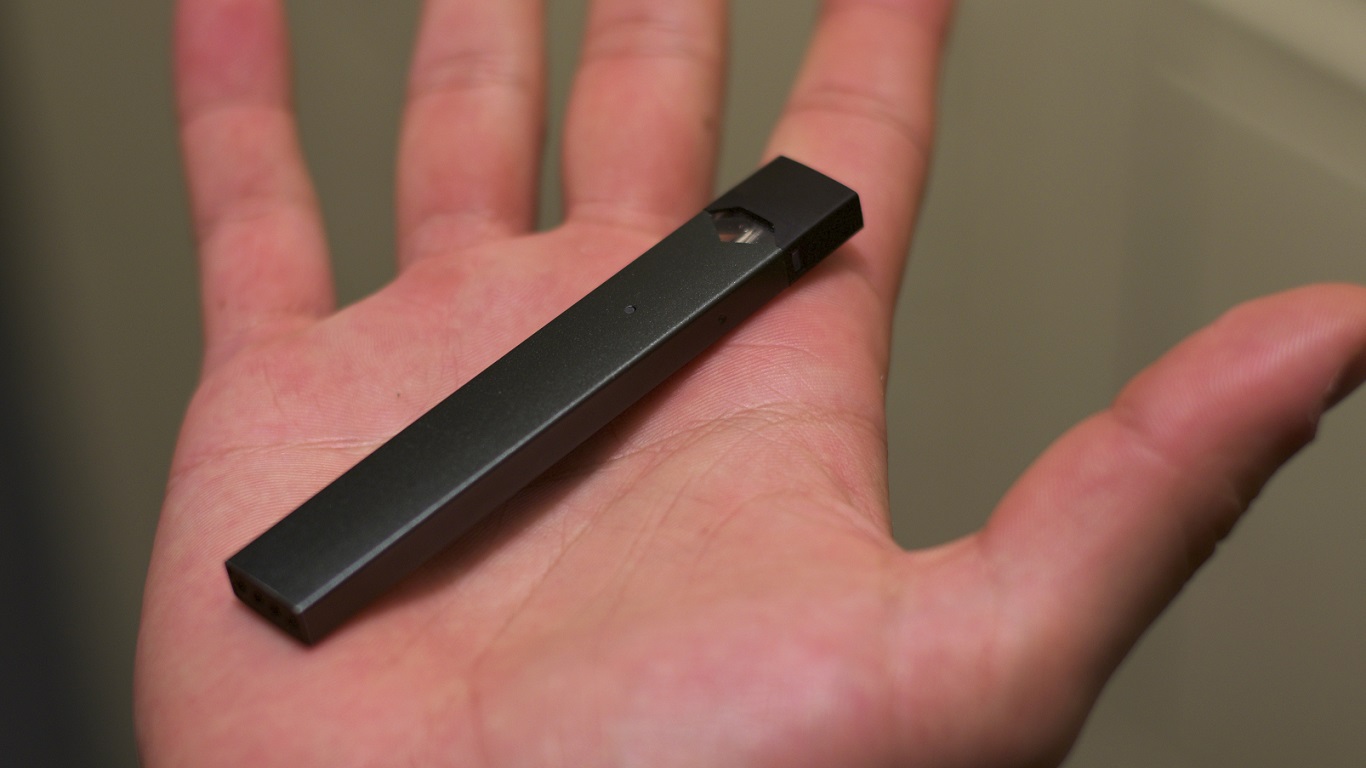
The use of electronic cigarettes as a nicotine delivery system has grown for years. No brand, though, has made quite the same splash as Juul, makers of a rectangular e-cigarette that is shaped more like an elongated thumb drive than a cigarette.
Juul uses a rechargeable battery to vaporize a small vial (pod) of nicotine salts to deliver a shot of nicotine to a user without all the carcinogenic baggage that comes from burning tobacco. Consumers have purchased enough Juul products to push the company’s valuation to $15 billion.
Why do consumers use e-cigarettes—and specifically projects from Juul? Researchers at LendEDU surveyed 1,000 self-identified Juul users ages 18 and older to find out how much they are spending on Juul products and if they are saving money by not buying cigarettes.
The survey did not include Juul users under the age of 18 because that is the minimum age requirement for purchasing Juul products. To purchase products at the Juul website, consumers have to be 21 years old to purchase the company’s products.
[nativounit]
Survey respondents who had been cigarette or cigar smokers (69% of the total) before using Juul reported spending $238 a month on tobacco products. Juul users in the survey spent an average of $180 a month on Juul products, a savings of $58.
Looking at median spending, the median Juul user spends just $50 a month on the company’s pod products. The median spend on Juul pods from previous tobacco users was $125.
One Juul pod is equivalent to one pack of cigarettes according to the company and the pods are sold in four-packs that cost $16, equivalent to $4 for a pack of cigarettes. Cigarettes vary widely in price, but the range, according to LendEDU, is anywhere from $5 to $13 a pack.
An interesting set of survey questions sought Juul users’ response to whether they would be interested in using a (so far unissued) Juul-branded credit card on which they earned rewards that could be applied to purchasing Juul-related products. Three-quarters of respondents said they would be likely to apply for such a card.
LendEDU points out that one downside to the credit card idea is increased nicotine consumption. Half of survey respondents said they would “definitely” increase their Juul consumption of the company’s products if they had one of the hypothetical cards.
We’re reminded of a line from “Barbarians at the Gate,” a 1989 book detailing the merger between tobacco giant R.J. Reynolds and Oreo cookie-maker Nabisco. If memory serves, it was something like this: “Cigarettes are the perfect product. You can make them for a penny, sell them for a dollar, and they’re addictive.”
The full LendEDU report is available at the website.
[recirclink id=485678]
[wallst_email_signup]











 Top Gaining Stocks
 Top Losing Stocks