


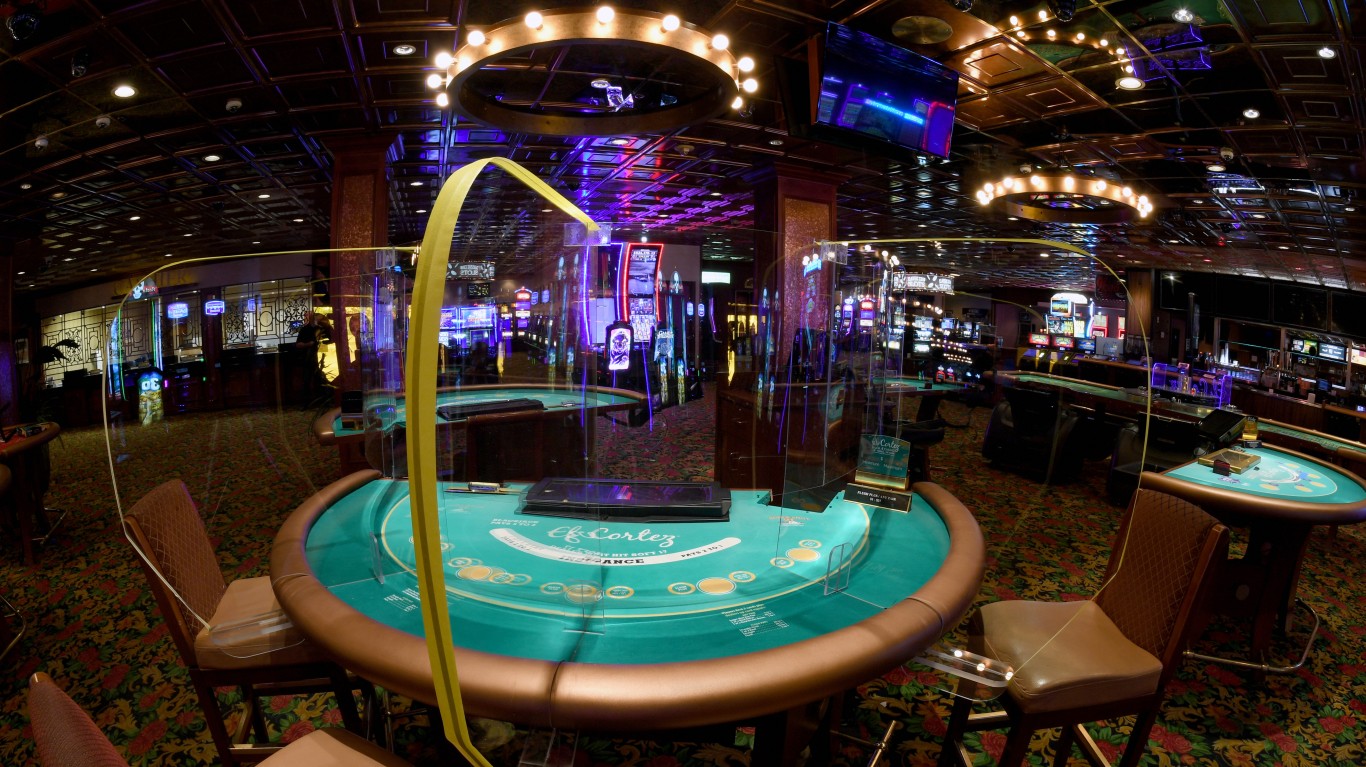
 Pennsylvania will now allow poker, blackjack, and a number of other games of luck and skill to be played at its 14 slot machine casinos. Politicians in the state say that they are against gambling. It is at best a way for drunks to waste hard-earned money and at worst a sin which requires a rosary to set right.
The Pennsylvania legislature and governor reluctantly went along with plans to expand the ways that people can gamble to help raise income for the financially troubled state. Tax receipts are down as they are in almost all states, a result of high unemployment and anemic business profits. The tax rate for playing table games in The Keystone State will be 16%. A small part of that will go to the municipality where the gambling hall is based.
Several states allow gambling on riverboats docked just off their shores. Some states make money from horse racing casinos and other from slot machines. Most state pre-assign the revenue they get from gaming. The cash goes to senior citizens and the disabled in New Jersey. Michigan law requires that the money be used for infrastructure repair, public safety, and youth programs. It is easier to get politicians to pass gambling laws if they can say the money goes to a good purpose and when they are regularly given complimentary passes to the gaming tables.
Sin has its uses, particularly when state, federal, and local governments are desperate for money. Politicians think nothing of taxing liquor and cigarettes. It is relatively easy because people can drink and smoke with impunity in most places. Gambling is different. The government must sanction it geographically except for gaming locations that sit on Indian land.
The UK has a national lottery, which is a form of gambling more acceptable than many others. The National Lottery Commission says that since it opened for business in 1994 the lottery has raised 23 billion pounds for “good causes.” The Commission is rightfully proud that 70% of UK adults play the lottery and 95% of the British population lives within one or two miles from a Lottery Terminal. The Commission has more locations in the UK than McDonald’s (NYSE:MCD) does.
There are a number of untapped ways to raise money in the US and in the states and municipalities. What is not clear is whether money spent gambling or playing “lotto” would make its way into the consumer part of the economy through some other means. Do people who play lotto spend less on milk or beer? There does not seem to be any good research on that question.
What is almost certainly true is that the governments from tiny towns in North Dakota to the Treasury in Washington need to wring every last dime that they can out of the citizenry. People will not accept higher taxes. But, they will gamble in great numbers because they feel that they are spending their own money as they see fit.
The amount of money that the federal government could bring in each year from a national lottery is probably in excess of $25 billion if the UK receipts are adjusted for the relative size and GDP of the US. That is not enough to make up much of the budget gap, but it does not include money that might come in from nationally regulated gambling halls. A country-wide casino business sanctioned by the government would certainly bring in much more than the $6 billion that makes its way through Las Vegas casinos each year. California’s sixty-five American Indian casinos brought in about $7.5 billion in 2009. Gambling is a big business.
The government can leave most of the spoils of the gaming industry to the people who own the gaming establishments, or it can legalize gambling throughout the country and bring is sums which would be significant compared to the deficit, if Congress and the White House will hold their noses and take the money.
Douglas A. McIntyre









 Top Gaining Stocks
 Top Losing Stocks