


 The news today from the Census Bureau was awful.
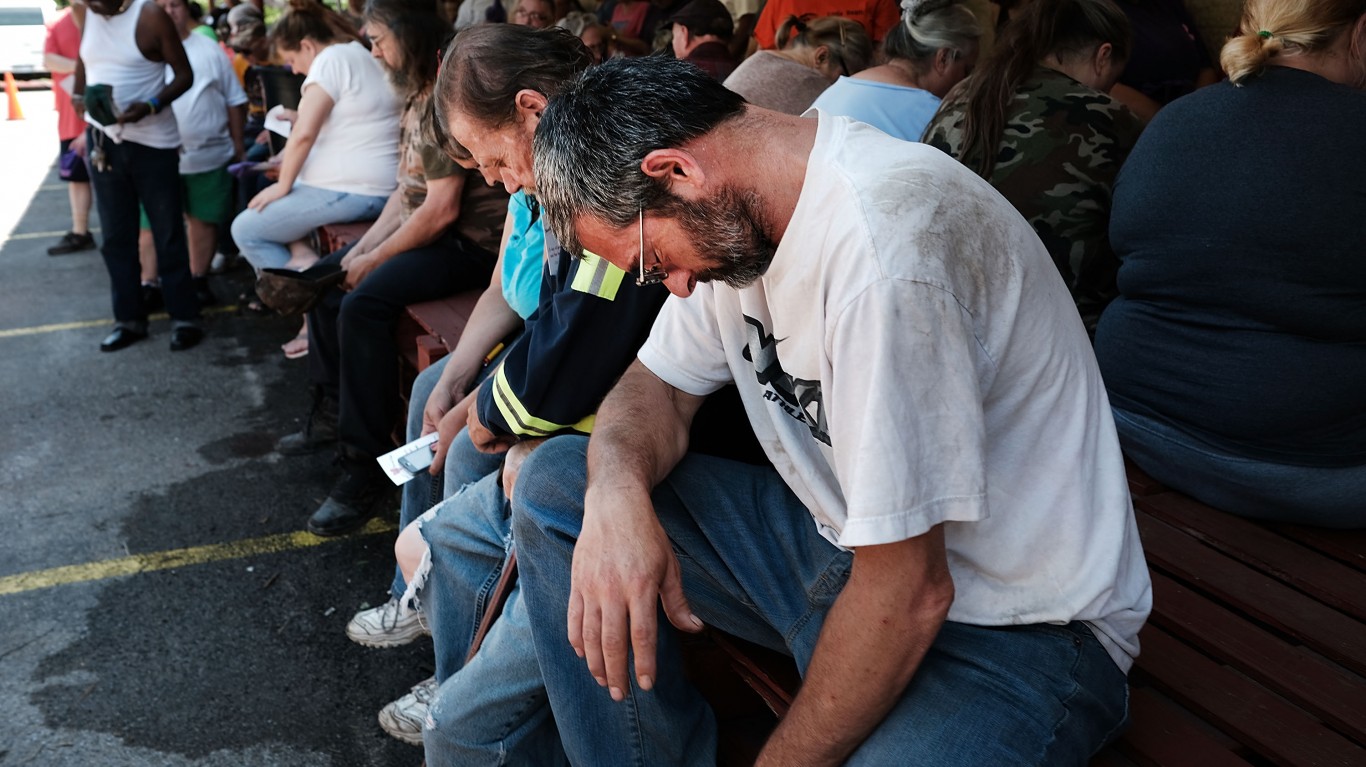
As the U.S. grapples with the worst economic downturn since the Great Depression, more people must struggle to sustain themselves. About 54 million people in the United States lived in poverty in 2009, an increase of 4 million from the year before. That’s an astounding 1-in-7 residents who fell below the federal poverty line of $10,830 in pretax cash income for a single person and $22,050 for a family of four. The poverty rate is 14.3 percent, its highest level since 1994.
But wait, there’s more.
Record numbers of Americans also lacked health insurance. In 2009, about 253.6 million people had public or private health coverage, down from 255.1 million in 2008 and the first decline since the government began tracking the figure in 1987. The number of people without coverage rose about 10 percent to 50.7 million. It’s a shame that most health care reform programs don’t kick in until 2014.
In a statement, President Barack Obama noted — as he has done before — that the economy would have been in worse shape were it not for his Recovery Act policies. Not surprisingly, he did not mention anything about his new effort to stimulate the economy through business tax breaks and infrastructure spending because of the fierce Republican opposition.
“Even before the recession hit, middle class incomes had been stagnant and the number of people living in poverty in America was unacceptably high, and today’s numbers make it clear that our work is just beginning, ” Obama says. “Our task now is to continue working together to improve our schools, build the skills of our workers, and invest in our nation’s critical infrastructure.”
Political progressives such as the Center on Budget and Policy Priorities (CBPP) were quick to note that the economy will not be improving any time soon.
“Poverty will likely remain very high in 2010 and climb even higher in 2011,” says Robert Greenstein, the executive director of the CBPP. “The Congressional Budget Office, the White House Office of Management and Budget, and the Blue Chip consensus forecast peg the expected average unemployment rate in 2011 at a high 9.0 to 9.3 percent. And in each of the past three recessions, poverty did not begin to fall until a year after the unemployment rate began to fall.”
The conservative Heritage Foundation argues that the Census data underscores the importance of marriage in keeping people out of poverty. Heritage’s Robert Rector argues that the government should encourage marriage just as it encourages children to stay in school and get an education.
“The Census data presented so far demonstrate that married couples have dramatically lower poverty rates than single parents,” he writes. “These substantial differences in poverty remain even when married couples are compared to single parents of the same race and level of education.”
Both sides have a point. But poverty is a problem that attracts politicians with easy answers to complicated issues. Poor people are not as saintly as some liberals make them out to be nor as lazy as some conservatives believe. Some are just unlucky. Regardless, unless the U.S. government can figure a way to help the deserving and undeserving, the economy will continue to bump along the bottom for years.
–Jonathan Berr






 Top Gaining Stocks
 Top Losing Stocks