


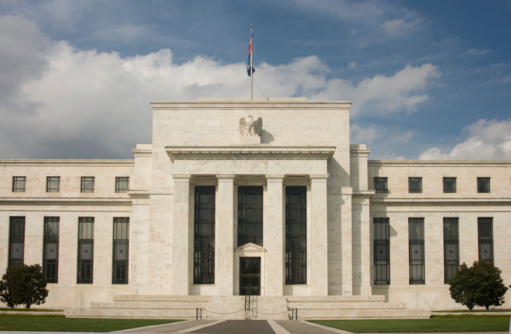
You only have to look at the stock and bond market reactions to the news that Larry Summers was withdrawing as a candidate for the next Federal Reserve chairman. Stocks rose and bond yields fell. The reason was that the easy money policies under Bernanke either would continue or at least would be turned back on if things hit another rough patch.
It seems odd on the surface that the markets are demanding this tapering of the $85 billion in bond purchasing. First of all, stock and bond investors have benefited handily from the Fed’s involvement in buying Treasury securities and mortgage-backed securities. The problem is that this also made the Treasury buy all the conventional mortgages, and now it is sitting on large losses due to the rise in interest rates.
The Bloomberg Economic Calendar notes said:
For expectations of Fed taper, the Econoday survey panel has a median forecast for a $10 billion reduction to $75 billion from the current level of QE purchases of $85 billion monthly. The low forecast for QE purchases is $70 billion ($15 billion reduction) and the high is $85 billion (no taper at the September meeting). For timing, the median forecast is for taper to start with the September FOMC meeting; the low (earliest), of course, also is September. The furthest out for taper start is the October 29-30 FOMC meeting.
The long and short of the matter is that the markets may have enjoyed the benefits of quantitative easing, but now enough is enough. The markets want a first step toward normalization, so long as that first step is a baby step.
What the market is not yet forcing the FOMC into is a formal rise in interest rates. The target Fed funds rate is expected to remain static at 0.00% to 0.25% as it has been. In fact, the CME Fed fund futures do not currently price in a 100% chance of rates rising only to 0.25% until October 2014. It is not even expected with a 100% pricing-in of a rate hike to 0.50% until April of 2015.






 Top Gaining Stocks
 Top Losing Stocks