


The economic impact
It’s set to make millions. If recent history is any indication, the economic impact from the 2018 Super Bowl will be enormous. Over the past five years, the game has stimulated local spending by an average of $460 million per year. The 2011 Super Bowl, played at Cowboys Stadium in Arlington, Texas, likely generated over $600 million in economic activity, according to Marketing Information Masters. This year’s game between the Denver Broncos and Seattle Seahawks, by comparison, could have contributed between $500 million and $600 million to the East Rutherford area.
ALSO READ: Cities Paying the Most for Sports Teams
Determinants of local spending vary, but they generally include hotel, restaurant, retail, and transportation-related revenues. Depending on the city, cultural events may also take in additional money. Based on a 2012 study of Indianapolis’ Super Bowl, thousands of jobs – many of which, are full-time – are also created.  Sources: Various media estimates and the NFL. Graph compiled by author. Numbers displayed are estimates only.
Digging deeper
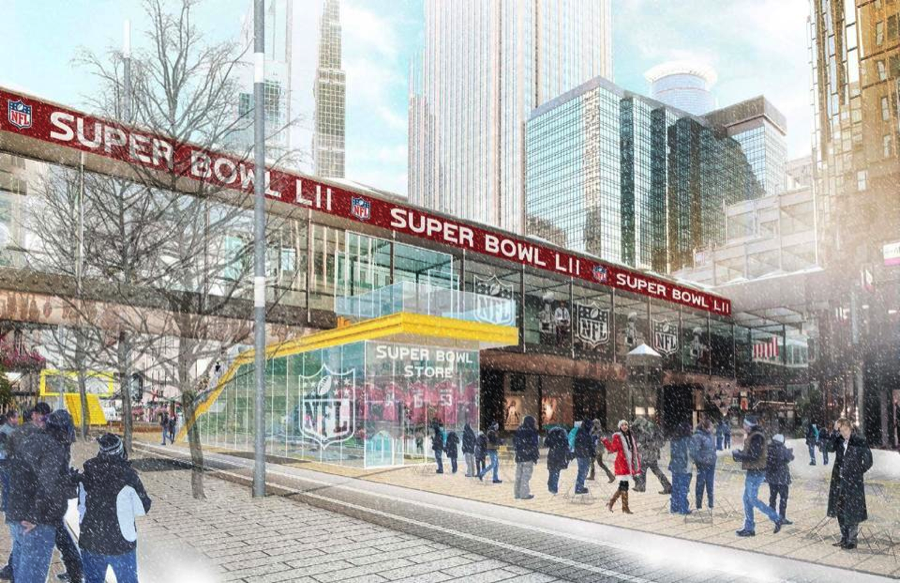
In terms of market size, Minneapolis is no East Rutherford or New Orleans, and its cold-weather climate doesn’t exactly ooze tourism. Still, the city’s recent renovation efforts, expected to cost over $1 billion when they’re finished, will likely create more avenues for local spending during the Super Bowl. The new Vikings Stadium, set to be the crown jewel of NFL venues after it opens in 2016, should also help. Richard Davis, CEO of US Bancorp and co-chair of the Vikings’ Super Bowl delegation, pegged a figure of $350 million on the 2018 game, according to TwinCities. Although plans are still in flux, potential attractions include a mile-long “Super Bowl Boulevard” (seen below), and a partnership with the annual St. Paul Winter Carnival. As USA Today points out, there are also plans to build several miles of enclosed skyways near the stadium. Winter temperatures in the area average a low of just 12°F in February.
ALSO READ: Football Teams with the Most-Expensive Tickets
The bottom line
Of course, these numbers are only estimates. Some sports economists, like Robert Baade, argue that the real economic impact of a Super Bowl is smaller than what many studies suggest. Earlier this year, Baade told the Phoenix Business Journal that the game’s fans might crowd out local consumers. This “substitution effect,” Baade says, negates some of the benefits the Super Bowl brings, and is something that’s often ignored by analysts. Still, a final point to consider is this: In Minneapolis, there might be less ‘crowding out’ than at a host city like New Orleans or Arlington. It regularly ranks outside of the U.S.’s top 50 most visited destinations. That, along with the hype surrounding the new Vikings Stadium, makes Davis’ $350 million estimate reasonable. And for my money, a number similar to the 2012 game in Indianapolis sounds about right. After three losing seasons in the past four years, the Vikings have to be happy about getting some positive exposure for a change.







 Top Gaining Stocks
 Top Losing Stocks