


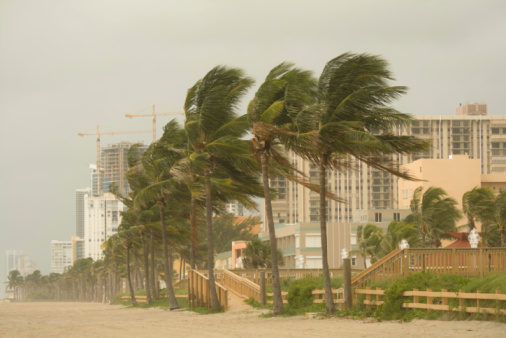
Tornadoes were also fewer in number this year. The National Weather Service verified just 720 tornadoes through August, making this year the lowest in tornado numbers since 2006.
The number of storms, of course, does not mean that the deaths and damage caused by these and other weather events is not tragic. Research firm CoreLogic notes in its just-released report on Natural Hazard Risk Summary and Analysis for 2014:
[I]t has been readily apparent for several consecutive years that the U.S. has had a slight reprieve from huge catastrophic events. Although this temporary respite may continue for a while, it is unlikely to extend very far into the future. A more likely scenario would be a return to higher numbers and more damaging events.
ALSO READ: States With the Shortest Life Expectancies
Like hurricanes and tornadoes, flooding also declined in 2014. Total flood damage this year is expected at around $4.2 billion, well below the long-term average of $5.3 billion in losses. CoreLogic points out that in the first six months of this year, the percentage of flood damage from flash flooding rose from an average of around 40% to 71%, with a flash flood in Detroit causing more than $1.1 billion in damage.
CoreLogic also reports that 18.6% of the continental U.S. experienced a hail storm with pellets three-quarters of an inch or larger in diameter. That is more than 930,000 square miles. The good news is that storms with hail greater than three inches in diameter were at their lowest point since 2006.
Wildfire acreage burned may finish the year at a 10-year low, according to CoreLogic. The number of wildfires is only slightly less than 2013, but the total acreage burned is roughly 85% of 2013’s total.
Several earthquakes struck California this year, with the most intense being a 6.8 shaker offshore of Humboldt County and a 6.0 quake that rattled the Napa Valley wine country in August. CoreLogic noted the increase of earthquakes of magnitude 3.0 or greater in Oklahoma, which the U.S. Geological Survey has linked to the injection of waste water in deep disposal wells associated with oil and gas production.
Although CoreLogic does not give a number for 2014, the researchers note that the number of individual hazard events that have caused more than $1 billion in damage has been declining. There were 14 such events in 2011, 11 in 2012 and nine in 2013. The absence of major hurricanes is likely the reason for the decline in these expensive hazard events.







 Top Gaining Stocks
 Top Losing Stocks