Is China’s Real Unemployment Rate 10%?

Photo of Douglas A. McIntyre
By Douglas A. McIntyre Published
This post may contain links from our sponsors and affiliates, and Flywheel Publishing may receive compensation for actions taken through them.

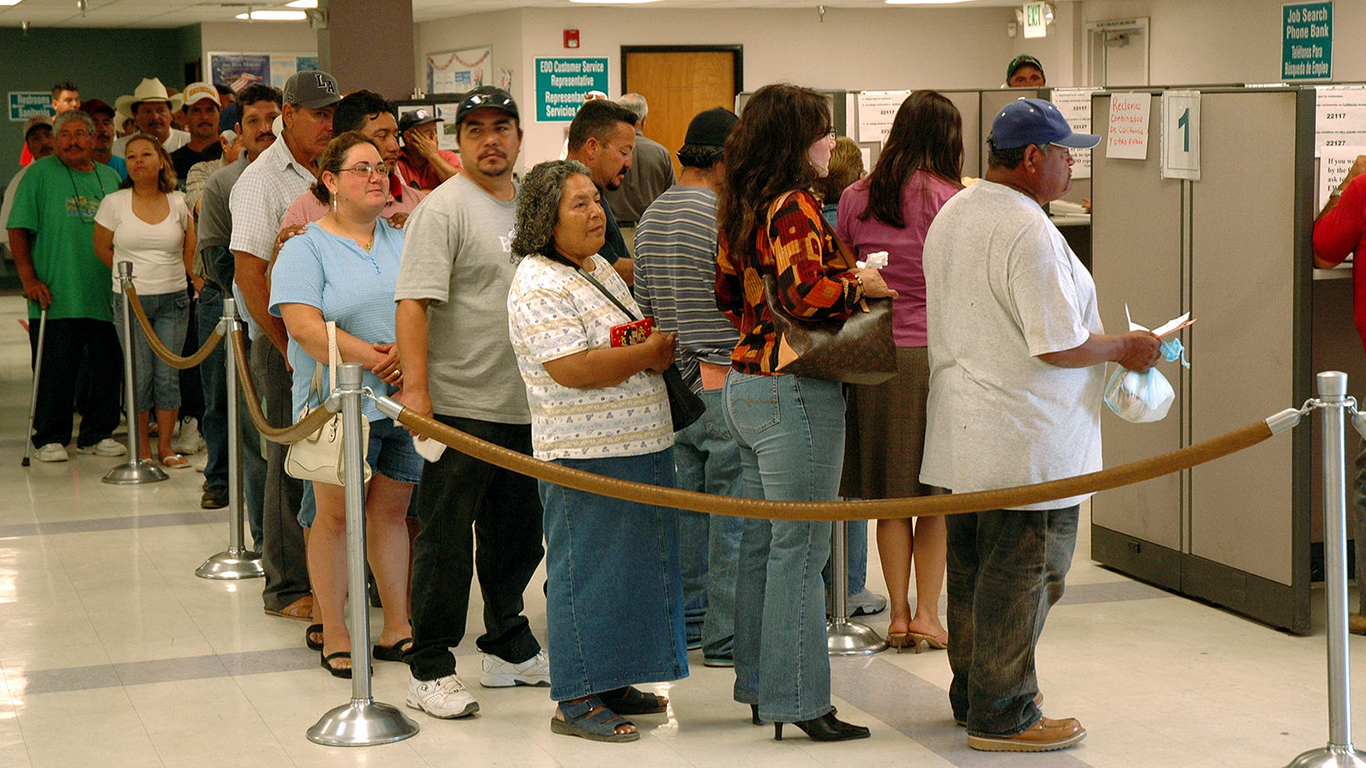
China claims the unemployment rate in its cities is just over 4%. The World Bank’s analysts pegged national unemployment at 4.6% in 2013. The CIA Factbook puts the figure at 4.1%. It is not clear the extent to which these numbers are based on the same type of measures as the U.S. Bureau of Labor Statistics (BLS) uses for the United States, whether China pads the figure to improve perceptions, or whether, in an economy as diverse as China’s, a correct measure can be done at all. At any rate, the recent economic turmoil in China raises the issue of whether the jobless rate is much higher.

One key part of any unemployment analysis is what it means to have a job. In China, some factories are kept open when they do not work at full capacity. Some of the workers who had jobs at these facilities previously may still be paid. Are they working, or are they simply collecting “unemployment,” underwritten by the central government or one of the country’s 34 divisions (provinces plus government designated areas)?

One of the more difficult issues for determining unemployment in China is the jobs condition in its farm economy. According to the CIA Facebook, a third of the Chinese economy is based on agriculture. Of the people on farms, who are essentially self-employed, how many are out of work? In theory, as water and ground pollution grow, some of these farms will not be able to operate. A slackening economy could also hurt food demand.

ALSO READ: America’s Fastest Growing Jobs

The BLS definition of joblessness includes some measures that apparently are not measured in China: People who work part time but would like full-time work. People who have not looked for work recently but have in the previous 12 months. People who have looked for work but have become discouraged and stopped looking completely.

In the United States, the unemployment rate, currently at 5.1%, is defined as “total unemployed, as a percent of the civilian labor force,” also known as U3. Take the measure called U6 (total unemployed, plus all marginally attached workers, plus total employed part time for economic reasons, as a percentage of the civilian labor force plus all marginally attached workers), and the U.S. number doubles. But his figure varies substantially from state to state, just as it must in China’s provinces. How carefully is that tracked in China, or can it be?

Some academics and world economic organizations have stated that China’s jobless rate may be closer to the U6 number in the United States — about 11%. If so, the economy in the People’s Republic is much worse off than the government is saying.

ALSO READ: America’s Fastest Shrinking Jobs

Photo of Douglas A. McIntyre
About the Author Douglas A. McIntyre →

Douglas A. McIntyre is the co-founder, chief executive officer and editor in chief of 24/7 Wall St. and 24/7 Tempo. He has held these jobs since 2006.

McIntyre has written thousands of articles for 24/7 Wall St. He is an expert on corporate finance, the automotive industry, media companies and international finance. He has edited articles on national demographics, sports, personal income and travel.

His work has been quoted or mentioned in The New York Times, The Wall Street Journal, Los Angeles Times, The Washington Post, NBC News, Time, The New Yorker, HuffPost USA Today, Business Insider, Yahoo, AOL, MarketWatch, The Atlantic, Bloomberg, New York Post, Chicago Tribune, Forbes, The Guardian and many other major publications. McIntyre has been a guest on CNBC, the BBC and television and radio stations across the country.

A magna cum laude graduate of Harvard College, McIntyre also was president of The Harvard Advocate. Founded in 1866, the Advocate is the oldest college publication in the United States.

TheStreet.com, Comps.com and Edgar Online are some of the public companies for which McIntyre served on the board of directors. He was a Vicinity Corporation board member when the company was sold to Microsoft in 2002. He served on the audit committees of some of these companies.

McIntyre has been the CEO of FutureSource, a provider of trading terminals and news to commodities and futures traders. He was president of Switchboard, the online phone directory company. He served as chairman and CEO of On2 Technologies, the video compression company that provided video compression software for Adobe’s Flash. Google bought On2 in 2009.

Featured Reads

Our top personal finance-related articles today. Your wallet will thank you later.

Continue Reading

Top Gaining Stocks

CBOE Vol: 1,568,143
PSKY Vol: 12,285,993
STX Vol: 7,378,346
ORCL Vol: 26,317,675
DDOG Vol: 6,247,779

Top Losing Stocks

LKQ
LKQ Vol: 4,367,433
CLX Vol: 13,260,523
SYK Vol: 4,519,455
MHK Vol: 1,859,865
AMGN Vol: 3,818,618