Flint Unemployment at 4.6%, Better Than National Average

Photo of Douglas A. McIntyre
By Douglas A. McIntyre Updated Published
This post may contain links from our sponsors and affiliates, and Flywheel Publishing may receive compensation for actions taken through them.
Flint Unemployment at 4.6%, Better Than National Average

© Thinkstock

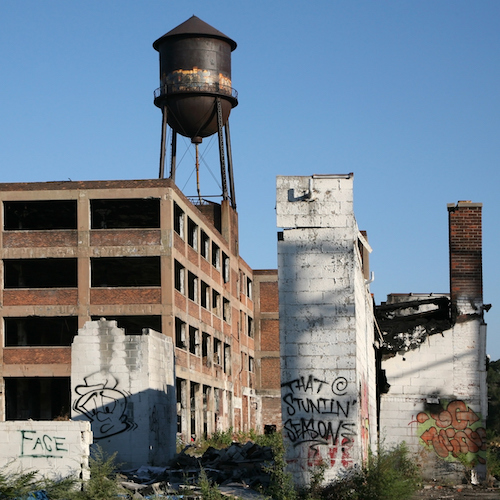
The dying city of Flint, Mich., has a 4.6% unemployment, which is rate below the national rate of 4.9%. The data mask the crippled housing market and poverty rate, and the underlying pay level of the city’s residents. Poison water is one among a number of deep-seated problems in Flint.

Flint’s unemployment rate, according to the Bureau of Labor Statistics, is the same as that of Houston and better than San Diego’s 4.7% rate. However, in Flint 41.6% of the people live below the poverty line, against a national rate of 14.5%. The median household income in Flint is $24,679, against a national average of $51,939.

Flint’s largest employers, beyond relatively small facilities left from the car industry, are government and medical centers, each of which has a presence in all cities. But the chance to move from these low-paying jobs to higher-paying ones is the lack of significant large, private enterprises.

Flint shares one of the troubles of a number of the old cities in the Rust Belt. It has lost a huge amount of its population since the auto industry boom period of the 1960s. According the Census Bureau, Flint had a population of 196,940 in 1960, which stayed flat for a decade and then fell to 99,002 in 2014. The remaining population lives in a city where crime is rampant. Homicides jumped 71% last year to 48, an extraordinary count for a city so small.
[recirclink id=318433]
What lies ahead for the city’s residents is more of the same. No single major piece of evidence shows that high-paying jobs will return to the city, nor that the large auto manufactures will move their factories back from places such as Louisville and Mexico. The city’s infrastructure makes it an unlikely place to relocate any business, even if Flint did not have drinking water problems.

Flint may have a relatively low unemployment rate, but based on almost every other statistic, the city is doomed.


Photo of Douglas A. McIntyre
About the Author Douglas A. McIntyre →

Douglas A. McIntyre is the co-founder, chief executive officer and editor in chief of 24/7 Wall St. and 24/7 Tempo. He has held these jobs since 2006.

McIntyre has written thousands of articles for 24/7 Wall St. He is an expert on corporate finance, the automotive industry, media companies and international finance. He has edited articles on national demographics, sports, personal income and travel.

His work has been quoted or mentioned in The New York Times, The Wall Street Journal, Los Angeles Times, The Washington Post, NBC News, Time, The New Yorker, HuffPost USA Today, Business Insider, Yahoo, AOL, MarketWatch, The Atlantic, Bloomberg, New York Post, Chicago Tribune, Forbes, The Guardian and many other major publications. McIntyre has been a guest on CNBC, the BBC and television and radio stations across the country.

A magna cum laude graduate of Harvard College, McIntyre also was president of The Harvard Advocate. Founded in 1866, the Advocate is the oldest college publication in the United States.

TheStreet.com, Comps.com and Edgar Online are some of the public companies for which McIntyre served on the board of directors. He was a Vicinity Corporation board member when the company was sold to Microsoft in 2002. He served on the audit committees of some of these companies.

McIntyre has been the CEO of FutureSource, a provider of trading terminals and news to commodities and futures traders. He was president of Switchboard, the online phone directory company. He served as chairman and CEO of On2 Technologies, the video compression company that provided video compression software for Adobe’s Flash. Google bought On2 in 2009.

Continue Reading

Top Gaining Stocks

CBOE Vol: 1,568,143
PSKY Vol: 12,285,993
STX Vol: 7,378,346
ORCL Vol: 26,317,675
DDOG Vol: 6,247,779

Top Losing Stocks

LKQ
LKQ Vol: 4,367,433
CLX Vol: 13,260,523
SYK Vol: 4,519,455
MHK Vol: 1,859,865
AMGN Vol: 3,818,618