


Global warming is at extremely high levels, compared to temperatures from the past. This is, supposedly, a sign that the planet’s atmosphere gets hotter by the year, based on human activity, although there are still some “global warming deniers.”
One set of facts that strongly supports the case the earth gets hotter at an accelerated pace is that the global temperatures have hit all-time monthly highs in each of the past 11 months.
According to the National Oceanic and Atmospheric Administration, a division of the U.S. Department of Commerce:
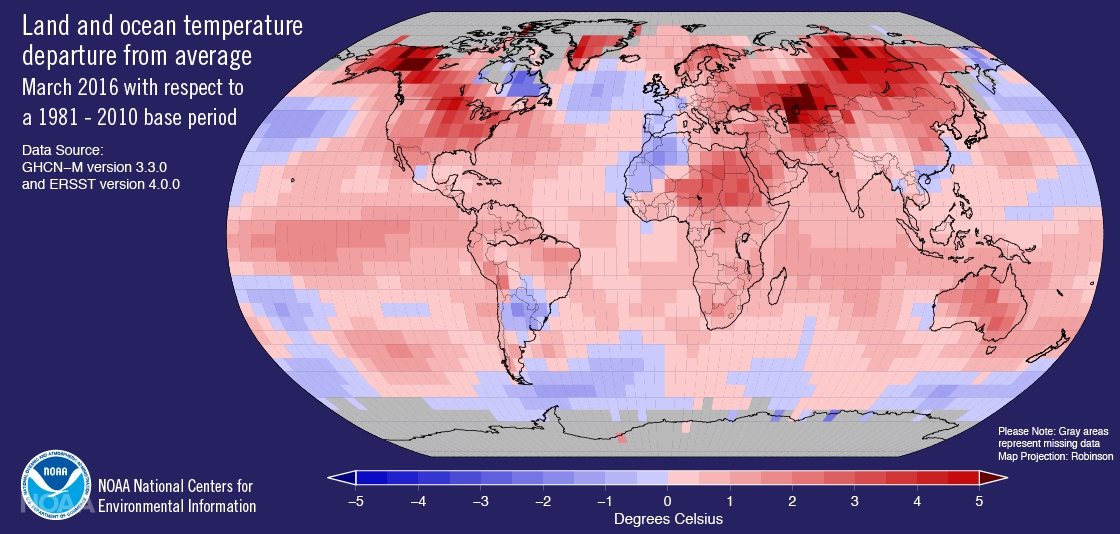
For 2016 year to date (January-March), the average temperature for the globe was 2.07 degrees F above the 20th-century average, according to scientists from NOAA’s National Centers for Environmental Information. This was the highest temperature for this period in the 1880–2016 record, surpassing the previous record set in 2015 by 0.50 degrees F. The globally averaged sea surface temperature for the year to date was also highest on record, surpassing the same period in 1998 by 0.42 degrees F, the last time a similar strength El Niño occurred.
For March, the average temperature for the globe was 2.20 degrees F above the 20th century average. This was not only the highest for the month of March in the 1880-2016 record, but also the highest monthly temperature departure among all months on record, surpassing the previous all-time record set last month by 0.02 degrees F. March also marked the 11th consecutive month a monthly global temperature record has been broken, and is the longest such streak in NOAA’s 137-year climate record.
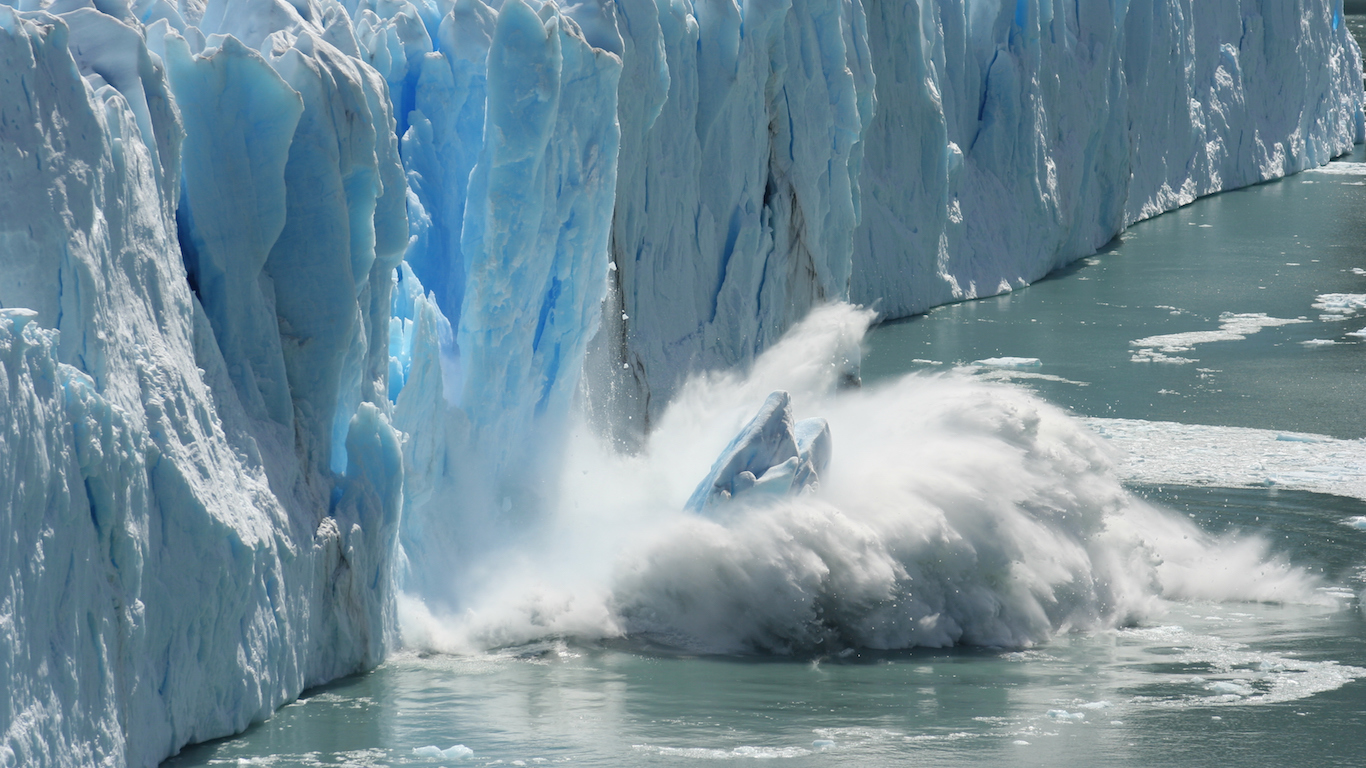
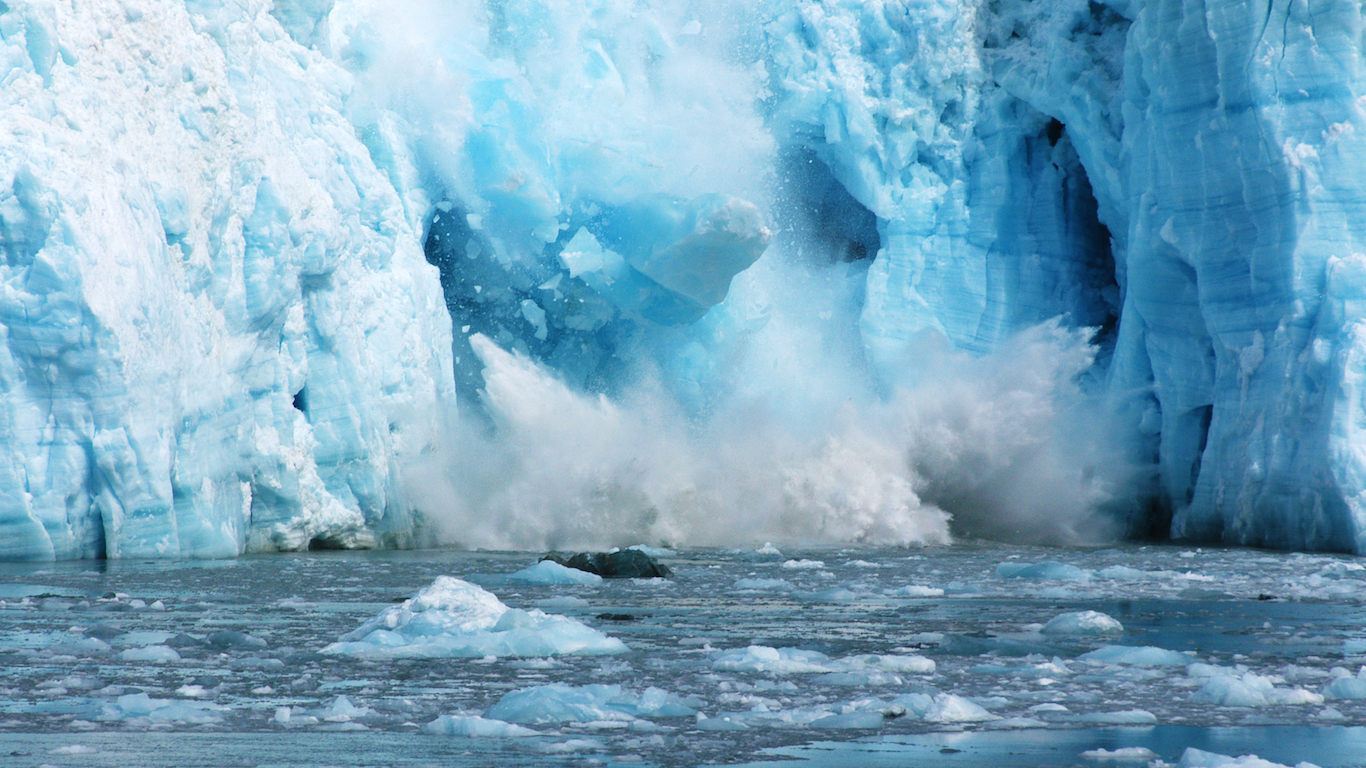
Among the substantial problems the trend has triggered is the rate at which the Arctic ice masses melt.
[nativounit]
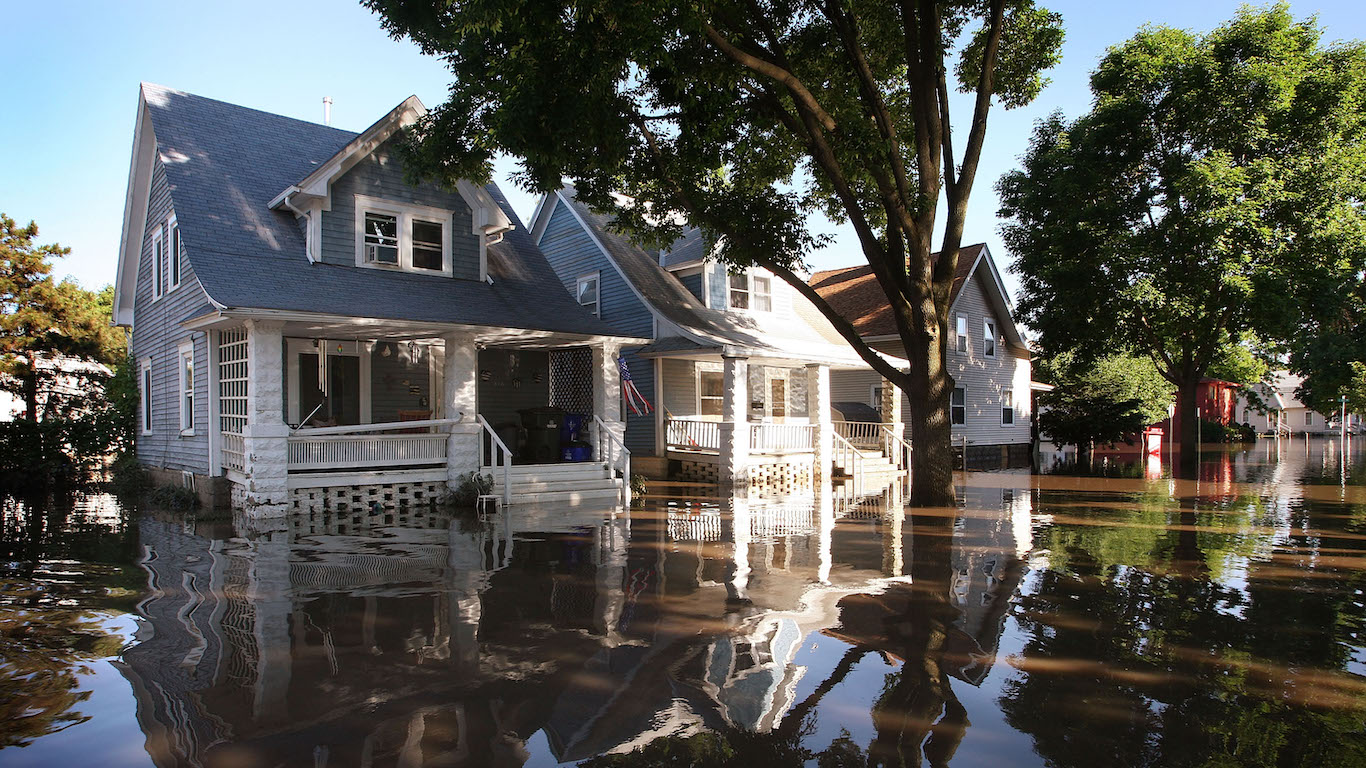
For those who believe the global warming is problem for other people but not for them, Weather.com’s Climate Disruption Index shows that people in 25 large American cities face massive and destructive effects. Most of these are on the Atlantic Ocean, the Gulf of Mexico or the Great Lakes, in particular Miami, New Orleans, New York City, Baltimore, Washington, Philadelphia and Detroit. Many people would not guess some of the cities on the list as they are far inland. Among these are metropolitan areas where drought and blazing urban temperatures could be primary problems. This already has happened in Las Vegas, part of the long-standing drought that runs through much of California. Other inland cities, like St. Paul, eventually will have drought problems, based on the Weather.com analysis. Its methodology:
We started by taking the top 100 cities across the United States with a population of 200,000 people or more, based on 2013 U.S. Census data, the most recent data available at the time. We opted to focus on city proper rather than county or region, another way the Census can be broken down. From there, we looked at six factors affecting cities, weighted differently:
- Sea-level rise (2.0, with an additional multiplier for cities along the Atlantic and Gulf coasts, to account for potential effects from hurricanes)
- Extreme precipitation (1.0)
- Extreme drought (1.0)
- Urban heat islands/extreme heat (1.0, with an additional multiplier for inland cities, to account for land-sea breeze effect)
- Average temperature changes (0.5)
- Average precipitation changes (0.5)
There is nowhere, either on the coasts or inland, for global warming deniers can go.









 Top Gaining Stocks
 Top Losing Stocks