Miami Beach May Be Completely Flooded

Photo of Douglas A. McIntyre
By Douglas A. McIntyre Updated Published
This post may contain links from our sponsors and affiliates, and Flywheel Publishing may receive compensation for actions taken through them.
Miami Beach May Be Completely Flooded

© Thinkstock

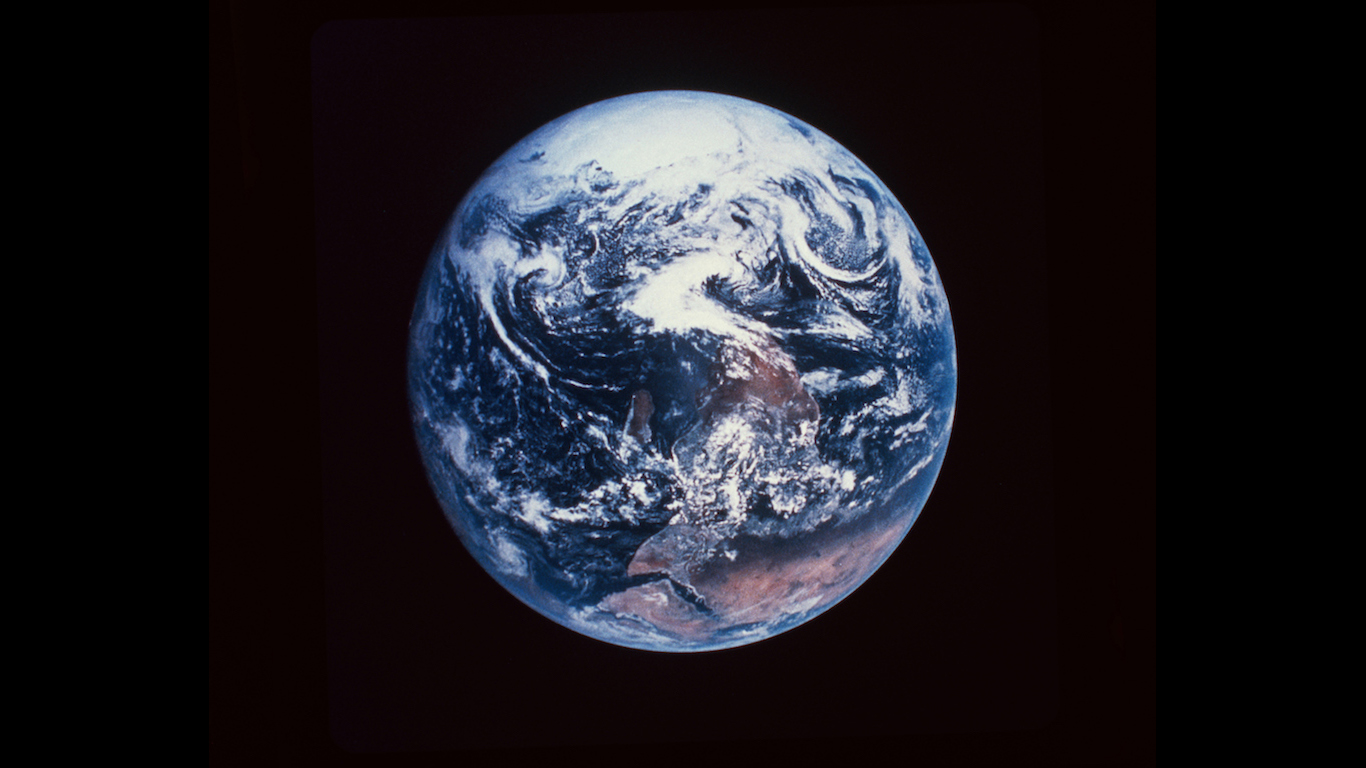
As the global temperature a hit record for the 11th month in a row, far faster than many experts had worried, the odds that coastal flooding in cities around the world has almost certainly clicked higher as the timeline of the problem has shortened.

Remarking on the temperatures, National Oceanic and Atmospheric Administration scientists wrote:

For March, the average temperature for the globe was 2.20 degrees F above the 20th century average. This was not only the highest for the month of March in the 1880-2016 record, but also the highest monthly temperature departure among all months on record, surpassing the previous all-time record set last month by 0.02 degrees F. March also marked the 11th consecutive month a monthly global temperature record has been broken, and is the longest such streak in NOAA’s 137-year climate record.

The Arctic was also impacted by record global heat. Arctic sea ice reached its maximum extent for the year at 5.61 million square miles March 24, the lowest annual maximum extent in the satellite record. This was 431,000 square miles below average and 5,000 square miles below the previous record from 2015.

[nativounit]
Several pieces of research have forecast the dangerous flooding of the world’s coast cities. Among the best known of these are from the Office of Coastal Management and the U.S. Geological Survey. A study from the Intergovernmental Panel on Climate Change change is extremely pessimistic:

The most recent IPCC assessment based on the most gloomy scenario puts predictions of 21st century sea level rise at between 26 and 59cm (10-23 inches)

If the sea level rises five feet, New Orleans would be 88% underwater. The forecast is for 100 years out and based on information from the U.S. Geological Survey. Once again, as global warming picks up, the date moves closer to the present one, so the time frame may be much shorter.

Under the same circumstance, Miami Beach would be 94% flooded. Atlantic City would be 62% flooded and St. Petersburg 32%.

Objects in the mirror may be closer than they seem.

Photo of Douglas A. McIntyre
About the Author Douglas A. McIntyre →

Douglas A. McIntyre is the co-founder, chief executive officer and editor in chief of 24/7 Wall St. and 24/7 Tempo. He has held these jobs since 2006.

McIntyre has written thousands of articles for 24/7 Wall St. He is an expert on corporate finance, the automotive industry, media companies and international finance. He has edited articles on national demographics, sports, personal income and travel.

His work has been quoted or mentioned in The New York Times, The Wall Street Journal, Los Angeles Times, The Washington Post, NBC News, Time, The New Yorker, HuffPost USA Today, Business Insider, Yahoo, AOL, MarketWatch, The Atlantic, Bloomberg, New York Post, Chicago Tribune, Forbes, The Guardian and many other major publications. McIntyre has been a guest on CNBC, the BBC and television and radio stations across the country.

A magna cum laude graduate of Harvard College, McIntyre also was president of The Harvard Advocate. Founded in 1866, the Advocate is the oldest college publication in the United States.

TheStreet.com, Comps.com and Edgar Online are some of the public companies for which McIntyre served on the board of directors. He was a Vicinity Corporation board member when the company was sold to Microsoft in 2002. He served on the audit committees of some of these companies.

McIntyre has been the CEO of FutureSource, a provider of trading terminals and news to commodities and futures traders. He was president of Switchboard, the online phone directory company. He served as chairman and CEO of On2 Technologies, the video compression company that provided video compression software for Adobe’s Flash. Google bought On2 in 2009.

Continue Reading

Top Gaining Stocks

CBOE Vol: 1,568,143
PSKY Vol: 12,285,993
STX Vol: 7,378,346
ORCL Vol: 26,317,675
DDOG Vol: 6,247,779

Top Losing Stocks

LKQ
LKQ Vol: 4,367,433
CLX Vol: 13,260,523
SYK Vol: 4,519,455
MHK Vol: 1,859,865
AMGN Vol: 3,818,618