


London’s FTSE 100 opened down 9% at the open after the news of Brexit hit the wires. By the end of day, the UK market had bounced 6%, making day traders and volatility speculators very happy but making everyone else nauseous. This was the story globally on Friday as capital markets everywhere took huge dives to recover strongly later in the day. Continuing this recovery to pre Brexit levels is likely for most countries, but the UK stock market itself is going to have a hard time climbing from here, and it has nothing to do with Brexit.
The seeds for a decline in British stocks were planted back in March. Brexit was just the trigger. In March, the Bank of England recorded the most drastic drop in its money supply since the 1950’s, an even bigger drop than recorded just before the onset of the 2008 financial crisis. From February to March 2016, Great Britain’s M2 (labeled as M4 by the Bank of England) consisting of coin, currency, demand deposits and short term time deposits, fell by 2.7%. Even without a Brexit, British stocks would have declined due to this at some point soon. Had Brexit failed, we would have likely seen a strong relief rally the next day and then a decline.
The sudden drop in the pound supply does have one good side effects though. It could help stave off some of the pressure on the pound, which has broken through the $1.34 level again. That said, now will not be the time for the Bank of England to loosen the money spigots any further, since keeping the pound from falling any further will be the priority rather than levitating British stocks. This puts the British stock market in even more trouble.
The same monetary declines have not been seen in the rest of Europe, nor in the United States. Money growth in the Eurozone is slowing slightly as it tends to do this time of year, but is more or less steady. For US markets we are also in a seasonal lull but the numbers are already recovering, meaning any decline in US stocks can be considered a buying opportunity. The same is true for Japanese stocks and to some extent China.
The UK though, is another story. Unless the monetary picture quickly reverses, and it probably won’t given the turmoil, we are likely in for a two-steps-forward, three-steps-back pattern that could bring the FTSE down to 5,000, a level it has not seen since 2010, or even loewr. When the monetary tightening in the United Kingdom loosens though, as eventually it will, it will signal the start of a big recovery. Investors looking to pick a bottom in UK stocks need only wait for the pounds to start flowing from London once more.
Why British Stocks Won’t Recover from Brexit Anytime Soon


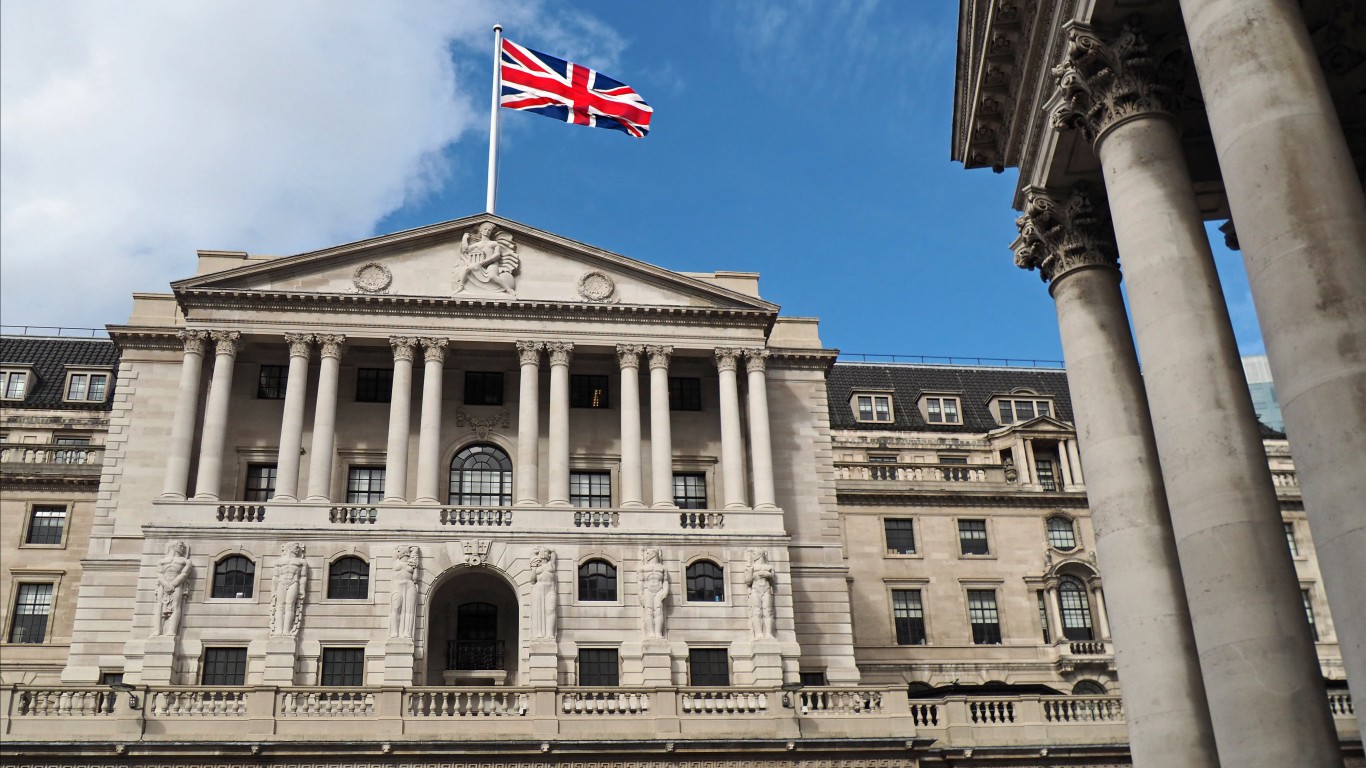
© Thinkstock

Douglas A. McIntyre is the co-founder, chief executive officer and editor in chief of 24/7 Wall St. and 24/7 Tempo. He has held these jobs since 2006.
McIntyre has written thousands of articles for 24/7 Wall St. He is an expert on corporate finance, the automotive industry, media companies and international finance. He has edited articles on national demographics, sports, personal income and travel.
His work has been quoted or mentioned in The New York Times, The Wall Street Journal, Los Angeles Times, The Washington Post, NBC News, Time, The New Yorker, HuffPost USA Today, Business Insider, Yahoo, AOL, MarketWatch, The Atlantic, Bloomberg, New York Post, Chicago Tribune, Forbes, The Guardian and many other major publications. McIntyre has been a guest on CNBC, the BBC and television and radio stations across the country.
A magna cum laude graduate of Harvard College, McIntyre also was president of The Harvard Advocate. Founded in 1866, the Advocate is the oldest college publication in the United States.
TheStreet.com, Comps.com and Edgar Online are some of the public companies for which McIntyre served on the board of directors. He was a Vicinity Corporation board member when the company was sold to Microsoft in 2002. He served on the audit committees of some of these companies.
McIntyre has been the CEO of FutureSource, a provider of trading terminals and news to commodities and futures traders. He was president of Switchboard, the online phone directory company. He served as chairman and CEO of On2 Technologies, the video compression company that provided video compression software for Adobe’s Flash. Google bought On2 in 2009.









 Top Gaining Stocks
 Top Losing Stocks