


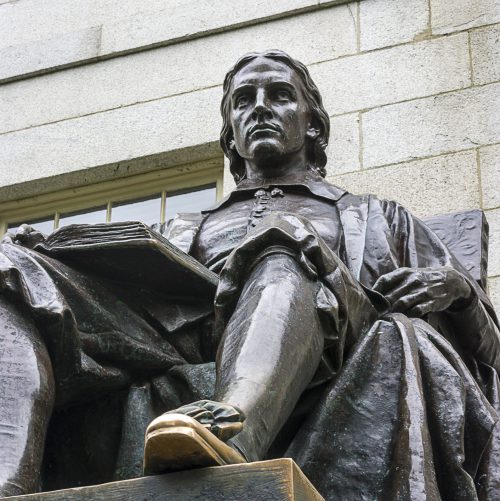
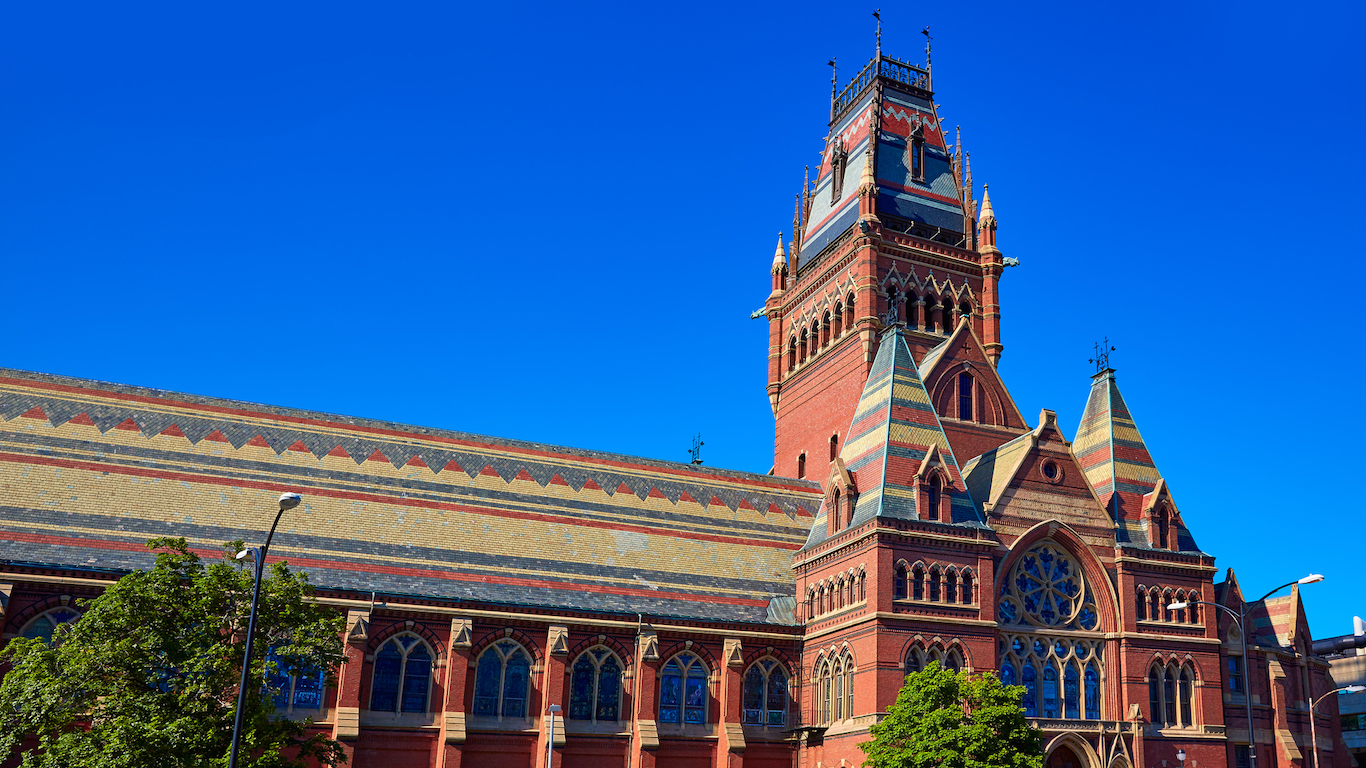
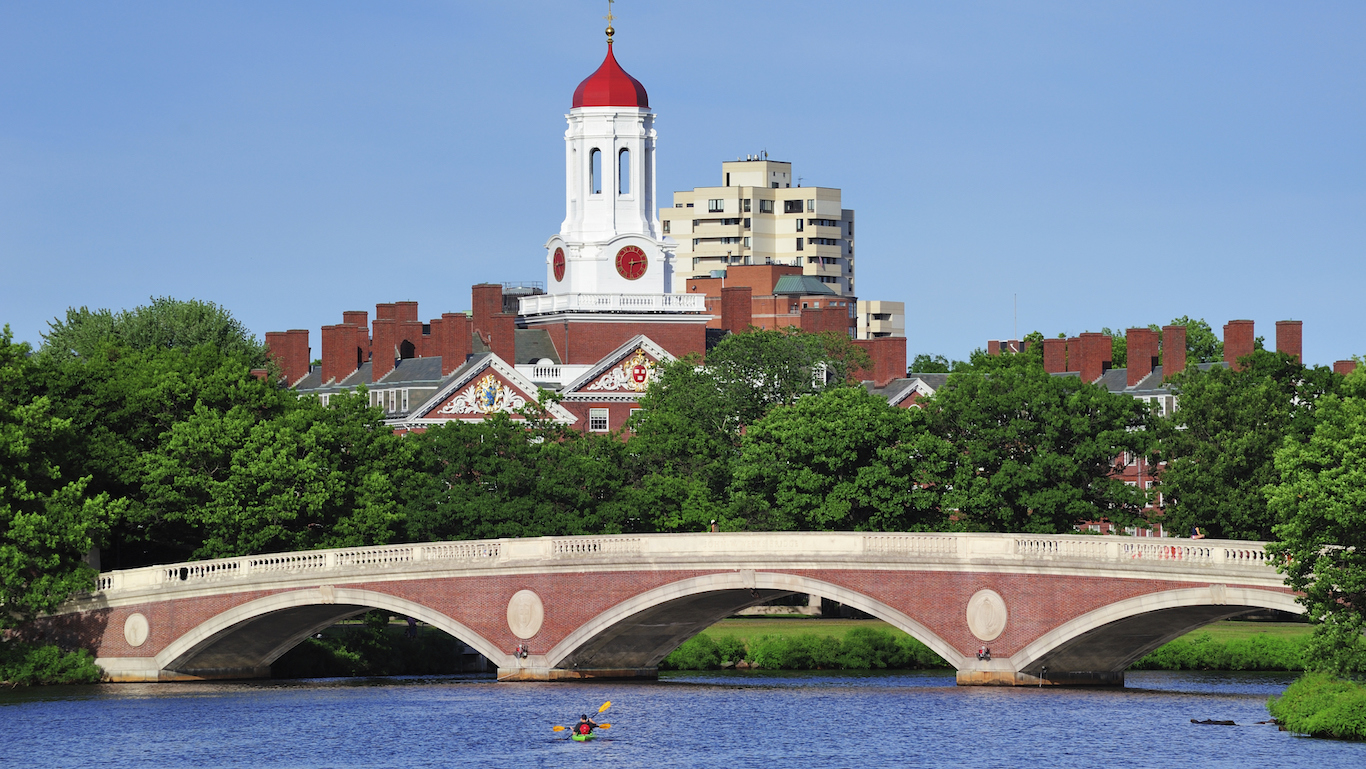
[cnxvideo id=”625480″ placement=”ros”]Harvard University is the top 0.001% of the academic world. Last year America’s colleges and universities raised $41 billion, according to the Council for Aid to Education. Of the total, $1.2 billion was raised by what is already America’s richest university.
Two things stand out in the 2016 version of the Voluntary Support of Education survey. The first is how much of the money raised goes to a tiny number of institutions. The second is how little the pot grew from 2015, despite an improving economy. However, the stock market was not terribly strong throughout the entire year.
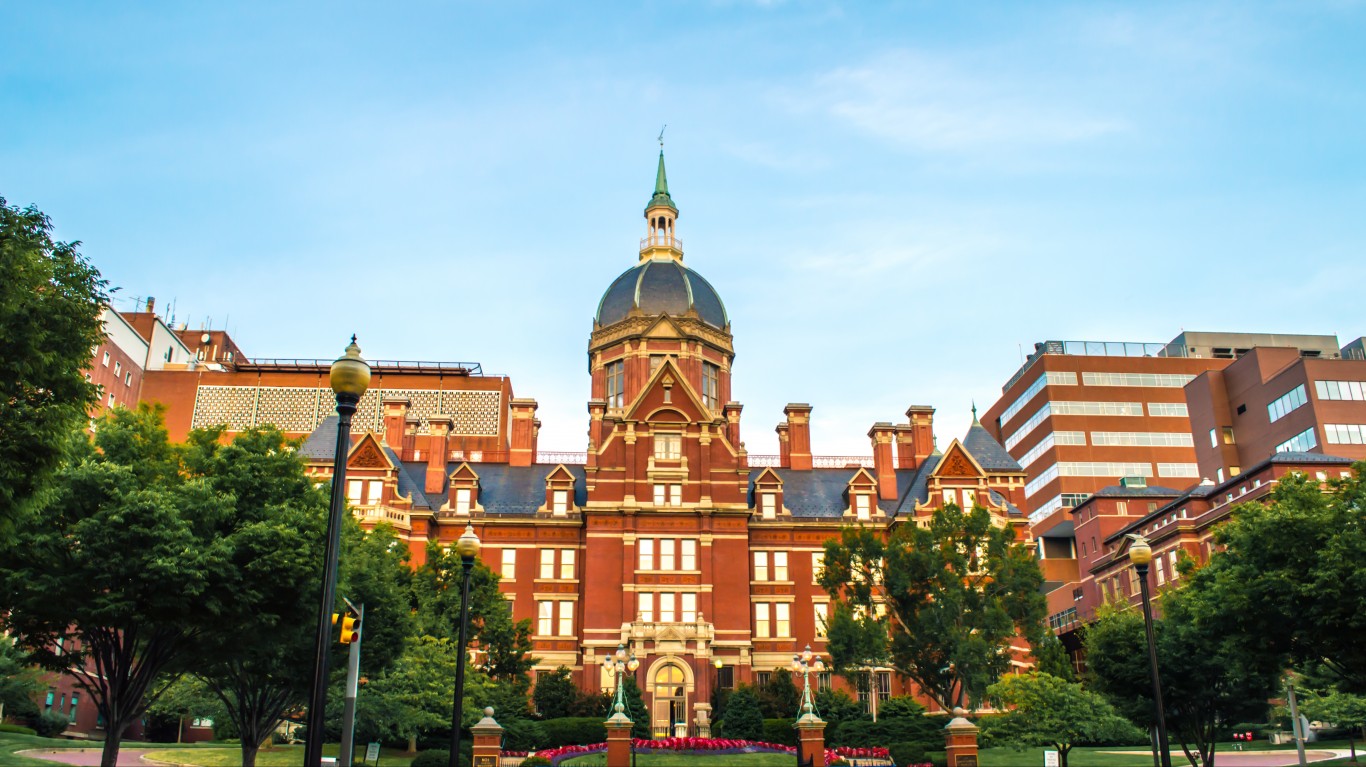
After Harvard’s $1.2 billion, Stanford University raised $952 million, followed by the University of Southern California (USC) at $666 million and Johns Hopkins University at $657 million. Among the list of the top 20, virtually every elite university in the United States is included: Cornell, Columbia, Yale, Duke, Massachusetts Institute of Technology (MIT) and University of Pennsylvania. As a matter of fact, according to the study of contributions:
Top 20 Fundraising Institutions – Less than 1 Percent of the Nation’s Colleges – Raise 27.1 Percent of All 2016 Gifts. Gifts to These 20 Institutions Fell 2.1 Percent in 2016. The Top 20 fundraising institutions together raised $11.12 billion, 27.1 percent of the 2016 total. In 2015, the same 20 institutions raised $11.36 billion.
[nativounit]
Due to the size of some gifts, which can range into the tens of millions of dollars, the year-to-year dislocation is not surprising. For example, Sandra and Edward Meyer gave Cornell $75 million in 2015. And that is not the total of their giving to the institution. At about the same time, Berkshire Hathaway Vice Chairman Charles Munger gave the University of Michigan $110 million.
Where does the money go? According to the survey, some is essential for many students. Student aid represents a large portion of earmarked gifts. Presumably students without the means to cover tuition would be deeply affected without this aid. Another large portion of donations goes to research, which is at the heart of much of the success of larger universities, both as a means to get and train top flight faculty and as a means to get future grants.
The final conclusion of the report covered what will happen to this year’s donations. It may be a challenge to match 2016, unless the stock market’s breathless advance continues:
Charitable support for colleges and universities is likely to increase in 2017 if the stock market continues to gain ground through June 30, 2017, the end of the fiscal year.
The level of such growth could be tempered, though, by the same factor that buoyed organizations’ philanthropy in 2016. The assets of organizations that support colleges and universities likely declined in 2016 due to the weak financial markets that year. Organizations’ 2016 financial positions fuel their 2017 contributions.
More is hanging on the rally than just what becomes of the incomes of the country’s very richest people.
[wallst_email_signup]








 Top Gaining Stocks
 Top Losing Stocks