


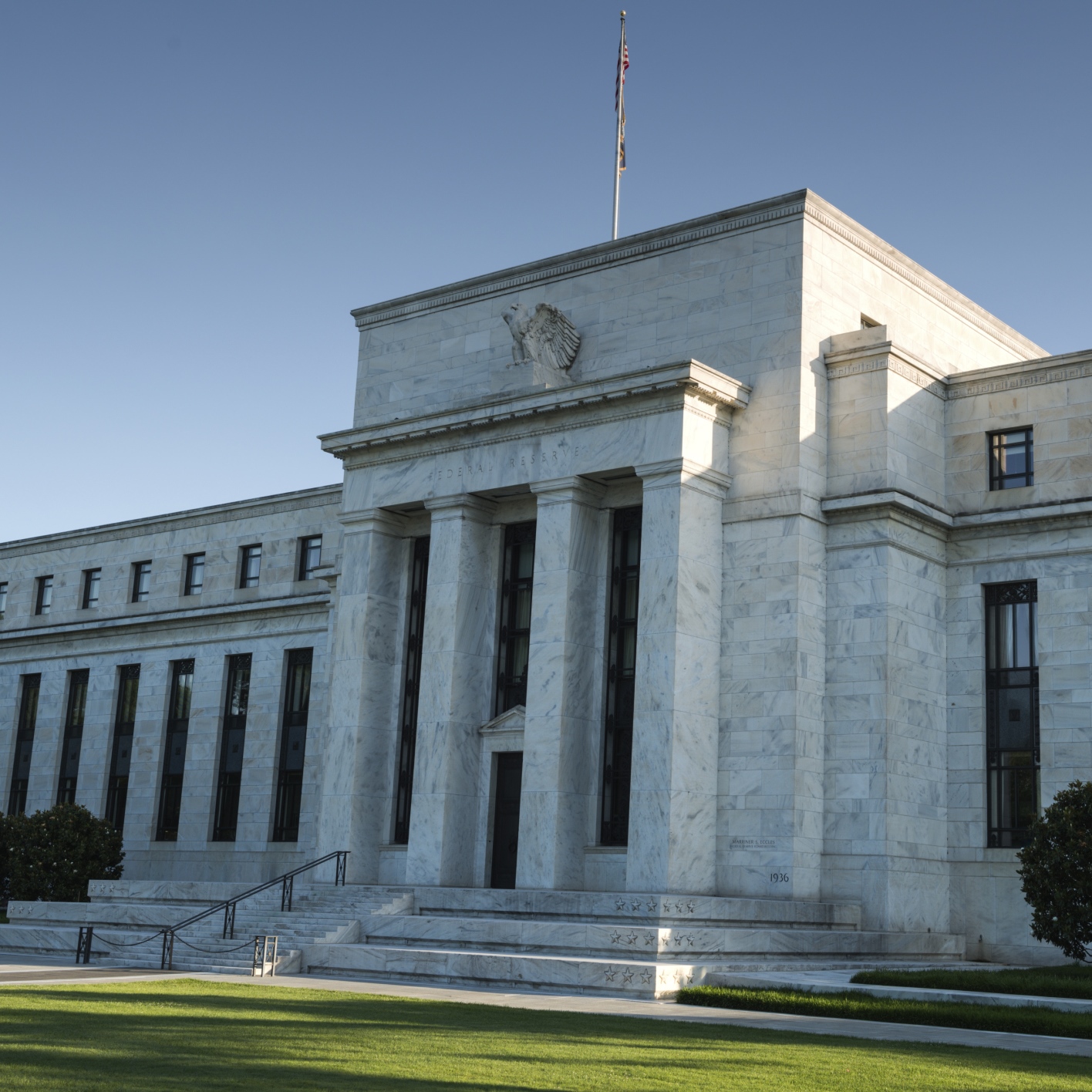
[cnxvideo id=”655426″ placement=”ros”]If the Federal Reserve and the financial markets are correct, 2017 will end up being the year that interest rates start to become more and more normalized on a historical basis. This is after almost a decade at a zero-rate on federal funds. Prior to 2017, the only rate hikes that had been seen was a hike in late 2015 and then another in December of 2016.
A rate hike in March of 2017 has now taken the fed funds rate to a target range of 0.75% to 1.00%. The New York Federal Reserve’s website showed that the effective fed funds rate has been 0.91% since March 16.
Consumers and investors alike need to be prepared for more interest rate hikes in 2017. That may sound like bad news on the surface, but the reality is that interest rates are likely to remain lower than what was seen in years past.
Increasingly, Federal Reserve presidents are calling for additional rate hikes in 2017. The source has been their direct speeches and commentary given to the media. That of course does not mean that they are assured, but it is a stark difference from 2015 and 2016 when Fed Chair Janet Yellen and most other Fed presidents were scared of their of own shadows at even the hint of rate hike commentary.
[nativounit]
In its March meeting, when a rate hike was delivered, the Federal Open Market Committee (FOMC) forecast was for the fed funds rate to be roughly 1.4% at the end of 2017. It is also worth noting that traders using fed funds futures seem to be pricing in two further interest rate hikes in 2017.
24/7 Wall St. has tracked the numerous Fed presidents calling for rate hikes in the last week of March.
Eric Rosengren, president of the Federal Reserve Bank of Boston, said on Wednesday that he thinks the Fed should raise rates a total of four times in 2017. The first thing to consider here is that this is a higher degree of hikes than most other Fed presidents. His speech at the Boston Economic Club talked about a path to normalization:
Looking ahead over the course of this year, I believe it is likely to be appropriate for the FOMC to raise rates at a more regular – though still gradual – pace. … My own view is that an increase at every other FOMC meeting over the course of this year could and should be the committee’s default, unless economic data come in inconsistent with forecasts. … This would still be a fully data-dependent approach, not a preset path, as it would hinge on the incoming data – but the base case would be four tightenings, reflecting the strength of the economy that I believe justifies more regular normalization of interest rates.
On Tuesday, Federal Reserve Vice Chair Stanley Fischer gave an interview on CNBC in which he said that two more interest rate hikes “seems to be about right” for 2017. He also noted that the FOMC has included some degree of economic stimulus into its economic forecasts, but he also said that the Fed’s current outlook hasn’t changed very much.
Fischer did address how the markets act when certain bills get introduced or start to take shape. He said:
Some bills, when they’re presented, have some impact on the economy immediately. I think that was the case with just the early days of the administration and so the stock market goes up and so forth. So, you take those effects into account. … You don’t have to put a huge weight on something that you don’t really know is going to happen. So, we take it into account somewhat.
Charles Evans, the president of the Federal Reserve Bank of Chicago, reiterated his support for interest rate hikes in 2017. Evans opined that there is an increasing chance that the economy could outperform expectations.
Robert Kaplan, the president of the Dallas Federal Reserve Bank, said on Monday that he supports additional interest rate hikes in 2017 if the economy keeps showing gains.
[wallst_email_signup]








 Top Gaining Stocks
 Top Losing Stocks