


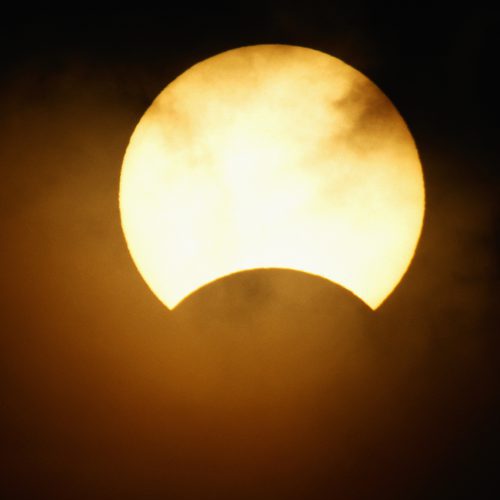
On Monday, August 21, North America will see a solar eclipse. The path of the total solar eclipse will stretch from Salem, Oregon, to Charleston, South Carolina, and traverse 14 states. Observers outside this path will still see a partial solar eclipse, in which the moon covers part of the sun.
An eclipse occurs when the sun, earth and moon move into alignment with each other. One of the celestial bodies blocks the view of another, thus creating a shadow.
There are two types of eclipses: solar and lunar. A lunar eclipse occurs when the earth passes between the sun and the moon, creating a shadow on the moon. These types of eclipses occur about two to four times per year and usually last for a few hours.
A solar eclipse occurs when the moon passes between the sun and the earth, creating a shadow on the earth. The last time a total solar eclipse occurred in the lower 48 states was 1979. The next time a total solar eclipse will traverse from coast to coast in North America will be in 2045.
[nativounit]
On average, a total solar eclipse can be visible from somewhere on Earth every 1.5 years.
While all of North America will be able to see the solar eclipse on August 21, most of the continent will only see a partial eclipse event, which may or may not be noticeable depending on where you are. A total eclipse will only be visible along the path of totality, which is about 60 to 70 miles wide at any given point. The farther you are from this path, the less noticeable the eclipse will be.
Besides Salem and Charleston, other U.S. cities that will be able to view a total solar eclipse include Idaho Falls, Idaho; Casper, Wyoming; Lincoln, Nebraska; Kansas City, Missouri; and Nashville, Tennessee.
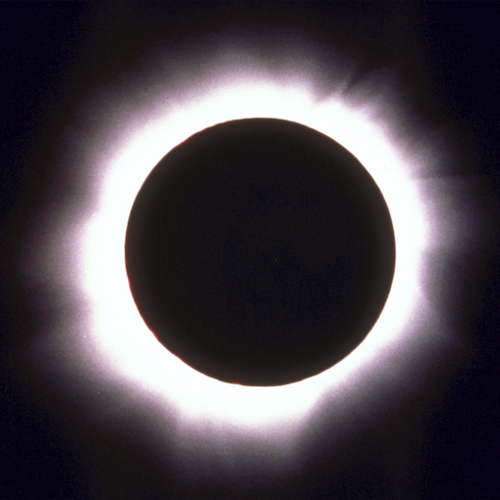
Viewing a solar eclipse involves taking safety precautions. Looking directly at the sun is unsafe, except during the brief total phase of a solar eclipse (totality), when the moon entirely blocks the sun’s face. That will happen only within the narrow path of totality.
The only safe way to look directly at the uneclipsed or partially eclipsed sun is through special-purpose solar filters, such as eclipse glasses or hand-held solar viewers. Homemade filters or ordinary sunglasses are not safe for looking at the sun. So far, only four manufacturers have certified that their eclipse glasses and handheld solar viewers meet the ISO 12312-2 international standard for such products.
The Wall Street Journal this week reported that online retailer Amazon.com Inc. (NASDAQ: AMZN) started to make refunds to consumers who bought certain brands of eclipse glasses, following reports that counterfeits were inundating the market.
The demand for the sunglasses has led to counterfeit and substandard products, say manufacturers and the National Aeronautics and Space Administration (NASA), which warned on its website of “unsafe paper solar glasses being distributed.” Some of those sunglasses were being sold on Amazon, according to NASA and the American Astronomical Society. Amazon has removed suspect items, it said previously.
[wallst_email_signup]







 Top Gaining Stocks
 Top Losing Stocks