



When U.S. gasoline prices rise by a double-digit percentage that usually causes U.S. consumers to reduce their discretionary retail spending. Gas prices rose about 12% in the first half of 2018, and retail sales also rose, by 4.5%, according to a report from Coresight Research.
Assuming that gas prices end the year up 12%, Americans will spend about $33 billion more on gas than they did in 2017. Coresight estimates that U.S. retail spending this year will reach $3.6 trillion (not including automobiles and gasoline), a 4.4% year-over-year increase. Changes to tax laws, higher wages, and continued economic growth are tabbed to drive the increase.
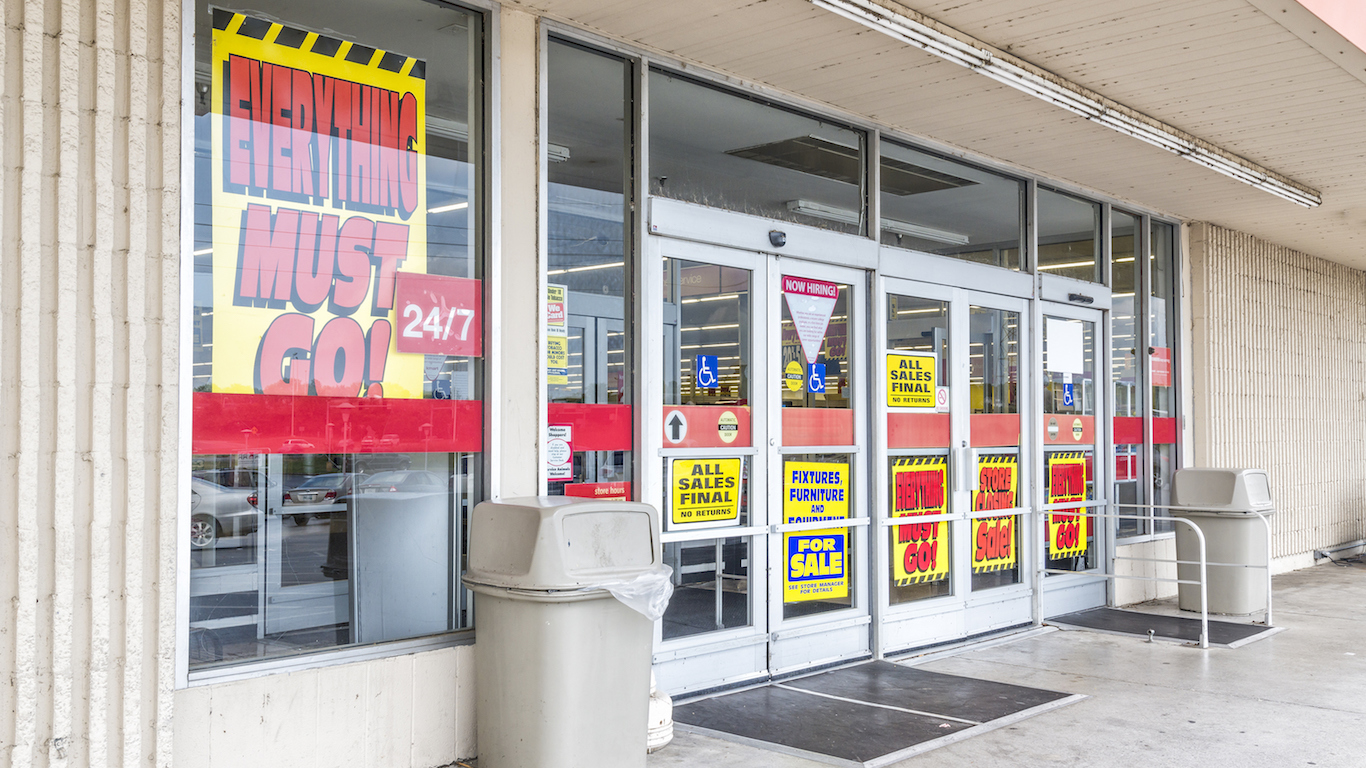
The not-so-good is that retail store closures are likely to total around 10,000 in 2018. At the end of June, Coresight had recorded 4,136 announced closures from major U.S. retailers. That’s fewer than the 5,341 at the same point last year. For the full year, the firm estimates store closures in a range of 8,000 to 10,000, more than the 7,066 closures recorded in 2017.
[nativounit]
Coresight has recorded 1,985 store openings so far in 2018 compared to a total of 3,267 in the first half of 2017.
The bankruptcies of Toys “R” Us and Bon-Ton Stores resulted in the announced closure of 1,241 stores. Walgreens has announced that it will close 600 stores, Sears will close 274, and Best Buy will close 250.
Coresight also noted that tariffs are not expected to have much impact on apparel and footwear.
While retail sales are solid, the same is not true for U.S. shopping malls. Bill McBride of the Calculated Risk blog cites research from Reis on mall vacancy rates:
With 3.8 million square feet of negative net absorption brought on by the Toys “R” Us store closings, the U.S. Retail Vacancy Rate climbed 0.2% to 10.2% in the second quarter. Rent growth was positive at 0.2%.
The Regional Mall vacancy rate also increased 0.2% to 8.6% in the quarter, the average Mall rent increased 0.3%. The Mall vacancy rate has climbed 0.8% from a low of 7.8% at the end of 2016.
After withstanding the hundreds if not thousands of store closings over the last 18 months, the neighborhood and community shopping center industry suffered its worst quarter in nine years with negative net absorption of 3.8 million square feet. This pushed the overall vacancy rate to 10.2% from 10.0 percent where it had held steady for the four previous quarters.
The Coresight Research report is available at the company’s website.
[recirclink id=474383]
[wallst_email_signup]







 Top Gaining Stocks
 Top Losing Stocks