


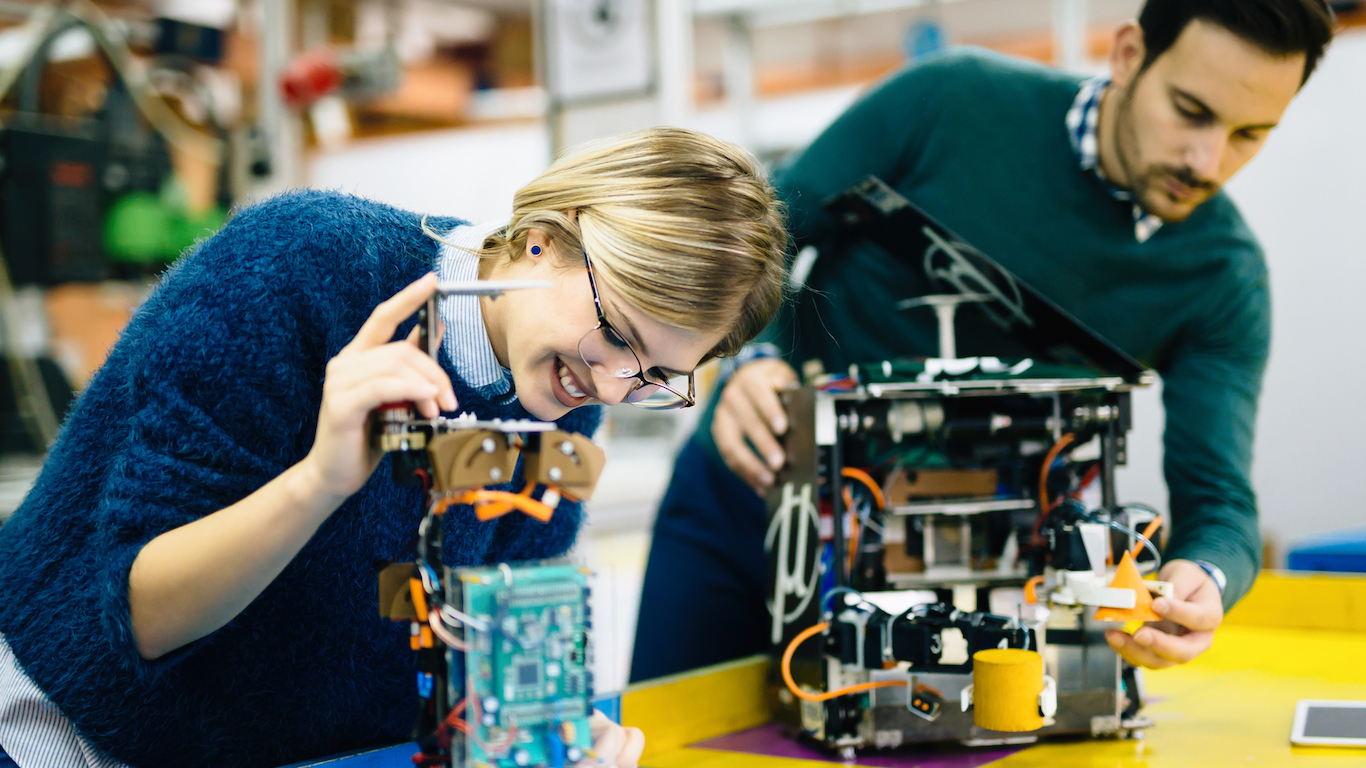
According to The World Economic Forum (WEF), automation and artificial intelligence (AI) used in the workforce could add 133 million jobs by 2022. It could also kill 75 million. The new forecast is part of the WEF’s “The Future of Jobs 2018” report.
The report’s authors are optimistic about the effect technology will have on global workers in the next five years. This could “lead to a new age of good work, good jobs and improved quality of life for all.” Alternatively, “if it is if managed poorly, (it could) pose the risk of widening skills gaps, greater inequality and broader polarization.”
The WEF calls the coming changes to the workforce the Fourth Industrial Revolution, in which technology can make companies substantially more productive via four developments: “ubiquitous high-speed mobile internet; artificial intelligence; widespread adoption of big data analytics; and cloud technology.”
As part of the revolution, according to the report, 85% of the companies surveyed are highly likely to “have expanded their adoption of user and entity big data analytics. Similarly, large proportions of companies are likely or very likely to have expanded their adoption of technologies such as the internet of things and app- and web-enabled markets, and to make extensive use of cloud computing.”
[nativounit]
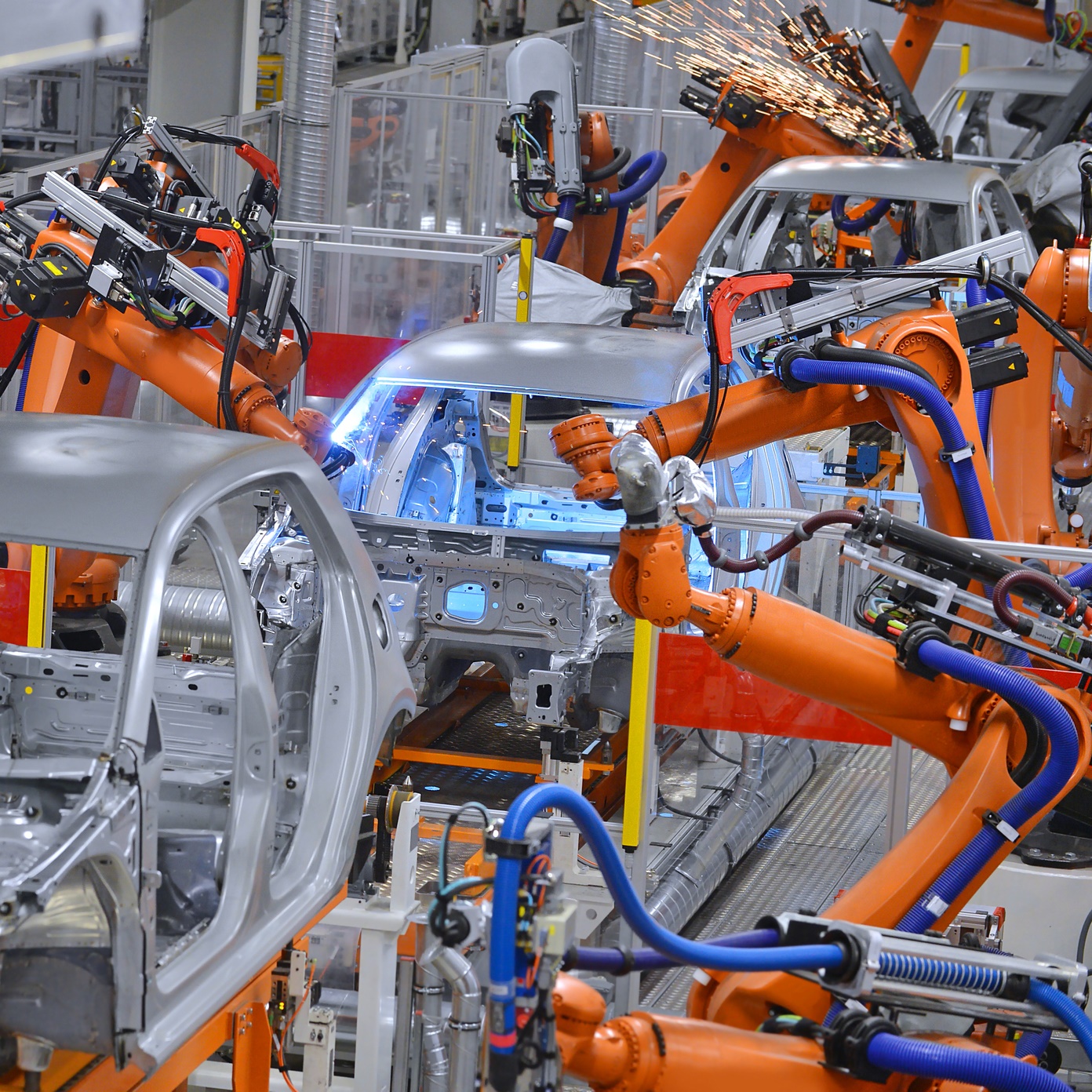
Additionally, robot adoption rates diverge significantly across industries, with “37% to 23% of companies planning this investment, depending on industry.”
The calculation of job additions and subtractions is based on “a new human-machine frontier within existing tasks.” The authors of the report do the math:
Within the set of companies surveyed, representing over 15 million workers in total, current estimates would suggest a decline of 0.98 million jobs and a gain of 1.74 million jobs. Extrapolating these trends across those employed by large firms in the global (non-agricultural) workforce, we generate a range of estimates for job churn in the period up to 2022. One set of estimates indicates that 75 million jobs may be displaced by a shift in the division of labour between humans and machines, while 133 million new roles may emerge that are more adapted to the new division of labour between humans, machines and algorithms.
Extrapolating is a vague way of forecasting long-term results. However, if the authors are correct, the net job additions will total nearly half of the current U.S. workforce.
[wallst_email_signup]











 Top Gaining Stocks
 Top Losing Stocks