


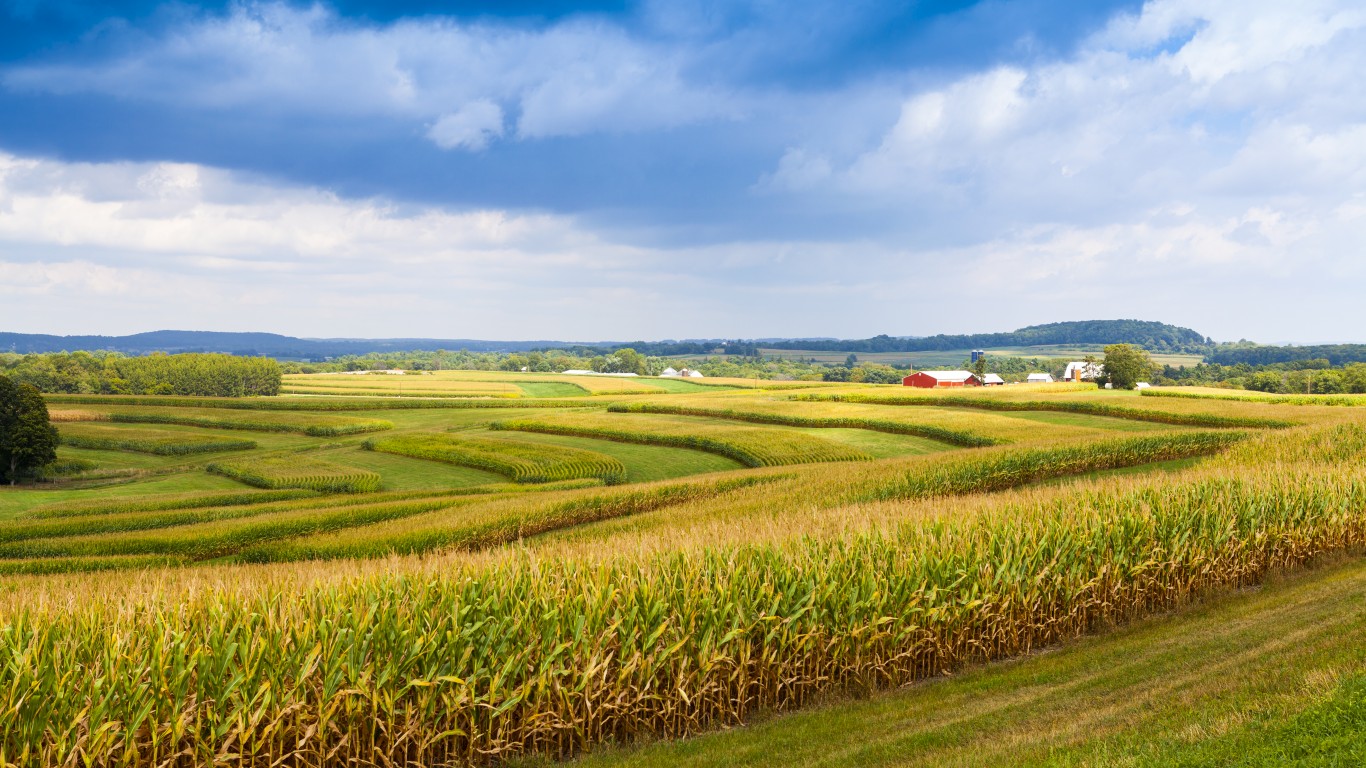
Sometimes a really interesting piece of research goes right by most of us and gets noticed only by an initiated few. That appears to have been the case with a report from researchers at the Massachusetts Institute of Technology and Dartmouth College that revealed the impact of intensive land use on a regional climate.
In this case, the observed climate change was toward cooler, not warmer, temperatures. The short version is that increased corn and soybean planting in the Midwest likely resulted in an increase in the moisture in the atmosphere, which both cooled the air and raised the amount of rainfall in the region.
The study, “Twentieth Century Regional Climate Change During the Summer in the Central United States Attributed to Agricultural Intensification,” reports that average summertime rainfall increased by about 15% and average summertime temperatures decrease by about one-half degree Celsius in the second half of the 20th century compared with the first half of the century.
[nativounit]
From the study’s abstract:
In the central United States, for example, observational data indicate that rainfall increased, surface air temperature decreased, and surface humidity increased during the summer over the course of the twentieth century concurrently with increases in both agricultural production and global GHG emissions. … [W]e conclude that twentieth century land use changes contributed more to forcing observed regional climate change during the summer in the central United States than increasing GHG emissions.
After the researchers included in their computer model a factor to account for more intensive agriculture, the model showed exactly what had been recorded by the observations over the course of the 20th century.
None of this means that global warming is a hoax, MIT professor Elfatih Eltahir told MIT News back in February of this year. Eltahir noted the need to refine existing models in order to improve predictions on the effects of climate change and the “need to understand some of these regional and local processes taking place in the background.”
Interestingly, the cooler, wetter change did not come from planting more acreage but from a “dramatic increase in yields” on existing farmland. One thing the results suggest is that intensifying agriculture on existing farmland may lessen the effects of global warming, at least locally.
But the good news, at least for Midwesterners, is not likely to last. The degree of agricultural intensification observed over the past 30 years “isn’t sustainable” a Midwestern farmer told Atlas Obscura. The mitigating effects may disappear completely, leading to a quicker pace of rising temperatures.
[recirclink id=505303]
[wallst_email_signup]












 Top Gaining Stocks
 Top Losing Stocks