



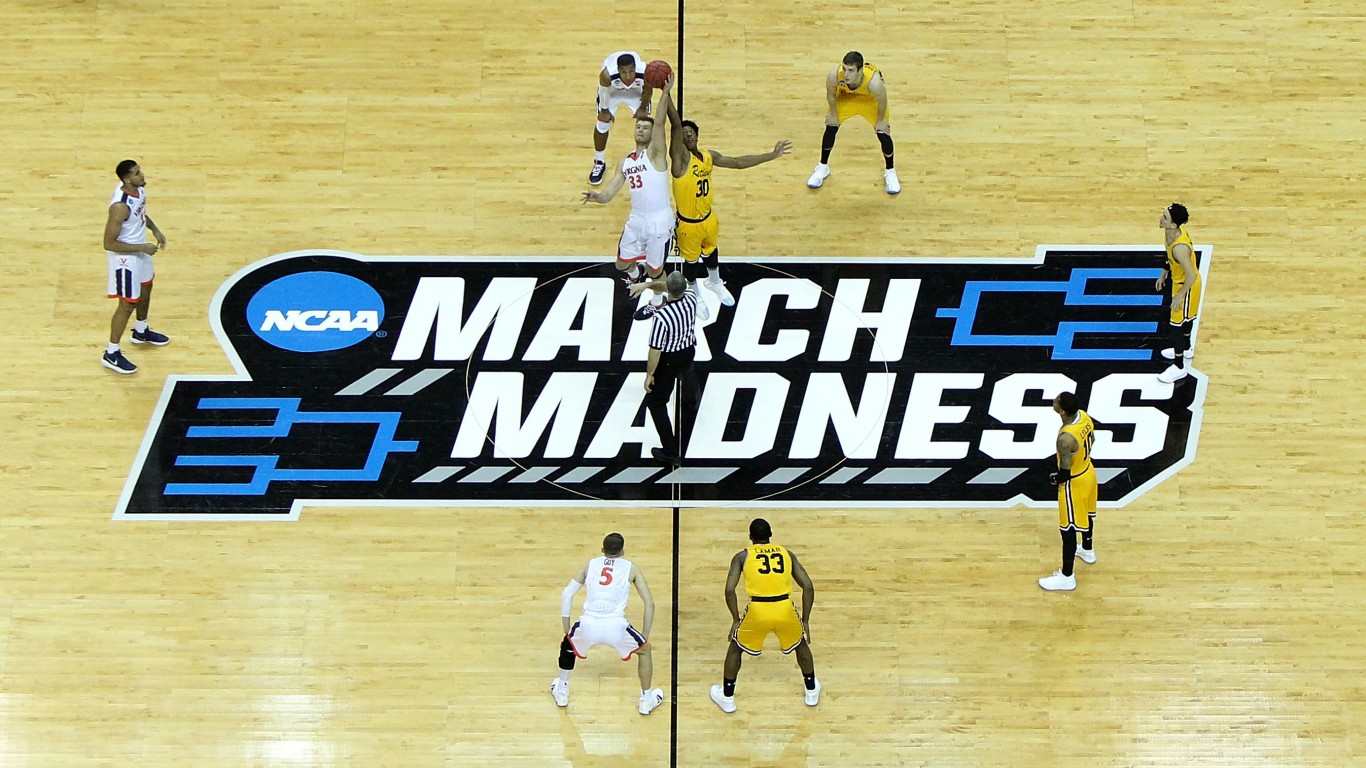
The selection process that kicks off March Madness starts March 17. That triggers a tournament that starts with 68 teams and runs through the National Championship in Minneapolis on April 8. Millions of people will watch the games, most of which are played during the workday. On some days the games start at noon.
One estimate is that workers who are glued to TV or computer screen to watch March Madness, plus those working on their best guesses about which team will win, will cost American businesses $13.3 billion in lost productivity.
Staffing company OfficeTeam estimates that last year during the tournament workers spent almost 26 minutes a day on March Madness activities. That means, over the 15 workdays on which the games were played, people spend an average of 6.375 hours. In addition, software company TSheets reports 48% of workers spent time forecasting which teams would win each bracket in 2018. The American workforce is 157 million people, TSheets says.
These numbers add up to about 75 million workers who spent time on their March Madness predictions last year. Outplacement firm Challenger, Gray & Christmas totaled those estimates together and reported that the aggregate loss of productivity will be $13,284,100,580 throughout the tournament. There is no way to know how this is spread between the jobs with the most and least job security.
[nativounit]
Is there a way to improve this loss of productivity? Andrew Challenger, vice president of global outplacement and executive coaching firm Challenger, Gray & Christmas, suggests there might be. “To give workers the ability to watch full games, employers could consider giving employees extended lunches or offering longer breaks at other times throughout the day to allow them to catch games that interest them. Employers could also offer telecommuting options so workers who are able can have the games on in the background at home as they work,” he commented about the research results. He added it is important for some companies to be liberal with the time they allow people to follow the tournament. Among other things, Challenger says, it is good for morale and team building.
It is unlikely companies can find a way around the loss of productivity, and for their relationships with employees long term they may not want to. As a matter of fact, keeping employees happy is one of the hallmarks of America’s best companies to work for.
[recirclink id=534313]
[wallst_email_signup]












 Top Gaining Stocks
 Top Losing Stocks