



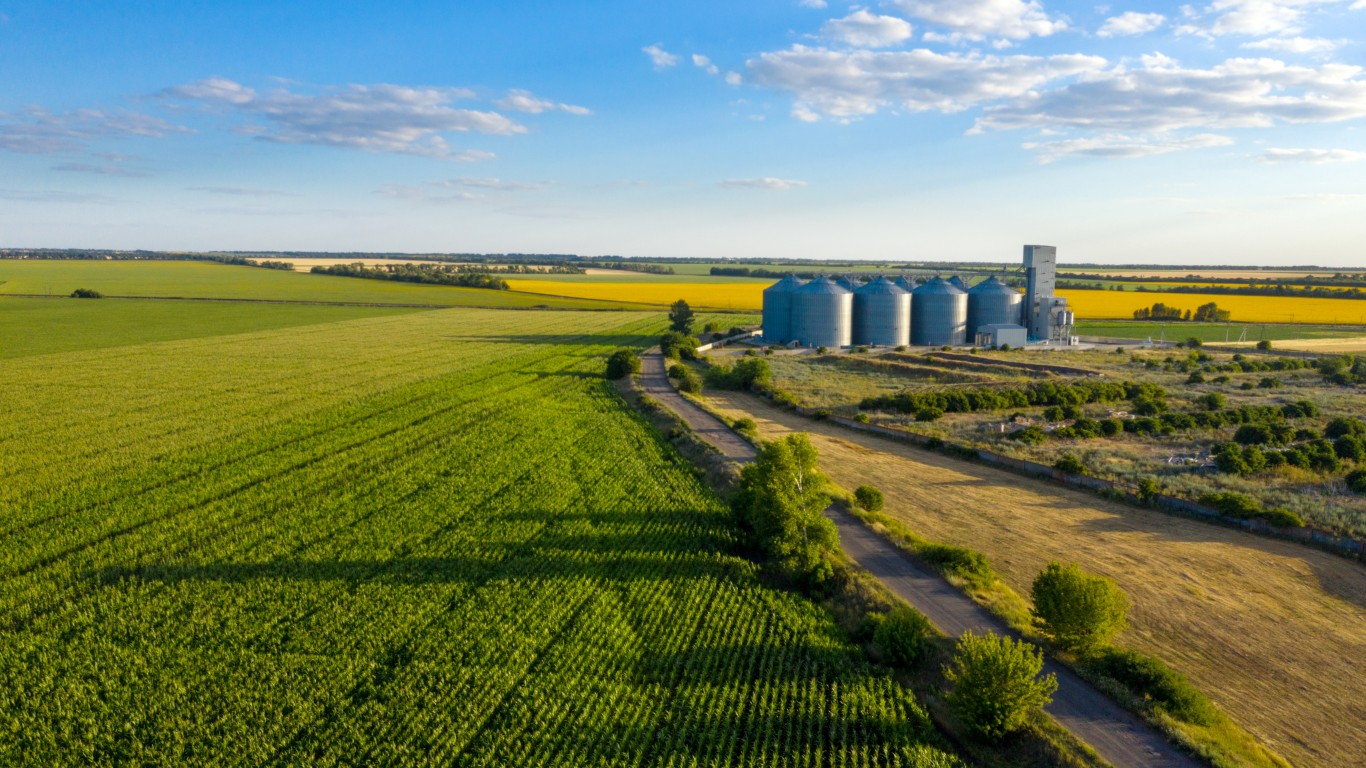
The number of U.S. farms (including ranches) dropped 3.2% between 2012 and 2017, and total U.S. land devoted to farming dropped by 1.6%, according to the U.S. Department of Agriculture’s (USDA) 2017 Census of Agriculture released Thursday. The number of farms dropped from 2.11 million in 2012 to 2.04 million in 2017 while farmland acreage dropped from 914.5 million acres to 900.2 million acres.
The average size of a farm rose slightly from 434 acres to 441 acres. The smallest farms (one to nine acres) comprise just 0.1% of all U.S. farmland, while the largest (2,000 or more acres) comprise 58% of all farmland. There were 273,000 of the smallest farms in 2017 and 85,127 of the largest. Both totals were higher in 2017 than in 2012. The number of farms in the five size ranges between the smallest and the largest declined in every range with the largest drop coming in farms between 50 and 179 acres.
The number of farms making sales of $2,500 or less rose from 788,310 to 791,701. The number of farms making sales of $500,000 or more declined from 155,178 to 146,568 in the five-year period.
The number of family farms declined from 1.83 million to 1.75 million, while the number of corporate farms rose from 106,716 to 146,568. Total production expenses for all farms rose dipped slightly from $328.94 billion to $326.39 billion.
[nativounit]
In addition to economic data, the 2017 Census also gathered demographic detail. The average age of all producers rose by 1.2 years between 2012 and 2017 to 57.5 years. Some 11% of all producers (370,619) have served in the U.S. military and the average age of this group is 67.9.
The number of producers rose 7% to 3.4 million in 2017 as the number of female producers jumped by 23% to 1.23 million and the number of males dropped by 1.7% to 2.17 million. More than half of all farms (56%) have at least one female decision maker and more than a third (36%) of all producers are female.
USDA’s National Agricultural Statistics Service (NASS) administrator Hubert Hamer commented, “While the current picture shows a consistent trend in the structure of U.S. agriculture, there are some ups and downs since the last Census as well as first-time data on topics such as military status and on-farm decision making.”
The full Agriculture Census is available at the NASS website.
[recirclink id=540383]
[wallst_email_signup]







 Top Gaining Stocks
 Top Losing Stocks