


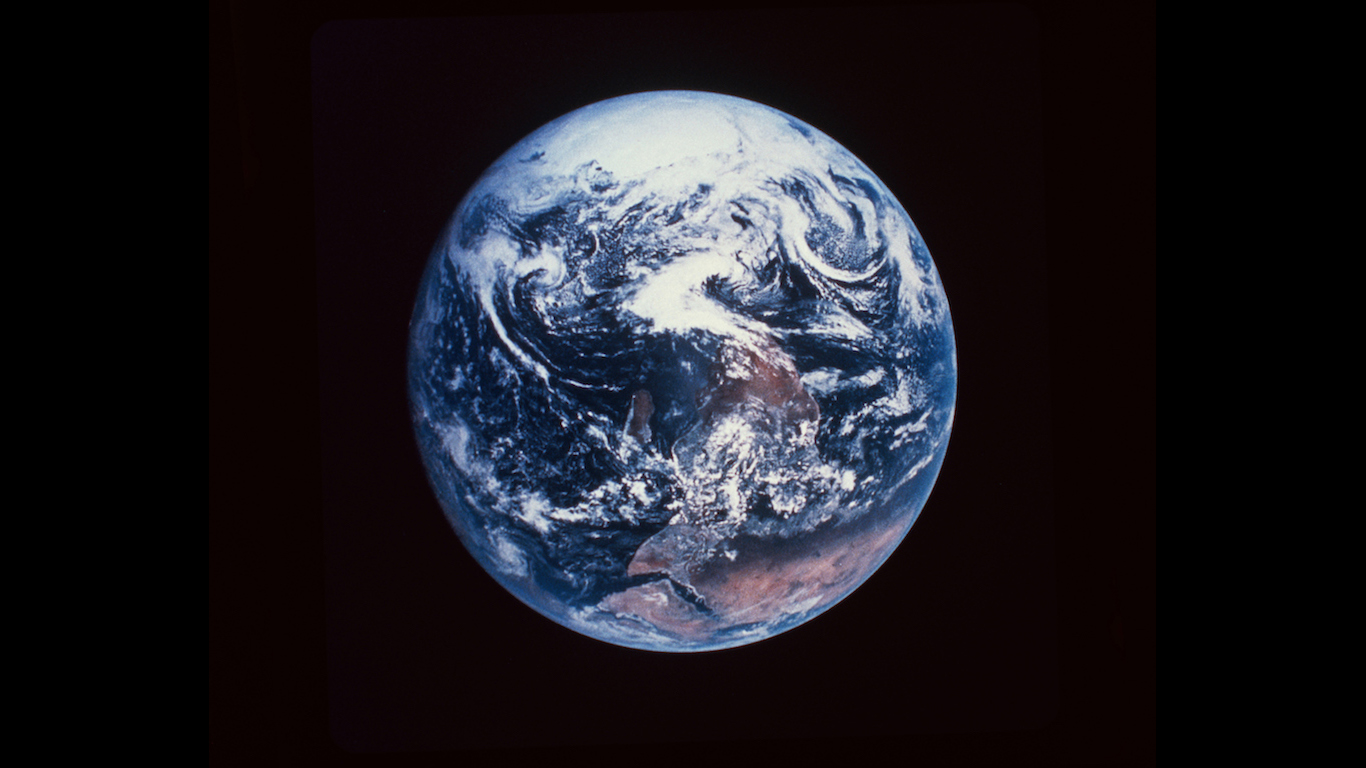
Planet Earth’s north magnetic pole moves around — a lot. Over the past 50 years, it has wandered around by about seven miles per year. It is moving so fast that the U.S. National Centers for Environmental Information (NCEI) updated its World Magnetic Model in February, months ahead of its next scheduled update at the end of this year.
The reason for the movement is a change in the earth’s molten outer core, a 2,000-kilometer thick liquid layer between the planet’s solid mantle and inner cores that remains in constant motion due to convection. A team of researchers led by Yale’s Kanani K.M. Lee has discovered that molten iron alloys containing silicon and oxygen, similar to alloys found in the earth’s outer core, form two distinct liquids under conditions like those in the core itself. That separation into two liquids is called immiscibility.
Sarah Arveson, a graduate student member and lead author of the study, put it this way: “We observe liquid immiscibility often in everyday life, like when oil and vinegar separate in salad dressing. It is surprising that liquid phase separation can occur when atoms are being forced very close together under the immense pressures of Earth’s core.”
The earth’s outer core, while it is liquid, is not the source of magma, the underground stuff that surfaces occasionally as lava eruptions from some of the planet’s most dangerous volcanoes.
[nativounit]
The constant motion of the earth’s liquid outer molten core keeps the liquids well mixed but forms a distinct layer along the top edge of the outer core that slows down the passage of seismic waves through the outer layer. Although scientists have proposed several theories to explain why the waves travel more slowly through that layer, the Yale researchers are the first to provide experimental evidence of how it works. The research team’s results are expected to help scientists figure out what’s been happening to the planet’s magnetic field throughout history.
And what a history it is. Over the past 83 million years, the earth’s north and south poles have reversed 183 times, the last time 780,000 years ago. Each reversal takes about a thousand years to run to completion. A weakening of the earth’s magnetic field has been taking place for about the past 150, and some scientists believe this signals that another reversal is occurring now.
In 2015, the last time the NCEI updated its model, the difference between magnetic north and geographic north, called declination, had changed by about 2.5 degrees over the 22 years that the Denver, Colorado, airport had been operating. Declination is important for providing accurate navigation systems, air traffic management and GPS services.
[recirclink id=545415]
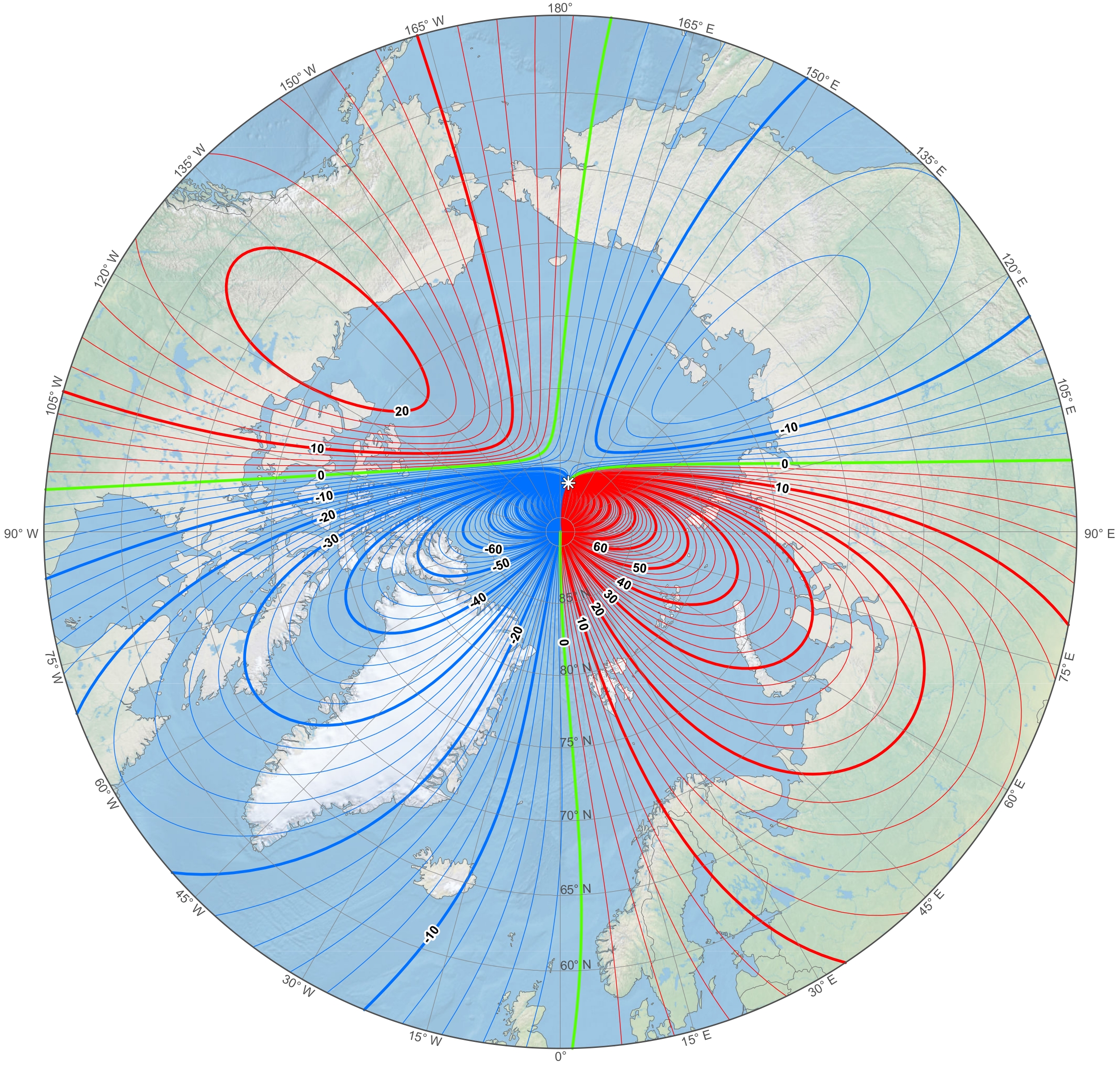
In the February update to the World Magnetic Model, the NCEI moved the earth’s magnetic pole further away from the Canadian Arctic and closer to Siberia. The white star in the following illustration shows the current location of magnetic north in relation to the geographic pole.
.
[wallst_email_signup]













 Top Gaining Stocks
 Top Losing Stocks