


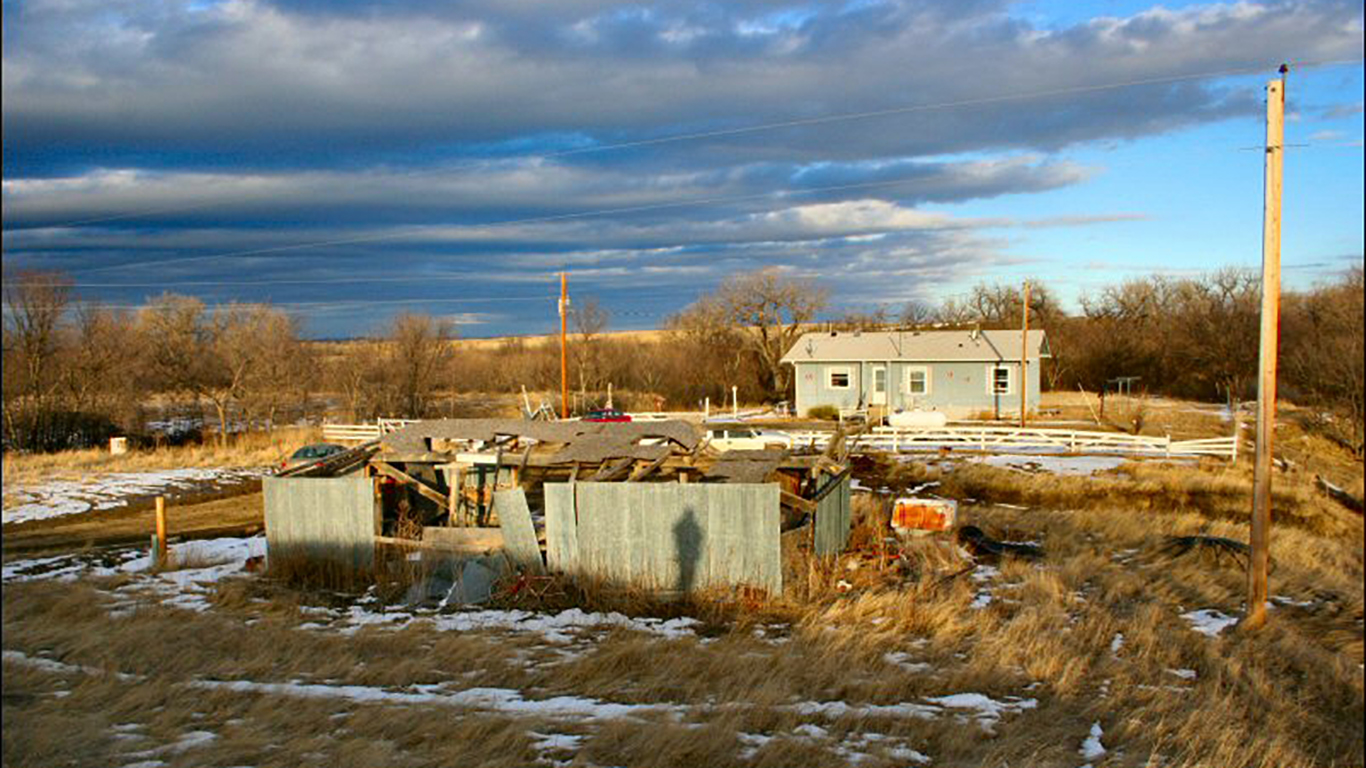
The American dream is based on the prospects of limitless opportunities, particularly financial ones. The fate of Americans is in their own hands. The hardest working and those with the most enterprise and the most guts can craft themselves into what they want to. In some places in America, that dream is out of reach early in life, particularly because people lack the basic foundations of education and family structures that nurture the ability to succeed in later life. In one county, in particular, these foundations are almost completely gone.
In short, the American dream is based on the assumption that success depends on one’s choices. However, broader conditions related to the community and environment, particularly during one’s childhood, also can play a considerable role.
The Equality of Opportunity Project (EOP), which is now part of the Opportunity Insights program at Harvard University, has reviewed the estimated economic impact of growing up poor in nearly 3,000 county and county equivalents in the United States. 24/7 Wall St. reviewed the report to identify the counties with the least upward mobility among low-income populations.
To determine economic mobility, the EOP estimated the income of young adults after growing up in a low-income household in each county. In the worst-off counties in America, those with the worst upward economic mobility nationwide, income losses were the highest. A 26-year-old who grew up in a low-income household in one of these counties earns an annual income of anywhere from $201 to $484 less for each year of childhood spent there than the national income per capita among 26-year-olds. Depending on how many years and the average annual loss, this can amount to thousands of dollars in lost income every year.
[nativounit]
Environmental conditions such as living below the poverty line, being raised by a single parent or even having parents with lower educational attainment have all been shown to have a negative effect on the likelihood of upward mobility later in life. Economic opportunity also tends to be limited in counties with extremely high unemployment.
Several of these economically disadvantaged areas contain an American Indian reservation. Native Americans commonly face extreme generational poverty resulting, in part, from their historical mistreatment by the U.S. government. There are also some unique conditions associated with reservations that may affect upward economic mobility. For example, reservation land is often communally owned, making it difficult for local residents to build wealth through homeownership. Here are the states with the most Indian reservations and tribal areas.
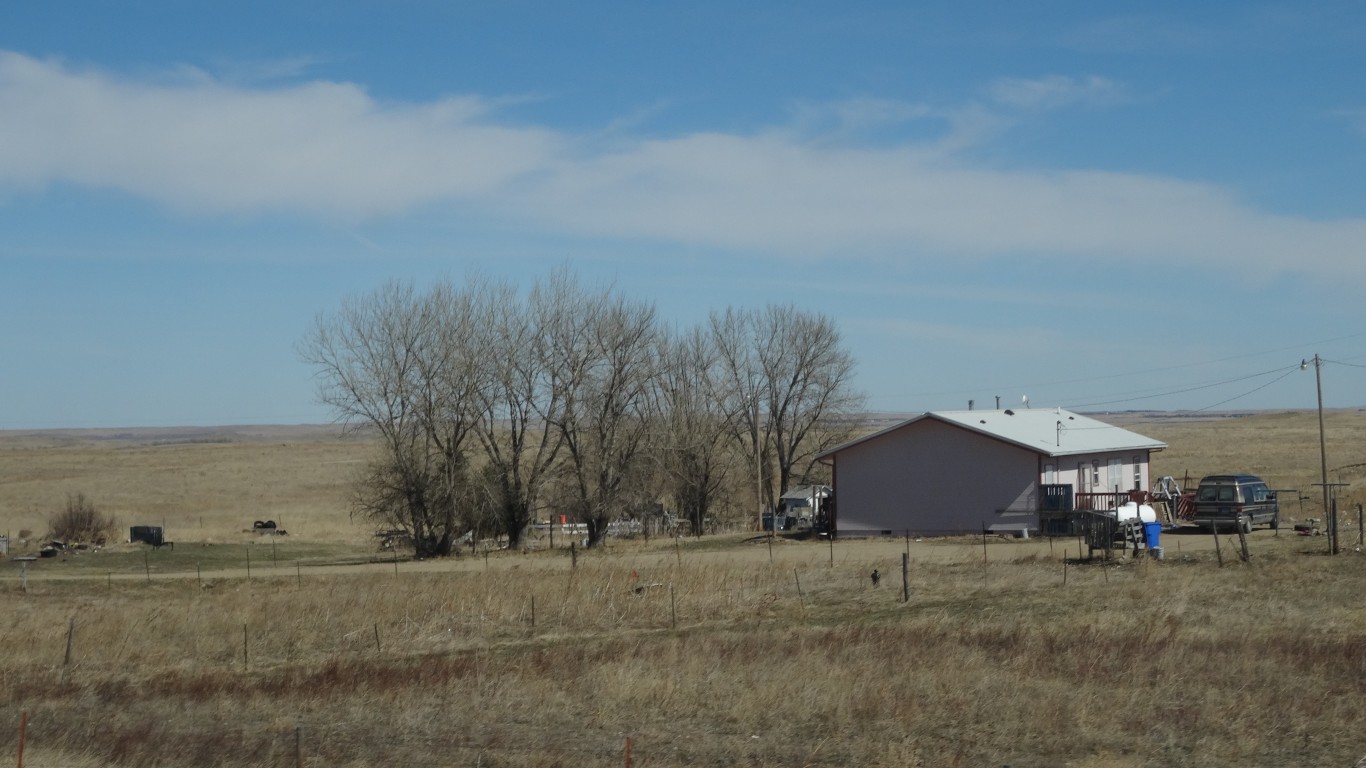
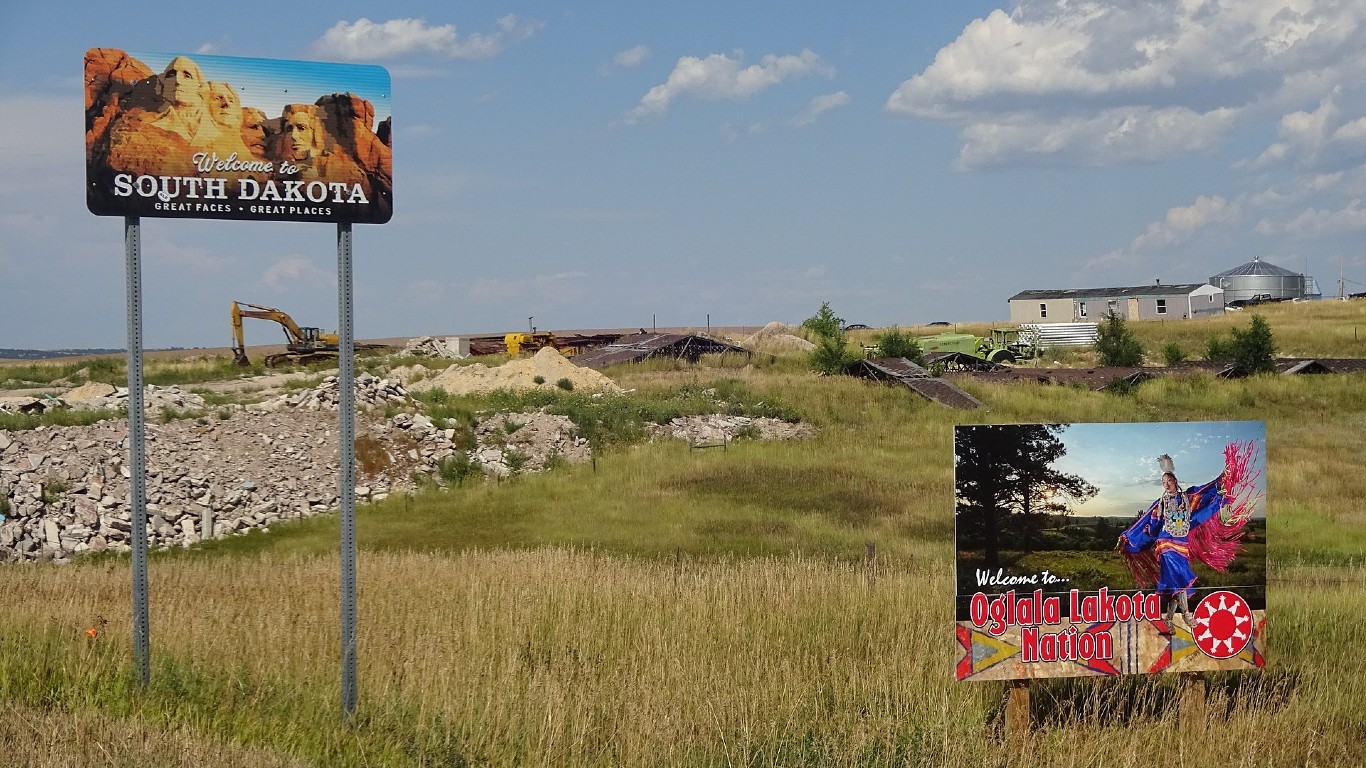
So, it comes as no surprise that the county where chances of attaining the American dream have virtually disappeared is populated almost entirely by Native Americans. Oglala Lakota County, South Dakota, posts an average annual income loss per year of childhood residence at $484. Household income per capita is a remarkably low $13,647. The poverty rate is 49.3%, which is about five times the national average. This figure certainly will have gone up since the start of the pandemic induced recession. Unemployment was 10% in December 2019. Based on jobless trends since then, the number easily could have doubled. The country has a population of 14,335.
Oglala Lakota County ranks as the worst for upward economic mobility nationwide for several reasons. For each year spent in the county as a child living in a low-income household, a 26-year-old earns a staggering $484 less than the national income per capita for that age, which is the biggest income loss of any county in the country. The county is home to part of the Pine Ridge Reservation, and nearly 90% of county residents are American Indian, a group that has long struggled economically due to a range of historic factors.
Those who have acquired an education are more likely to earn better wages and to transcend a low-income upbringing. In Oglala Lakota County, 76.0% of adults have a high school diploma and only 11.8% have a bachelor’s degree, each well below the national shares of 87.7% and 31.5%, respectively.
While the current recession may rob many people in the United States of their opportunity to have the American dream in their future, for the residents in one place, that chance is close to zero.
[recirclink id=769144]
[wallst_email_signup]









 Top Gaining Stocks
 Top Losing Stocks