


“What a drag it is getting old”–“Mother’s Little Helper (The Rolling Stones, 1966)
America’s population has aged rapidly recently. The Census released a report in 2020 that showed the number of people 65 and older increased by 34.2% from 2010 which translates to a growth of 13,787,044. Dr. Luke Rogers, chief of the Census Bureau’s Population Estimates Branch commented: “The first Baby Boomers reached 65 years old in 2011. Since then, there’s been a rapid increase in the size of the 65-and-older population, which grew by over a third since 2010. No other age group saw such a fast increase.”
Age has its disadvantages. Despite the fact that older Americans tend to have higher net worths than their younger counterparts, many live below the poverty line. Older Americans suffer from obesity problems more than young people. They also live alone more, live in nursing homes more, and are much more likely to have heart disease, cancer, and Alzheimer’s disease. Social Security and Medicare offer some safety net, but Social Security payments are relatively modest.
[nativounit]
And, of course, older Americans are more likely to be retired. With retirements at historic levels, 24/7 Wall St. created an index of over a dozen key socioeconomic measures to identify the worst state to grow old in. The measures were chosen to gauge the health, financial well-being, safety, and social engagement of 65 and older populations in each state. States are ranked from best to worst.
The states that rank as the best places for older Americans to live are generally those that have higher than average life expectancy at age 65, high incomes in retirement age households, safe streets, and high-levels of social engagement, among other attributes. The top states are mostly located in the Northeast and the West. Meanwhile, the worst states are disproportionately concentrated in the South.
It is important to note that this is an analysis of an aggregate of conditions and is not necessarily an accurate reflection of quality of life for older residents of a given state at a personal level.
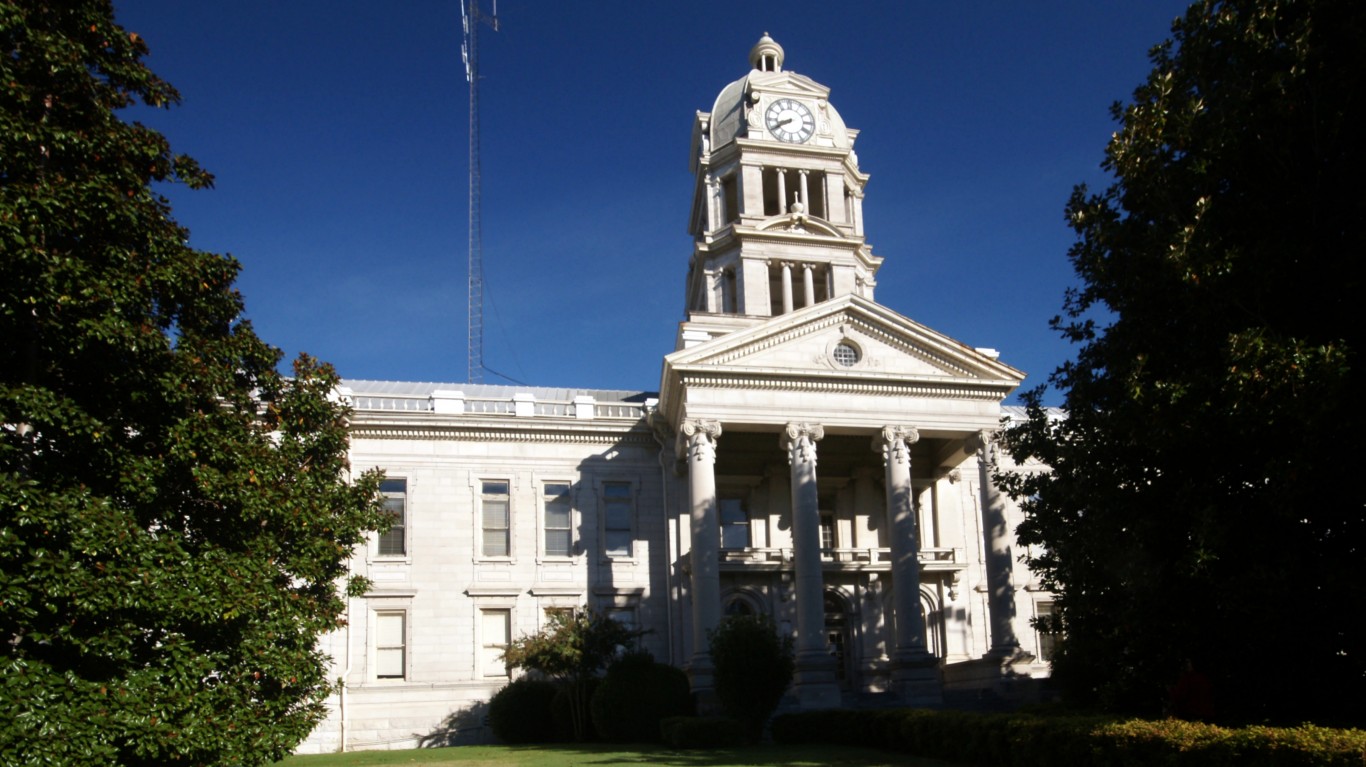
The worst state to grow old in is Mississippi. Here are the details:
> Pct. of pop. age 65+: 16.4% (19th lowest)
> Avg. earnings 65 & older households: $49,422 per year (7th lowest)
> 65 & older homeownership rate: 82.3% (9th highest)
> Life expectancy at age 65: age 82.5 (the lowest)
Mississippi ranks as the worst state in the country for older Americans. Life expectancy at age 65 in Mississippi is just 17.5 years, the lowest in the country and two years below the national average. Older Mississippi residents also appear to be at greater risk of financial insecurity. The poverty rate among those 65 and older in the state of 13.2% is the second highest in the country and well above the 9.4% national rate. Additionally, the average annual earnings among 65 and older Mississippi households stands at just $49,422, about $14,100 below the national average.
Remaining socially engaged throughout retirement can be critical to maintaining a high quality of life. In Mississippi, older residents are less likely to volunteer based on average annual hours of volunteer work per year, and are less likely to belong to a club or group than the typical retirement age American.
Methodology: To determine the worst state in which to grow old, 24/7 Wall St. reviewed several statewide as well as 65 and older population-specific data. The data includes measures in four categories: income, health, education, and environment and access. We created four indices for each of these four broad categories.
To construct the indices we used the min-max normalization method. For reference, a similar methodology was used in constructing HelpAge International’s Global AgeWatch Index and the United Nations Human Development Index.
Income
The percentage of 65 and over households with supplemental retirement income, the median household income for the 65 and over population, and the homeownership rate for the 65 and over population are one-year estimates from the U.S. Census Bureau’s 2019 American Community Survey. The pension funded ratio as of 2019 came from The Pew Charitable Trusts.
Health
The percentage of non-institutionalized people 65 and over with a disability came from the census. We also included healthy life expectancy at 65 from the Centers for Disease Control and Prevention’s National Vital Statistics System for 2018. The percentage of adults who reported not having a personal doctor in 2020 came from the Kaiser Family Foundation. The age-adjusted elderly mortality rate per 100,000 people 65 and over from 2018 to 2020 in each state is also from the CDC.
Education
The share of people 65 and over with a bachelor’s degree or higher came from the ACS.
Environment and Access
2020 violent crime rates are from the FBI, and the share of workers who walk or use public transportation and the percentage of population 65 years and over are from the ACS. The percentage of the 65 and over population that did favors for or with their neighbors at least once a month and the average number of hours spent volunteering by the 65 and over population in the last 12 months came from the Current Population Survey’s September 2019 Volunteering and Civic Life Supplement of the Census Bureau.
Click here to read The Worst States to Grow Old In
[wallst_email_signup]










 Top Gaining Stocks
 Top Losing Stocks