


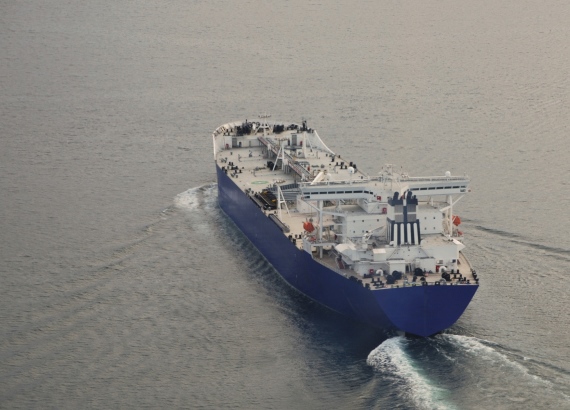
Merrill Lynch maintains that Exxon Mobil Corp. (NYSE: XOM) and BP PLC (NYSE: BP) are its preferred global oil stocks. This is based on their improving portfolio stability and a development outlook that includes improving cash margins, which underpin an inflection point in free cash flow. However, Merrill Lynch is expanding this peer group for global oils further to include ConocoPhillips and Total. Specifically, the upgrades to Neutral from Underperform.
The least preferred global oils out of this peer group would be Royal Dutch Shell PLC (NYSE: RDS-A) and Chevron. Hence Chevron’s downgrade to Underperform. Below are some details from the Merrill Lynch report.
READ ALSO: UBS Sees 4 Large-Cap Energy Stocks as Possible Acquisition Targets
Chevron has planned growth of roughly 20% through 2017 and management has forecast an expansion in margins.
The risk is that Chevron is still burning cash in 2017 in terms of $100 Brent. While this improves at $110, there is a greater upside for other U.S. names on the same basis. A projected increase in net debt is not a concern, as it can act as a differentiating headwind for translating top line growth to equity appreciation.
Considering ConocoPhillips in the same peer group, the analysis suggests a more favorable outlook than Chevron. ConocoPhillips evaluated against this large cap peer group showed modest top line growth and a dividend funded from debt, which have acted as twin headwinds. Merrill Lynch concludes that ConocoPhillips fits better in the peer group of global oil majors, where its competitive position looks more favorable than Chevron in particular over the next 12 months.
In Europe, BP is considered a preferred “supermajor” that covers its dividend with free cash flow. It is estimated to have roughly more than $20 billion worth of headroom on its balance sheet. This extra cash would suggest that there is no dividend risk and that the company is growing faster than its European counterparts.
Total received an upgrade based on its relative positioning in terms of production from long life assets, although it does not expect free cash flow coverage of dividends before 2017.
Royal Dutch Shell remains unchanged at Neutral with limited upside potential to fair value.
READ ALSO: BP Gross Negligence Ruling Could Cost Billions of Dollars More in Fines
Merrill Lynch’s take is that the majors are acting bearish, with yield playing a key role in underpinning relative performance. Exxon retains the best combination of growth and margin improvement that can drive a step change in free cash flow. However, Chevron bookends the global sector view, with prospects for equity value appreciation increasingly dependent on higher oil prices. If applied to the sector as a whole, Chevron still screens with limited upside potential.








 Top Gaining Stocks
 Top Losing Stocks