



It’s official. President Trump withdrew the United States from the Paris climate accord. The news was covered from multiple angles by the media, outside nations and even by corporate leaders. Many people are unhappy about the move, but this move also was telegraphed months before the election. Many industry watch groups already had signaled and predicted this outcome ahead of the actual exit.
The investing population often makes very different bets around events, and they often take the opposite side regardless whether they otherwise feel happy or sad about news. Ultimately, investors focus on what to expect rather than focusing on what their personal opinion might be. In fact, even when good news comes out as expected, there is often a yawn or a sell-the-news reaction in the financial markets. And sometimes investors buy into or right after what seemed like bad news if you just relied on headlines or public sentiment.
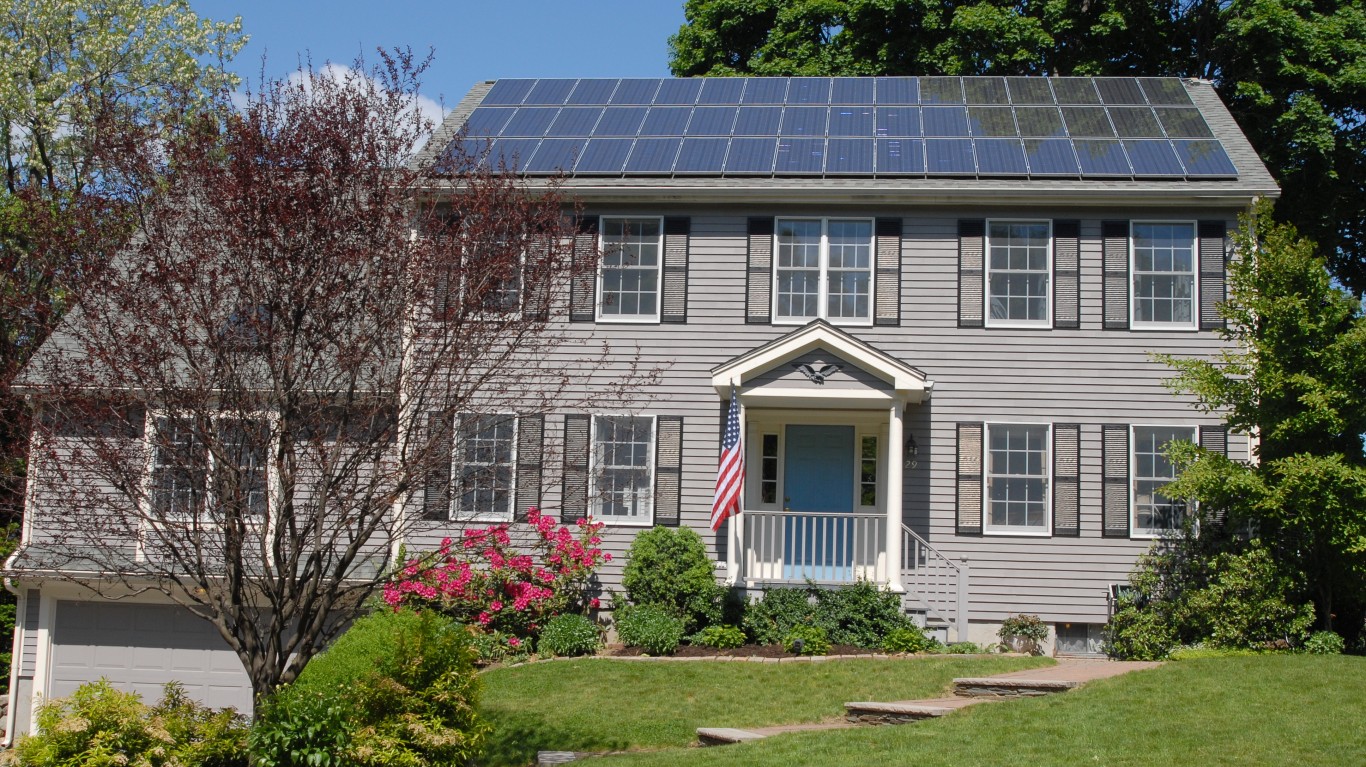
The immediate industries that have the most to win and lose around climate change are solar, alternative energy, renewable energy, coal, oil and gas, and other fossil fuels. However, these industries did not translate into an obvious outcome in the financial markets. Does it seem odd that solar hardly budged or that coal and oil fell?
What many industry watchers may have overlooked is that the global investment in clean energy already had posted a big decline in 2016. This was the first annual decline in years, and it was long before Trump became president.
[nativounit]
Another consideration about the U.S. exit of the Paris accord will not mean that alternative energy and renewable energy will be killed in this country or elsewhere. Many industries and companies already had vowed to continue their moves to clean and renewable energy in the years ahead. Many fossil fuels companies that were formally in favor of the Paris accord will continue to invest in renewable and clean energy. Quite simply, the president’s decision will not change those trends.
24/7 Wall St. looked at some of the key exchange traded funds and go-to alternative energy and renewable energy companies to see what really happened to their shares ahead of and after the announcement. Ditto in coal and oil.
Here are some of the key reactions, with before and after prices for a comparison. Color has been added in some of the names.
Guggenheim Solar ETF (NYSEMKT: TAN) was trading down one cent at $18.54 late on Friday, up from the $18.40 close a week earlier. This ETF has a 52-week trading range of $16.45 to $22.45.
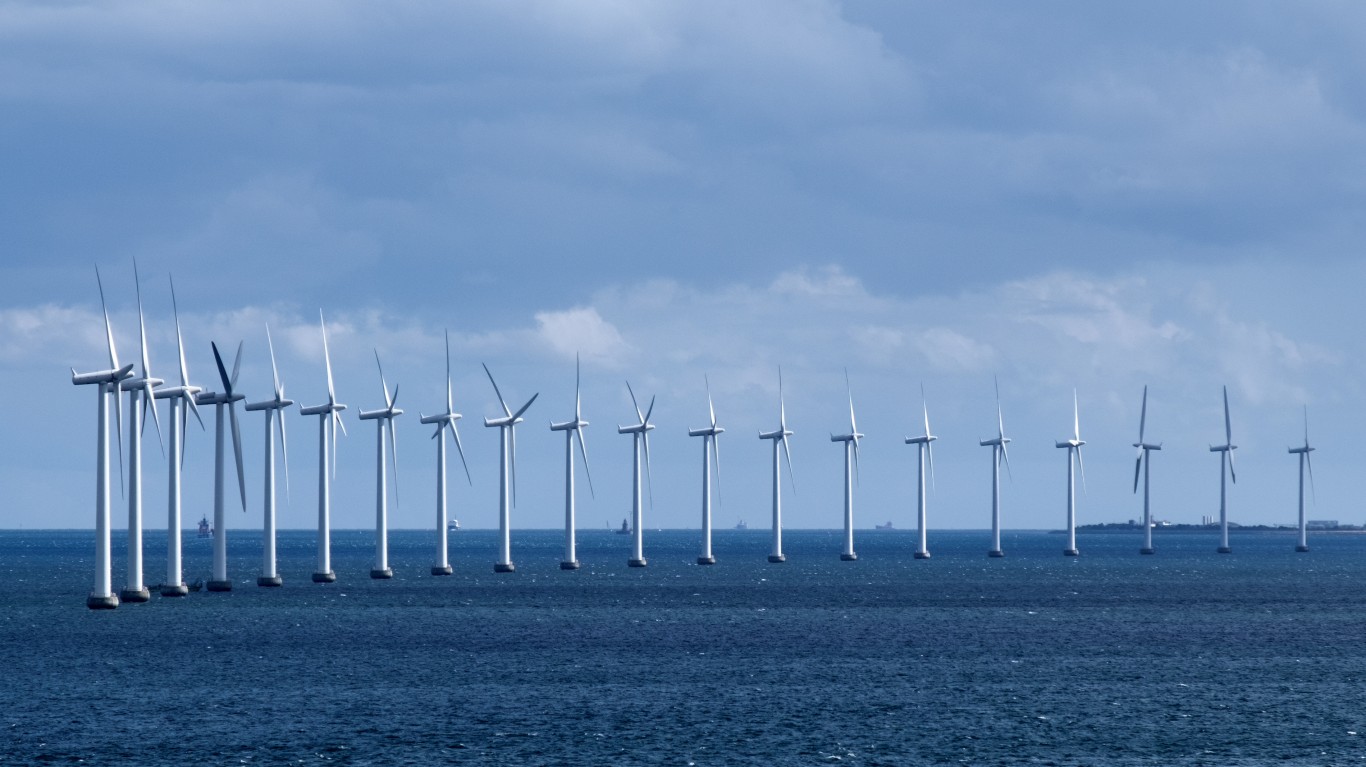
The First Trust Global Wind Energy ETF (NYSEMKT: FAN) was down all of two cents at $13.50 late on Friday, versus $13.49 a week earlier. The ETF was trading at $12.80 back on the November election day and closed at $12.40 the following day. Its 52-week range is $11.35 to $13.76.
The PowerShares WilderHill Clean Energy ETF (NYSEMKT: PBW) was down by just a penny to $4.17 late on Friday, compared with $4.15 a week earlier. This ETF was trading lower at $3.65 on election day, but it went to $3.58 the following day. It has a 52-week range of $3.41 to $4.29.
The VanEck Vectors ETF Trust – VanEck Vectors Oil Services ETF (NYSEMKT: OIH) should have been considered a big winner from exiting the Paris agreement because it tracks oil services providers rather than alternative energy service providers. Guess again, with oil’s sell-off having continued, its shares were down 2.1% at $25.63 in the midday session on Friday. The Oil Services ETF was trading at$27.53 ahead of OPEC’s oil cut extension announcement, and its 52-week range is $25.42 to $36.35.
The VanEck Vectors Coal ETF (NYSEMKT: KOL) actually traded lower by 0.7% at $12.68 on Friday, and that was down from $12.77 the prior day when the climate accord exit was announced. Isn’t coal supposed to be the big winner if the administration has made promises to the coal industry? It turns out that the world’s utilities were already going to rely less on coal in the years and decades ahead, regardless of the climate accord. This ETF has a 52-week range of $8.23 to $14.74, and it was valued around $13.50 a share around the November election.
24/7 Wall St. also wanted to look at some of the key stocks that should have been deemed big winners or losers as well. Again, the headlines and the sentiment are often different than what markets were expecting.
First Solar Inc. (NASDAQ: FSLR) is the king of U.S. solar companies, with a 44 billion market cap. Its stock was down just 0.6% at $38.08 in Friday’s midday trading. This was a $36.84 stock a week earlier, but it did trade up to above $39 ahead of climate accord withdrawal announcement. First Solar has a 52-week trading range of $25.56 to $51.30, and this was a $26 stock as recently as April.
SunPower Corp. (NASDAQ: SPWR) was actually up 1.1% at $8.08 midday on Friday, up from $7.95 a week earlier. It has a 52-week range of $5.84 to $17.60. Its stock was under $7 around the November election.
Peabody Energy Corp. (NYSE: BTU) was down almost 5% at $22.93, and this is one of the kings of coal. Peabody Energy shares have a range of $22.61 to $28.47 over the past year, and it has a $2.2 billion market cap. It was trading at $24.76 a week earlier.
Arch Coal Inc. (NYSE: ARCH), another U.S. coal king, was down 2% at $69.92 midday on Friday. Its stock has been largely range-bound in 2017, and it has a $1.75 billion market cap.
[wallst_email_signup]






 Top Gaining Stocks
 Top Losing Stocks