


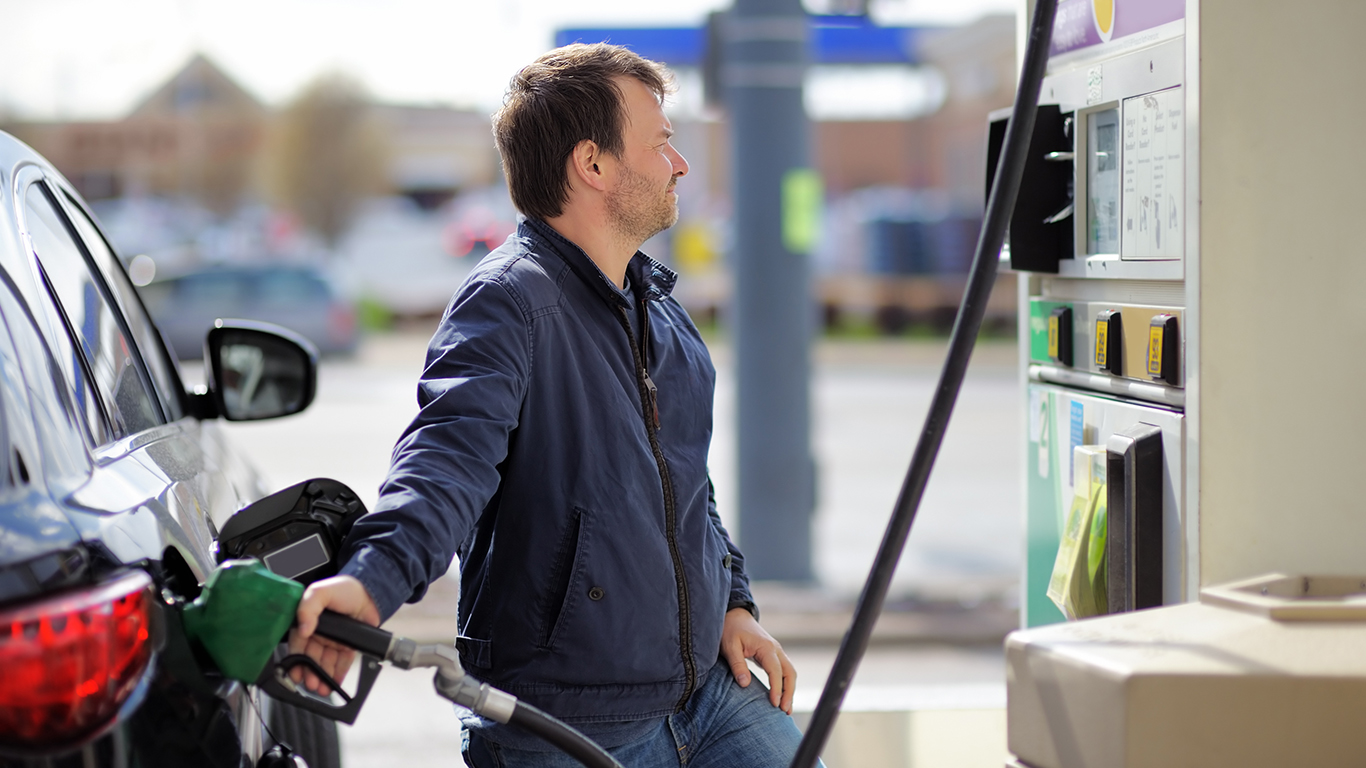
U.S. drivers are already enjoying a year-over-year per-gallon cost savings of $0.24 for regular gasoline. Moreover, Friday’s national average retail pump price of $2.60 is expected to drop by another 20 cents to $2.40 a gallon in the autumn.
This summer’s highest national average price came in early May, ahead of the Memorial Day start to the summer driving season, and pump prices have trended downward ever since. Given the trajectory of gas prices for the year to date, it’s virtually certain that the annual national average price for a gallon of regular gas will drop below 2018’s average of $2.72.
AAA spokesperson Jeanette Casselano said: “AAA predicts that fall gasoline prices will be significantly less expensive than this summer with motorists finding savings in every market across the country. Many factors are driving this decrease, but the low price of crude oil is chief among them.”
Of course, gas prices have fluctuated considerably over the years. This is what a gallon of gas cost the year you were born.
The highest year-over-year price differences are found in Ohio (six cents higher), Michigan (up five cents), Illinois (up two cents), South Dakota (up a cent) and Nebraska (also one cent higher). The states where gas prices are currently highest are Hawaii ($3.66), California ($3.58), Washington ($3.22), Nevada ($3.14) and Oregon ($3.06). High prices at the pump in these states are partially due to high gas taxes. These are the states with the highest (and lowest) gas taxes.
[nativounit]
The states where gas prices are currently lowest are Louisiana ($2.22), Mississippi ($2.23), Alabama ($2.26), South Carolina ($2.25) and Arkansas ($2.29). Gas prices in 48 states are about a penny lower than at this time last year.
Large U.S. commercial crude oil inventories and the inability of the Organization of the Petroleum Exporting Countries (OPEC) and its partners to drain global inventories, even with big cuts to production, are expected to keep crude oil prices in check for the rest of the year.
There is a catch, however. The fall hurricane season is about to begin, threatening to shut-in U.S. crude production from the Gulf of Mexico and inland oil fields and refineries near the Gulf Coast. Price spikes from these closures are likely. AAA points to a 30-cent per gallon spike in 2017 due to Hurricane Harvey as an example. When hurricanes hit populated areas, most gas stations typically run out of gas within five days, while recovery often takes much longer.
[wallst_email_signup]






 Top Gaining Stocks
 Top Losing Stocks