


In a press conference Thursday, the U.S. president told reporters that the administration is “trying to find some medium ground” to end the battle between Russia and Saudi Arabia over market share for oil. With both countries about to pump flat out, an already oversupplied market may simply drown in crude, with U.S. producers the victims.
At practically the same time as the president made his statement, the Texas Railroad Commission (TRC), which despite its name regulates the oil and gas industry in the state, said its members are discussing enforcing a cap on the state’s production, something the TRC last did in 1973 during the first oil embargo.
In an opinion article published by Bloomberg on Thursday, TRC commissioner Ryan Sitton asked the fundamental question, “Why shouldn’t our government step in to try to reinstate a more market-based approach?” He suggests that the federal government, “and our president, … make a deal [with the Saudis and the Russians] that stabilizes oil markets.”
The deal he proposes is that Russia, Saudi Arabia and Texas (the world’s third-largest producer on its own) agree to reduce production by 10% each. According to Sitton, such an agreement would return crude prices to their level of three weeks ago. On February 25, West Texas Intermediate (WTI) crude fetched nearly $50 a barrel. By Wednesday, March 18, the price had dropped to near $20.
That U.S. oil and gas industry stocks are in free fall is perhaps an understatement. Since February 24, the energy sector of the S&P 500 has lost more than 50% of its value. That decline is partly due to the price war between the Russians and the Saudis and partly due to the virtually instant drop in global demand for oil as the world tries to cope with the coronavirus pandemic.
[nativounit]
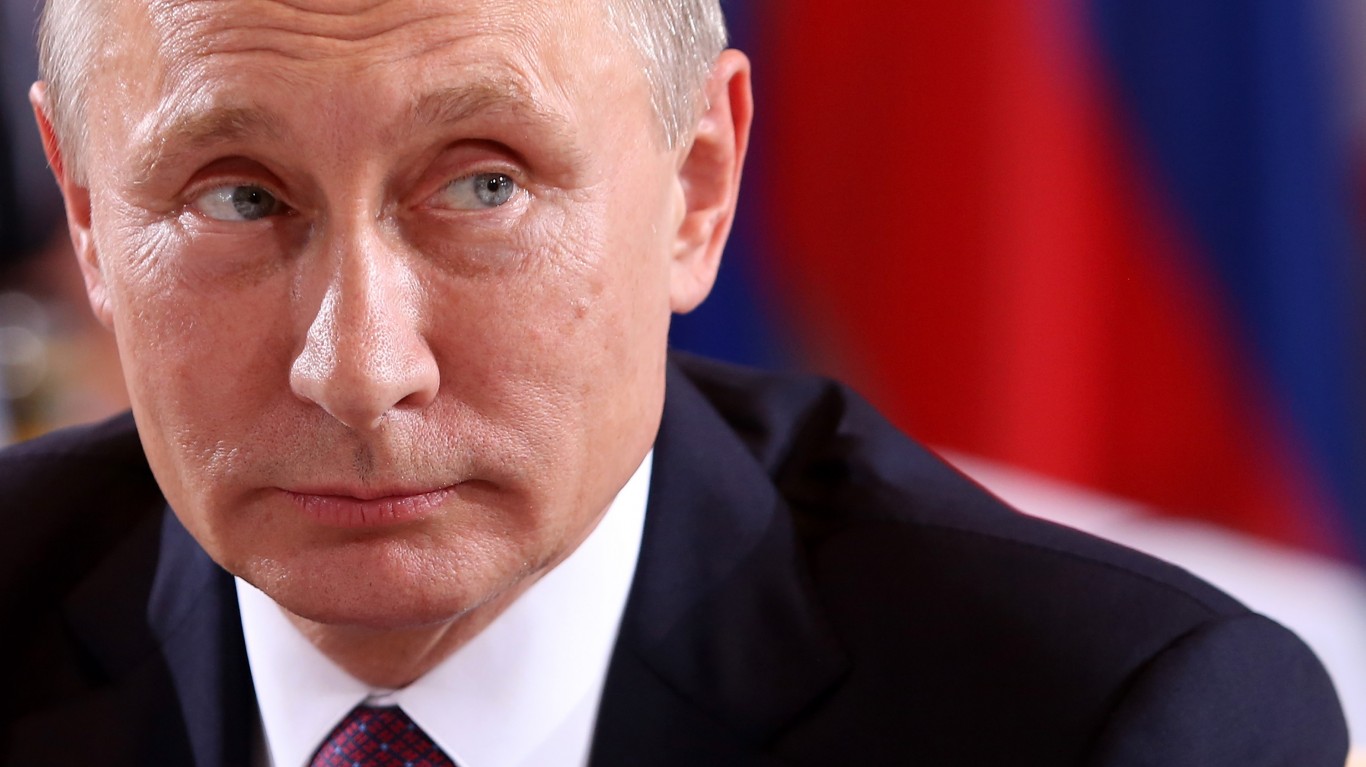
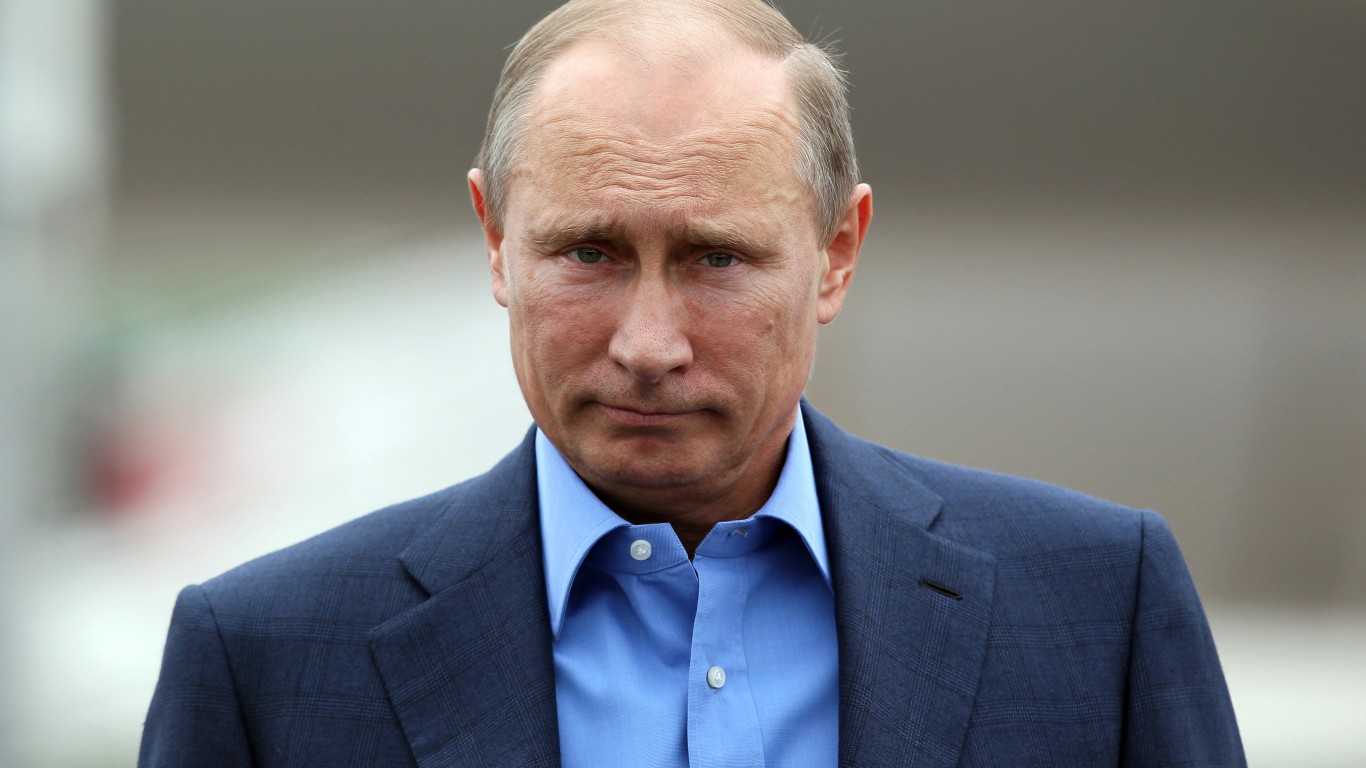
What could Trump offer the Russians that could persuade them to reduce production? Russian President Vladimir Putin has said repeatedly that Russia can survive low prices longer than the Saudis can. A Moscow-based analyst told Bloomberg that Putin has to protect both the country’s national interest and “keep his political image as a strongman.”
Under President Obama, the United States imposed sanctions on Russia by withholding advanced oil discovery and extraction technology and blacklisted the country’s state-controlled oil firm, Rosneft, following the Russian invasion of Ukraine. The Trump administration slapped additional sanctions on Rosneft for the company’s alleged trading of Venezuelan crude. These sanctions were imposed as a direct result of congressional and presidential approval of the Magnitsky Act.
The U.S. trade balance with Russia last year was a negative $16.5 billion. Of that total, $13.1 billion was down to U.S. imports of oil and petroleum products, most of which was fuel oil. Only imports of precious metals ($1.59 billion) and materials for making steel ($1.04 billion) exceeded $1 billion in value last year. Of U.S. exports, the largest component was civilian aircraft and parts ($1.19 billion). Total U.S. exports to Russia last year were valued at $5.79 billion, while imports were valued at $22.28 billion. Trade sanctions and tariffs, Trump’s preferred weapons, would hardly make a dent in Russian gross domestic product (GDP) ($1.64 trillion in 2019).
The 2019 U.S. trade balance with Saudi Arabia was a positive $846.4 billion, with aircraft and parts again the largest export ($1.24 billion). Of a total of $13.44 billion in imports from Saudi Arabia last year, more than $12 billion were down to oil and petroleum products. While trade sanctions and tariffs could have a harsher impact on the Saudis, exports to the United States amounted to less than 2% of the country’s GDP ($779.29 billion) last year.
Arguably, the United States is likely to have more influence on Saudi Arabia’s oil policy than on Russia’s. The United States spends a great deal of money safeguarding the oil riches of the Middle East. If Trump demands more payments from Middle Eastern countries (as he has done both with South Korea and Europe), the Saudis along with the rest could simply resist and force the president either to eat his words or force him to leave a gap in regional defenses that China (for example) would be only too happy to fill. They could also pay up, but that just kicks the can down the road and doesn’t solve the Texas oil industry’s problem.
As TRC commissioner Sitton implies, the Texas oil industry would prefer to use U.S. economic and political power to pressure Russia and Saudi Arabia rather than put billions into a bailout that might include what the industry would consider onerous conditions like preferred stock, a prohibition on buybacks, lower dividends or even no dividends.
Trump is faced with equally poor choices. Either he has to put the squeeze on two governments he would rather leave alone or he has to use federal money to bail out private industry, something that true-blue Republicans, like his former U.N. Ambassador Nikki Haley, find unpalatable.
[recirclink id=656714]
[wallst_email_signup]







 Top Gaining Stocks
 Top Losing Stocks