


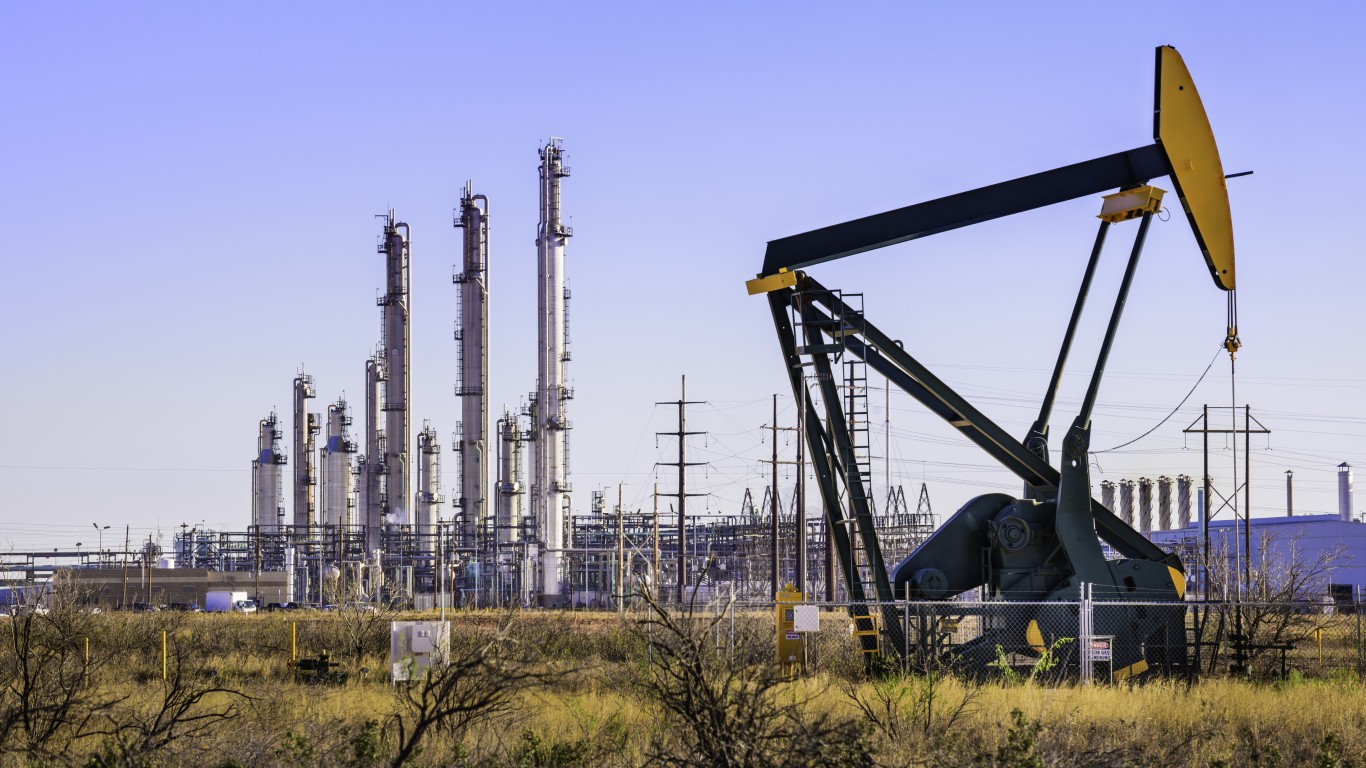
By early June, U.S. crude oil production is expected to be about 1.75 million barrels a day lower than recent levels. The reason should be painfully clear by now: a price collapse that culminated a month ago when May futures dropped into negative numbers.
Since then the crude market has sent prices for July futures (the current front month contract) to nearly $34 a barrel. At that price, many more U.S. barrels become profitable.
Oil market analysts at IHS Markit cite several reasons for the sharp drop in production. Operating cash losses, lack of demand and storage capacity, and no interest in giving away oil all played a role in the expected production decline.
According IHS Markit, much of that reduced production will return in the summer and fall if the price is right. Market fundamentals are expected to push margins back into positive territory:
This resumption of production may accelerate if WTI remains above $30 per barrel—a price that allows operators to cover their operating costs and that reflects improved storage availability.
However, about one third of the volumes (approximately 550,000 b/d) will stay off the market for the long-term—or at least until WTI prices push above $50/bbl, justifying the capital spending needed to repair the impact that some of the wells will have incurred from being shuttered.
[nativounit]
The analysts expect about 1.4 million barrels of daily production from U.S. shale oil regions to be shut in, along with about 550,000 barrels produced from so-called stripper wells that produce five barrels a day or less.
Raoul LeBlanc, vice president of financial services, IHS Markit, commented:
North America has, by far, the greatest number of producers (15,000-plus) and producing wells (more than one million), as well as the greatest diversity of subsurface conditions and operational technologies. This creates immense optionality within the system as companies evaluate and execute the mass shut-ins in response to the market.
West Texas Intermediate (WTI) crude has returned to its level of early March. But that level remains nearly 50% below a January high of around $64 a barrel. WTI last closed above $50 a barrel on February 24.
According to Wednesday’s report from the U.S. Energy Information Administration, domestic crude oil production totaled 11.6 million barrels a day last week, down from 12.2 million barrels a day for the same period a year ago. All-time high U.S. production totaled 13.1 million barrels a day for three weeks in February and March of this year.
[recirclink id=708170][wallst_email_signup]













 Top Gaining Stocks
 Top Losing Stocks