


 Recently, energy expects have argued that the United States might become independent from the need to import energy, or at least energy-producing fuels, from abroad. The time frame for this occurring varies, but a date two decades from now suffices as a period acceptable for most analysis.
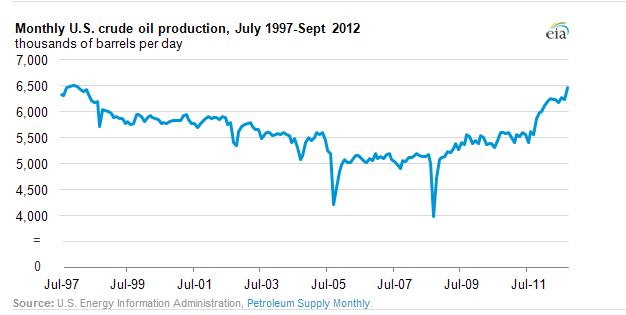
A great deal of the support for these contentions come from analysis with roots in anecdotal information on wind, and sun and shale. However, the footing for the argument has improved recently. The U.S. Energy Information Administration (EIA) put out a report saying American oil production reached its highest level since 1998. Americans can believe that the hope of energy independence is likely to come true. The balance of power between the oil producing nations and the U.S. could happen sooner than expected.
The EIA report was modest, barely a page long. Among its conclusions:
U.S. crude oil production (including lease condensate) averaged almost 6.5 million barrels per day in September 2012, the highest volume in nearly 15 years. The last time the United States produced 6.5 million barrels per day or more of crude oil was in January 1998. Since September 2011, U.S. production has increased by more than 900,000 barrels per day. Most of that increase is due to production from oil-bearing rocks with very low permeability through the use of horizontal drilling combined with hydraulic fracturing. The states with the largest increases are Texas and North Dakota.
Shale has come of age. Hydraulic fracturing may have a bad name, but it has produced remarkable results. North Dakota’s production from its Bakken region comes almost completely from this source.
The news will foster more debate over whether fracking hurts the environment more than it benefits the energy independence of the United States. The EIA offers some data for the argument on both sides. And it may well turn both public and political opinion in the direction of allowing a more broad use of hydraulic fracturing. Energy independence is no longer just a dream.
Douglas A. McIntyre







 Top Gaining Stocks
 Top Losing Stocks