


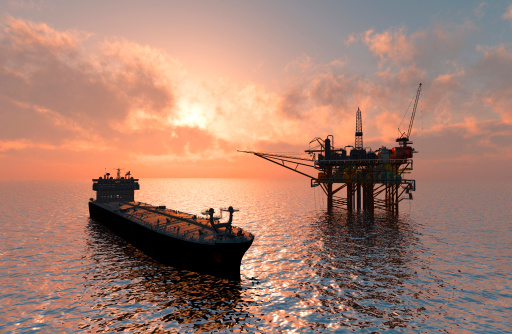
In case you don’t remember, the Jones Act was passed by Congress in 1920 and prohibits the domestic transport of cargoes between U.S. cities in vessels that are not built in the United States, at least 75% owned by U.S. citizens or entities, and manned by U.S. crews. The downside to this “America-first” policy is that tankers are much more expensive to build in the United States, driving up the per-barrel cost of transporting cargoes. Ultimately, consumers pay the tariff.
In addition to its purchase of the five tankers, Kinder Morgan also has acquired the rights to four additional Jones Act tankers of the same size to be delivered in 2015 and 2016 from San Diego’s NASSCO shipyard.
Put this acquisition together with recent news that Kinder Morgan is preparing to file an application to add 590,000 barrels a day of transportation on its Trans Mountain system from Alberta’s oil sands to the British Columbia coast, and what do you have? A new source of crude to replace the dwindling supply of Alaska North Slope crude that now feeds California refineries.
Transporting crude oil or refined products is more expensive than pipeline transportation but less expensive than railroad tank cars. Pipeline transportation costs around $4 a barrel, while rail transport could cost $10 to $12 a barrel. Coastal tanker ship costs run around $5 to $6 a barrel. Surprisingly perhaps, it costs just $2 a barrel to transport a barrel of crude from the Gulf Coast to a Canadian refinery because the oil can travel on foreign-flagged ships that were built elsewhere for a much lower price.
Of the five ships that Kinder Morgan acquired Monday, one transports refined products from the Gulf Coast to Florida, another transports refined products from Washington state to northern California and a third transports from Gulf Coast crude oil terminals to refineries on the Gulf and mid-Atlantic Coasts. Of the crude transports, one operates under a time charter with a division of BP PLC (NYSE: BP), one is chartered to a division of Royal Dutch Shell PLC (NYSE: RDS-A) and the third is under charter to an affiliate of Chevron Corp. (NYSE: CVX). The company’s two other tankers are listed as “in service with MSC, the U.S. Navy’s Military Sealift Command,” and operate worldwide.
Kinder Morgan must be pretty sure that it will get Canadian government approval for its proposed increase on the Trans Mountain pipeline. A competing proposal from Enbridge Inc. (NYSE: ENB) to build a new pipeline — the Northern Gateway — was approved by the government last week. The Enbridge pipeline has generated a lot of opposition from Canadian environmental groups and Canada’s First Nations and faces an uphill slog from its opponents.
The Trans Mountain expansion proposed by Kinder Morgan would follow the route of the existing pipeline for virtually all its nearly 620-mile run and would include new storage tanks and new berths at a coastal terminal to accommodate ships more than twice as large as the coastal tankers. Opposition to the expansion will be more difficult to mount because the Trans Mountain has been in service for 60 years, even though Kinder Morgan has owned the system only since 2005. The stiffest opposition is likely to be related to the terminal expansion in Burrard Inlet near Burnaby, B.C., where a 1,250 barrel spill occurred in 2007 after a construction crew hit an unmarked pipe
Kinder Morgan is taking something of a risk with this purchase. The Jones Act could be rescinded, but that seems unlikely given the state of the economy. Political support for eliminating the Jones Act would be vaporously thin. Another risk is that more pipelines will be built from the Bakken shale and other fields to refinery locations. That is possible, but given that pipelines have gotten a bad reputation in the past few years, building new ones will not be easy. The nearly $1 billion Kinder Morgan paid for the tankers is going to look cheap a few years down the road.






 Top Gaining Stocks
 Top Losing Stocks