


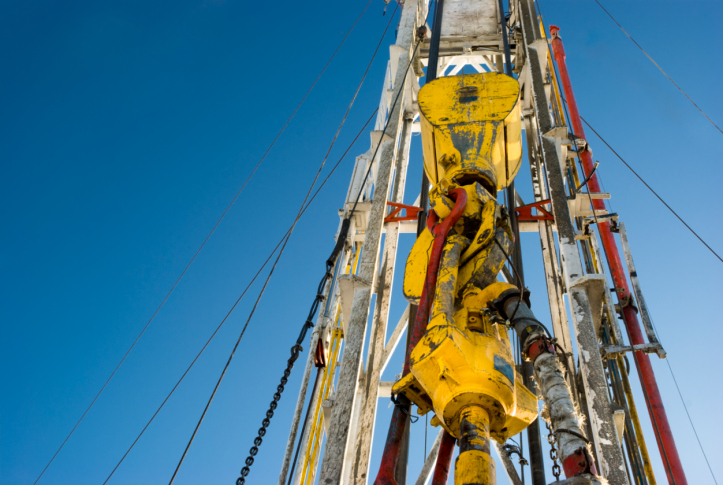
The total number of rigs drilling for oil in the United States last week came in at 1,499, compared with 1,536 a week ago and 1,382 a year ago. Including 341 other rigs mostly drilling for natural gas, there are a total of 1,840 working rigs in the nation, down 35 week-over-week, but up 83 year-over-year. The data come from the latest Baker Hughes Inc. (NYSE: BHI) North American Rotary Rig Count.
The year-over-year growth underlines the impact of the falling price of crude: the average price of a barrel of West Texas Intermediate (WTI) crude in December 2013 was $97.63. By June 2014 the price had risen to $105.79, and by November the price had dropped to an average of $75.79. That number very likely will tumble by about another $10 a barrel in December.
ALSO READ: 10 Huge Countries Without Their Own Oil
The two states losing the most rigs were California (-17) and Texas (-16). North Dakota lost three, while Oklahoma gained four. In the three biggest producing basins, rig counts fell slightly: the Permian Basin of west Texas lost three rigs to bring its total down to 536; the Eagle Ford Basin in south Texas lost two rigs and now has 204 working; and the Williston Basin (Bakken) has 179 working rigs, down two from the prior week.
Until crude prices rise, what we are likely to see is that as wells are completed the rigs are not put back to work. Monday’s posted price for Williston Basin sweet crude was just $37.19 a barrel, and Williston sour was all the way down to $25.08 a barrel. Eagle Ford Light crude sold for $50 a barrel, the same as WTI.
What these numbers indicate is that Bakken producers are paying about $13 a barrel in transportation and other costs to get their barrels to the U.S. Gulf Coast. At around $35 a barrel, it is not clear that drilling a new well will pay back its costs. WTI traded at around $53.40 a barrel Tuesday morning, which means that Williston sweet was probably going for around $30 a barrel. The only way that price makes sense is if the well is already drilled or in the middle of being drilled. As we have noted before, the threat to North Dakota’s economy gets more real every day.





 Top Gaining Stocks
 Top Losing Stocks