


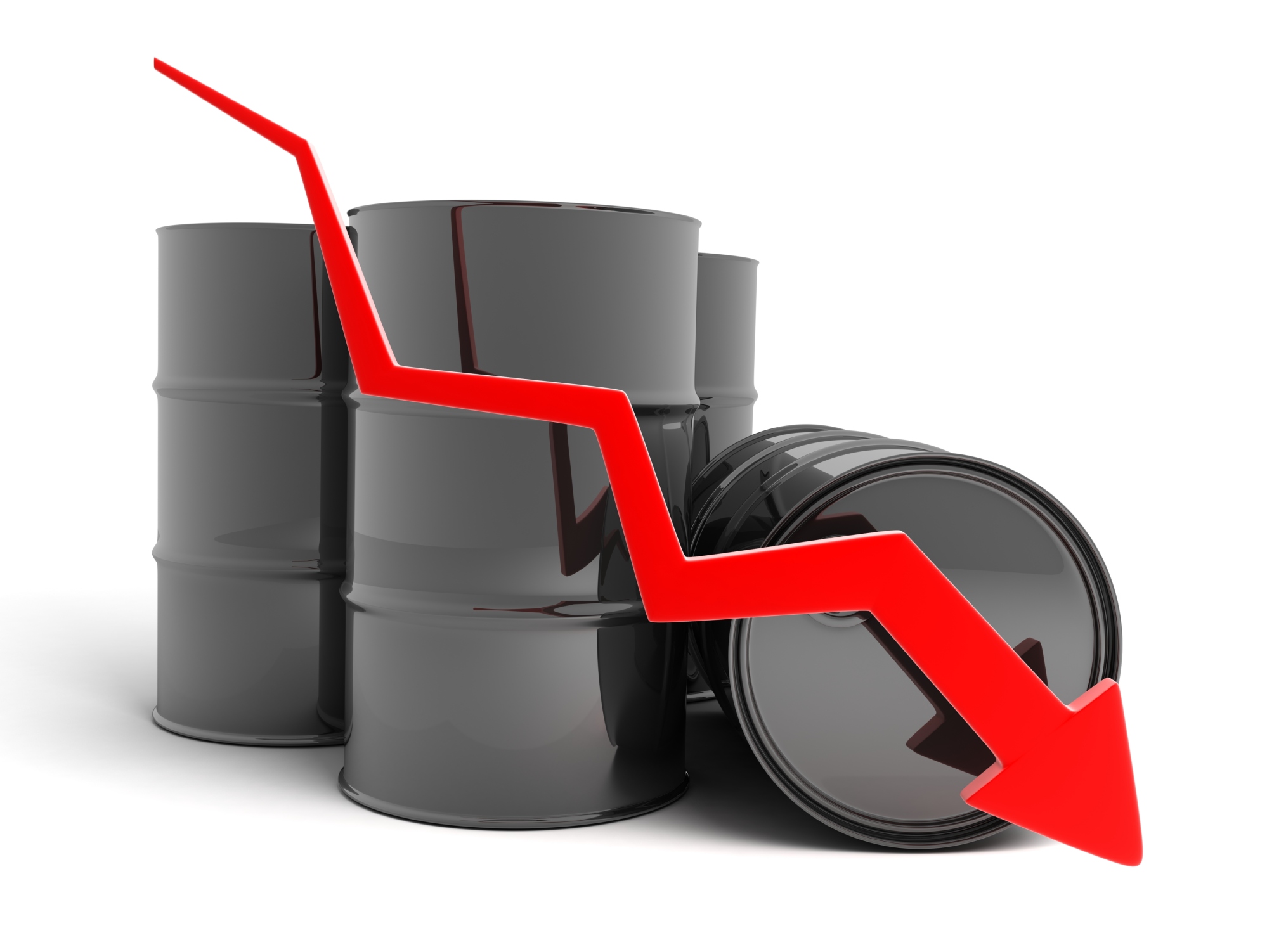
Last week analysts at Goldman Sachs said that prices may have to drop below $40 a barrel before the market rebalances. The analysts cut their price forecasts from $75 a barrel in the next six months to $39 and from $80 in the next 12 months to $65 for West Texas Intermediate (WTI). Prices for Brent crude were chopped from $83 and $90 a barrel for the same periods to new levels of $43 and $70 a barrel.
The analysts at J.P. Morgan had previously forecast an average price of $82 a barrel for Brent crude in 2015. J.P. Morgan also cut its forecast for 2016 prices from $87.75 a barrel to $56.80. The new forecasts were cited at MarketWatch.
A major concern regarding the price collapse is how the impact of these lower prices will affect broader market indexes. Because demand for crude has fallen as supply continues to expand, something has to give. And what has been giving so far are producers, drillers, services companies, lenders and oil patch workers. These impacts are hammering stock prices and are relatively easy to spot.
ALSO READ: Insiders Continue to Buy Stock as Market Sells Off
Less visible are the positive effects of the lower crude prices. As Gretchen Morgenstern pointed out in The New York Times over the weekend, the winners in a world of cheaper oil “far outnumber the losers.” She cites David Kotok, the chief investment officer at Cumberland Advisors, who estimates that the economic output of oil companies and related business could fall by $150 billion in 2015. That drop would be offset by a gain of about $400 billion in other parts of the economy as consumers receive the equivalent of a tax cut from the lower pump price of gasoline.
Morgenstern notes that the $200 billion that energy companies spent in 2014 on structures and equipment is not exactly chicken feed, but that it is not a very big piece of the total $17 trillion U.S. economy:
And even if the industry lost half its jobs — which it won’t — that would be equivalent to less than a single month’s gain for the overall economy, which added about 275,000 jobs a month last year.
An economist cited by Morgenstern, Ian Shepherdson, said:
The oil business and everything to do with it is a very small share of the economy. Could it possibly be more than 5 percent of G.D.P? No, and the other 95 percent of the economy is saying, “Thank you very much.”
The moral of the story seems to be that what you see when examining the decline in oil prices depends a lot on where you look. Without question the uncertainty that the lower prices are creating in the broader market are a big concern, but is that concern on the same scale as, say, the financial crisis that led to the Great Recession? Probably not.









 Top Gaining Stocks
 Top Losing Stocks