


With more than two months to go in the 2015 storage injection season, the U.S. Energy Information Administration (EIA) estimates that natural gas in storage at the end of October will total 3.867 trillion cubic feet, the second-highest October level ever.
The EIA also estimates that natural gas consumption in 2015 will rise from 73.5 billion cubic feet per day to 76.5 billion cubic feet, driven by the power generation sector where fuel-switching from coal to natural gas continues. Industrial consumption is expected to increase by 2.3% in 2015 and 5.0% in 2016 as new fertilizer and chemical plants come online. Only in the residential and commercial sectors is consumption expected to decline both this year and next.
Supply growth already exceeds demand growth, keeping prices down. Of the top 10 natural gas producers in the first quarter of this year, only one cut production. Southwestern Energy Co. (NYSE: SWN) raised production by 411 million cubic feet per day and Cabot Oil & Gas Corp. (NYSE: COG) raised production by 511 million cubic feet per day, according to a list prepared by the Natural Gas Supply Association. Only Exxon Mobil Corp. (NYSE: XOM) cut production. How can natural gas producers make a profit at these low prices and high production rates?
ALSO READ: The 10 Most Polluted Cities in America
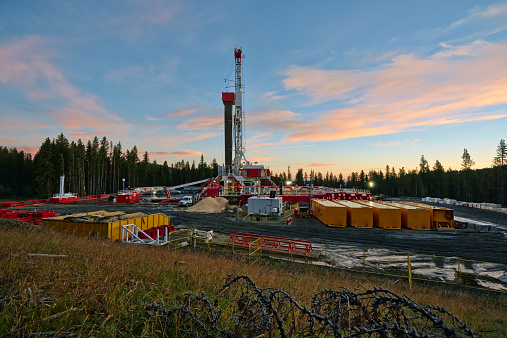
The basic answer is producers take advantage of advances in drilling and fracking technology, and they drill for gas in the places they believe have the most potential for producing the highest volumes. Right now, the most productive plays are the Marcellus and Utica shales.
The Marcellus and Utica regions account for about 85% of the growth in U.S. natural gas production since the beginning of 2012. A recent well drilled in southwestern Pennsylvania posted an initial 24-hour production rate of a staggering 72.9 million cubic feet per day, equal to 22.6 million cubic feet per day per every 1,000 feet of lateral drilling. Wells such as this, and others that are nearly as productive, could generate break-even at near $2 per million BTUs. (A million BTUs is roughly equivalent to 1,000 cubic feet of natural gas.)
Analysts at Platts offer some reasons for the continued natural gas production increases:
- Leasing contracts require the companies to produce or face a fine or, worse, the loss of the lease.
- Committed space on a pipeline moving gas from the field to a user. Most arrangements with pipeline companies require lessees to pay for the space on the pipeline whether the lessee fills it or not.
- Producers are lining up to take advantage of liquefied natural gas exports which are set to begin late this year.
- Eventually lower rig counts will result in lower production and higher prices. Like good Boy Scouts, producers want to be prepared.
- Any cash flow, no matter how small, is better than no cash flow.
The analysts had a few more suggestions, but you get the general idea. The situation reminds us of Samuel Johnson’s comment on second marriages: they represent the triumph of hope over experience. In addition to hope, however, natural gas producers are also used to the cyclical nature of the commodity market. But the question remains: is it really different this time?









 Top Gaining Stocks
 Top Losing Stocks