


[cnxvideo id=”655236″ placement=”ros”]Supply glut, the two words that seem to haunt the energy sector constantly. While that may remain a near-term issue, the longer term issue is demand, as well as the lack of reserve replacement. One country that may end up being the key to demand is China, and a new Jefferies research report makes the case that China’s oil and gas companies substantially cut capital expenditures in 2015, one year earlier than global peers. The result, they believe, has been a rapid decline in domestic output.
So who fills that huge output gap? The likely companies could be major international integrated oil giants that have the depth and reach to sell into the China market. We screened our 24/7 Wall St. research database for international integrated companies that may be the winners in a race to supply an oil-thirsty China.
Chevron
This stock is very solid story for investors looking to stay long the energy sector, and it is a preferred U.S. company to own now. Chevron Corp. (NYSE: CVX) is an integrated oil and gas company with worldwide operations in exploration and production, refining and marketing, transportation and petrochemicals. It sports a sizable dividend and has a solid place in the sector when it comes to natural gas and liquefied natural gas (LNG). Some on Wall Street estimate the company will have a compound annual growth rate of over 5% for the next five years.
The company’s Permian Basin assets are a goldmine, and that the Australian LNG business will transition from a yearly $8 billion capital consumption drag to a $2 billion to $3 billion contributor. Combined with the much lower overall capital spending for the 2016 to 2018 period, the company is poised to not only hang around, but end the sector slump in a much better position. The analysts note the Permian acreage is profitable at $40 a barrel.
CEO John Watson has made it clear that preserving the dividend for investors is the top priority. Wall Street analysts point out that although the company trades in line with its peers, the growth potential and solid balance sheet deserve a 10% premium.
Chevron investors receive a 4.2% dividend. The Wall Street consensus price target for the stock is $111.33. Shares closed trading Wednesday at $102.15.
[nativounit]
Exxon Mobil
This company remains a top Wall Street energy pick. Exxon Mobil Corp. (NYSE: XOM) explores for and produces crude oil and natural gas in the United States, Canada, South America, Europe, Africa, Asia, Australia and Oceania. It also manufactures and markets commodity petrochemicals, including olefins, aromatics, polyethylene and polypropylene plastics, and specialty products, and it transports and sells crude oil, natural gas, and petroleum products.
Top Wall Street analysts are very positive on the long term as the overall corporate strength of this massive integrated giant plays a significant part in the company’s usually solid earnings reporting pattern and in maintaining dividend coverage.
Exxon is also a very strong company from a financial standpoint. It has an AA+ credit rating and an outstanding debt-to-equity ratio of 0.23. It is free cash flow positive, with the company reporting free cash flow of $6.5 billion in 2015 and management cutting the capital expenditures budget for 2016. This is a sound investment to buy and hold forever.
Exxon investors receive a 3.45% dividend. The consensus price objective is $89.63. Shares closed most recently at $86.90.
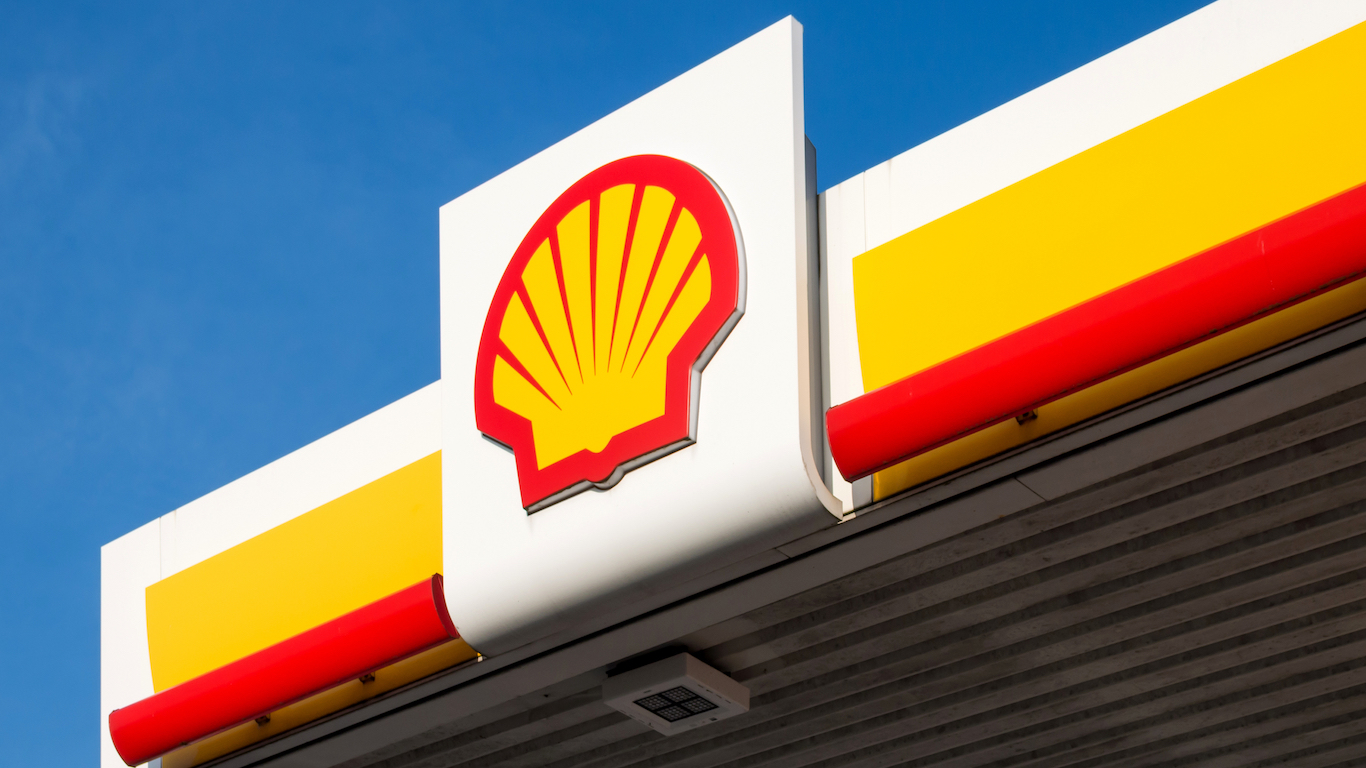
Royal Dutch Shell
This company has survived the plunge in oil pricing plunge as good as or better than any other major integrated stock. Royal Dutch Shell PLC (NYSE: RDS-A) operates as an independent oil and gas company worldwide through its Upstream and Downstream segments. The company explores for and extracts crude oil, natural gas and natural gas liquids.
Royal Dutch Shell also converts natural gas to liquids to provide fuels and other products; markets and trades crude oil and natural gas; transports oil; liquefies and transports gas; extracts bitumen from mined oil sands and converts it to synthetic crude oil; and generates electricity from wind energy.
In addition, the company engages in the conversion of crude oil into a range of refined products, including gasoline, diesel, heating oil, aviation fuel, marine fuel, liquefied natural gas for transport, lubricants, bitumen and sulphur; production and sale of petrochemicals for industrial customers; refining; trading and supply; pipelines and marketing; and alternative energy businesses.
The company generated 3.83 billion cubic feet per day of natural gas in the second quarter of this year from its integrated gas operations and another 6.40 billion cubic feet per day from its upstream operations. The company produced poorer-than-expected earnings in the second quarter, but it still ranks as one of the most profitable natural gas companies.
Royal Dutch Shell investors are paid a huge 6.56 % dividend. The consensus price target was not posted. Shares closed Wednesday at $48.72.
Total
This is another giant European energy giant, this one based in France. Total S.A. (NYSE: TOT) is a global integrated energy producer and provider, a leading international oil and gas company, and the world’s second-ranked solar energy operator with SunPower.
The company operates through three segments. The Upstream segment explores and produces oil and gas; ships, trades and markets natural gas, liquefied natural gas and liquefied petroleum gas (LPG); generates power; and mines and markets coal.
The Refining & Chemicals segment refines and produces petrochemicals and provides sealing, insulation, fluid transfer and transmission and transportation solutions, as well as offers chemical processes and services for electronics, surface finishing and semiconductor manufacturing. It is also involved in trading and shipping crude oil and petroleum products.
The Marketing & Services segment supplies and markets petroleum products, including automotive fuels, biofuels, home heating oil and heavy fuel oil, lubricants, LPG, asphalt, aviation fuel, additives and special fuels and special fluids through service stations for light vehicles and trucks.
The main drivers behind the company’s ability to stay profitable include an increase in oil and gas manufacturing and strong growth in the company’s very profitable refining division.
Total investors receive a 4.88% dividend. The consensus price objective is $54.40, and the stock closed on Wednesday at $47.19.
[wallst_email_signup]
These are the kind of large cap market leaders that make good sense in long-term growth and income portfolios. Investors may want to buy partial positions as the oil pricing could remain volatile through the fall despite the OPEC production cut.










 Top Gaining Stocks
 Top Losing Stocks