Oil Demand to Rise Past 2040, Earth Temperature to Rise

Photo of Douglas A. McIntyre
By Douglas A. McIntyre Updated Published
This post may contain links from our sponsors and affiliates, and Flywheel Publishing may receive compensation for actions taken through them.
Oil Demand to Rise Past 2040, Earth Temperature to Rise

© Thinkstock

If use of fossil fuels is supposed to be part of the plan to reduce global warming, its contribution may not kick in for decades. This is according to a report from the International Energy Commission.

In its World Energy Outlook, the authors wrote:

Global oil demand continues to grow until 2040, mostly because of the lack of easy alternatives to oil in road freight, aviation and petrochemicals, according to WEO-2016. However, oil demand from passenger cars declines even as the number of vehicles doubles in the next quarter century, thanks mainly to improvements in efficiency, but also biofuels and rising ownership of electric cars.

One of the great energy pollutants of the last century will drop in demand:

“We see clear winners for the next 25 years – natural gas but especially wind and solar – replacing the champion of the previous 25 years, coal,” said Dr Fatih Birol, the IEA’s executive director. “But there is no single story about the future of global energy: in practice, government policies will determine where we go from here.”

[nativounit]

So, new energy sources will grow, but not enough:

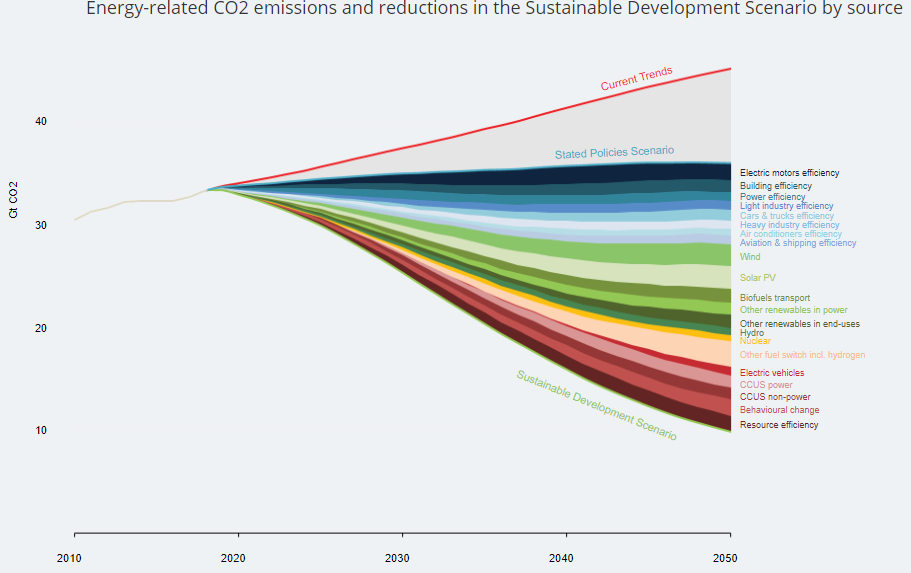
The Paris Agreement, which entered into force on 4 November, is a major step forward in the fight against global warming. But meeting more ambitious climate goals will be extremely challenging and require a step change in the pace of decarbonization and efficiency. Implementing current international pledges will only slow down the projected rise in energy-related carbon emissions from an average of 650 million tonnes per year since 2000 to around 150 million tonnes per year in 2040.

While this is a significant achievement, it is far from enough to avoid the worst impact of climate change as it would only limit the rise in average global temperatures to 2.7°C by 2100. The path to 2°C is tough, but it can be achieved if policies to accelerate further low carbon technologies and energy efficiency are put in place across all sectors.

In a way, use of fossil fuels is the choice of governments, at least in terms of policy. And, like poverty and financial reforms, not enough is expected to happen to change the tide of decades of dangerous policy results.

[wallst_email_signup]

Photo of Douglas A. McIntyre
About the Author Douglas A. McIntyre →

Douglas A. McIntyre is the co-founder, chief executive officer and editor in chief of 24/7 Wall St. and 24/7 Tempo. He has held these jobs since 2006.

McIntyre has written thousands of articles for 24/7 Wall St. He is an expert on corporate finance, the automotive industry, media companies and international finance. He has edited articles on national demographics, sports, personal income and travel.

His work has been quoted or mentioned in The New York Times, The Wall Street Journal, Los Angeles Times, The Washington Post, NBC News, Time, The New Yorker, HuffPost USA Today, Business Insider, Yahoo, AOL, MarketWatch, The Atlantic, Bloomberg, New York Post, Chicago Tribune, Forbes, The Guardian and many other major publications. McIntyre has been a guest on CNBC, the BBC and television and radio stations across the country.

A magna cum laude graduate of Harvard College, McIntyre also was president of The Harvard Advocate. Founded in 1866, the Advocate is the oldest college publication in the United States.

TheStreet.com, Comps.com and Edgar Online are some of the public companies for which McIntyre served on the board of directors. He was a Vicinity Corporation board member when the company was sold to Microsoft in 2002. He served on the audit committees of some of these companies.

McIntyre has been the CEO of FutureSource, a provider of trading terminals and news to commodities and futures traders. He was president of Switchboard, the online phone directory company. He served as chairman and CEO of On2 Technologies, the video compression company that provided video compression software for Adobe’s Flash. Google bought On2 in 2009.

Featured Reads

Our top personal finance-related articles today. Your wallet will thank you later.

Continue Reading

Top Gaining Stocks

CBOE Vol: 1,568,143
PSKY Vol: 12,285,993
STX Vol: 7,378,346
ORCL Vol: 26,317,675
DDOG Vol: 6,247,779

Top Losing Stocks

LKQ
LKQ Vol: 4,367,433
CLX Vol: 13,260,523
SYK Vol: 4,519,455
MHK Vol: 1,859,865
AMGN Vol: 3,818,618