The Permanent Death of 99 Cent Gas

Photo of Douglas A. McIntyre
By Douglas A. McIntyre Updated Published
This post may contain links from our sponsors and affiliates, and Flywheel Publishing may receive compensation for actions taken through them.
The Permanent Death of 99 Cent Gas

© Thinkstock

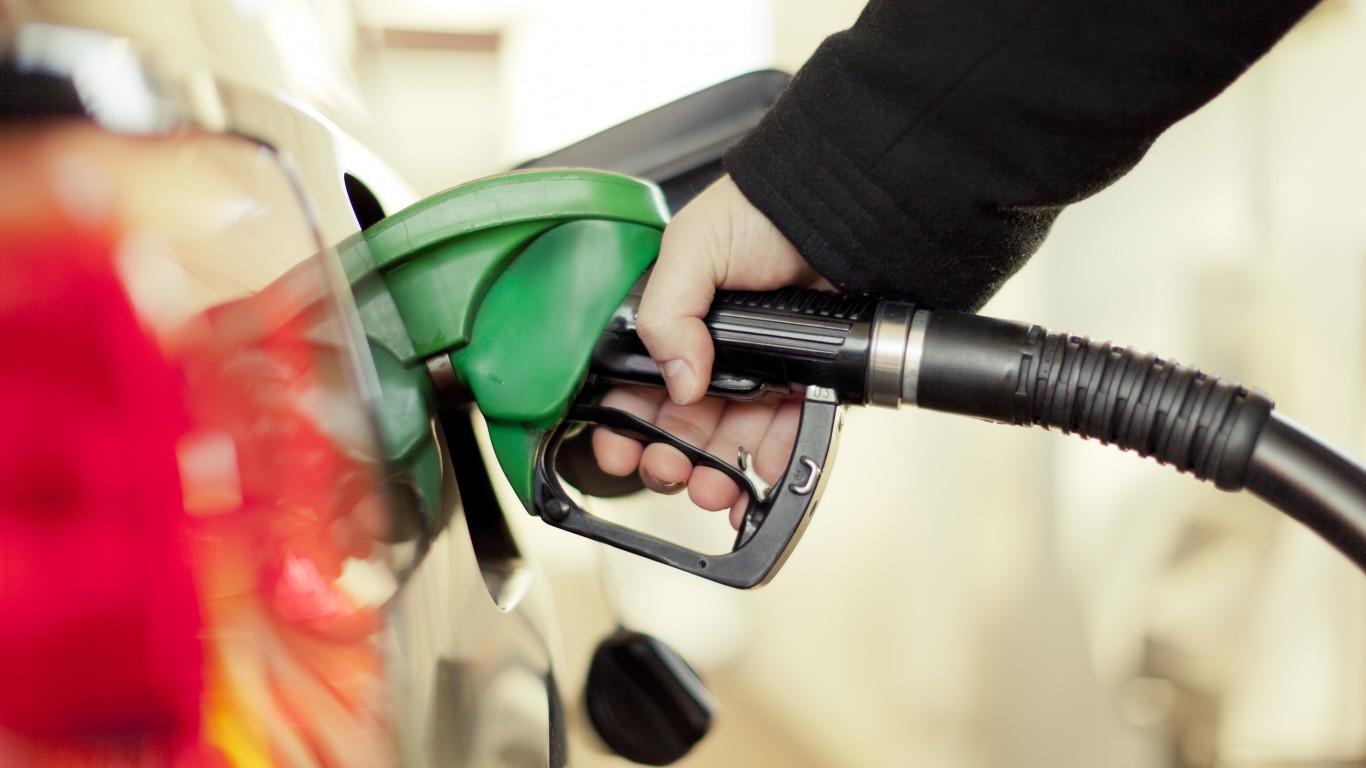
Early this year, the price of a gallon of regular gasoline dropped below 99 cents in some parts of the country. Why? Goldman Sachs forecast oil could drop under $20 a barrel. And it got close. If several OPEC ministers and most experts are right, oil prices will settle between $50 and $60 for a long time. Producing nations will have bled enough out of their treasuries in a scramble to keep market share and undermine the robust American shale industry. These nations can no longer afford it. Gas at 99 cents is gone and will not be back, at least for an unimaginably long time.

Some economists believed gas prices were critical to the ongoing recovery of consumer spending. Wages were not rising for the average American. The low cost of fuel would free up money. As gas prices rose to $2, and then close to $2.50 recently, the consumer has remained relatively healthy. Holiday retail sales will be a measure of that. Strong car and home sales may be already. The value of low gas prices was overestimated.

The low gas price versus low oil price benefit analysis also can be put on the back shelf for now. Oil at $50 will stabilize one of the country’s largest industries. Layoffs will end. The old energy part of the economy will recover. The industry’s health will prove to be more important for gross domestic product than low gas price consumer-driven spending.

[nativounit]

Ninety-nine cent gas is gone for another reason. Gas taxes at the state level have been too low to fund infrastructure spending at a level high enough to replace roads and bridges. New Jersey already has raised its gas tax. Other financial resource constrained states have roads aging just as quickly as New Jersey’s. There are very few places to go to raise the money. The traditional source is the gas tax. State house economists will argue that the consumer is well enough off, based on recent evidence, to take the extra 15 cents a gallon without blinking. New roads, without a weakened consumer.

So, 99 cent gas is history.

[wallst_email_signup]

Photo of Douglas A. McIntyre
About the Author Douglas A. McIntyre →

Douglas A. McIntyre is the co-founder, chief executive officer and editor in chief of 24/7 Wall St. and 24/7 Tempo. He has held these jobs since 2006.

McIntyre has written thousands of articles for 24/7 Wall St. He is an expert on corporate finance, the automotive industry, media companies and international finance. He has edited articles on national demographics, sports, personal income and travel.

His work has been quoted or mentioned in The New York Times, The Wall Street Journal, Los Angeles Times, The Washington Post, NBC News, Time, The New Yorker, HuffPost USA Today, Business Insider, Yahoo, AOL, MarketWatch, The Atlantic, Bloomberg, New York Post, Chicago Tribune, Forbes, The Guardian and many other major publications. McIntyre has been a guest on CNBC, the BBC and television and radio stations across the country.

A magna cum laude graduate of Harvard College, McIntyre also was president of The Harvard Advocate. Founded in 1866, the Advocate is the oldest college publication in the United States.

TheStreet.com, Comps.com and Edgar Online are some of the public companies for which McIntyre served on the board of directors. He was a Vicinity Corporation board member when the company was sold to Microsoft in 2002. He served on the audit committees of some of these companies.

McIntyre has been the CEO of FutureSource, a provider of trading terminals and news to commodities and futures traders. He was president of Switchboard, the online phone directory company. He served as chairman and CEO of On2 Technologies, the video compression company that provided video compression software for Adobe’s Flash. Google bought On2 in 2009.

Continue Reading

Top Gaining Stocks

CBOE Vol: 1,568,143
PSKY Vol: 12,285,993
STX Vol: 7,378,346
ORCL Vol: 26,317,675
DDOG Vol: 6,247,779

Top Losing Stocks

LKQ
LKQ Vol: 4,367,433
CLX Vol: 13,260,523
SYK Vol: 4,519,455
MHK Vol: 1,859,865
AMGN Vol: 3,818,618