


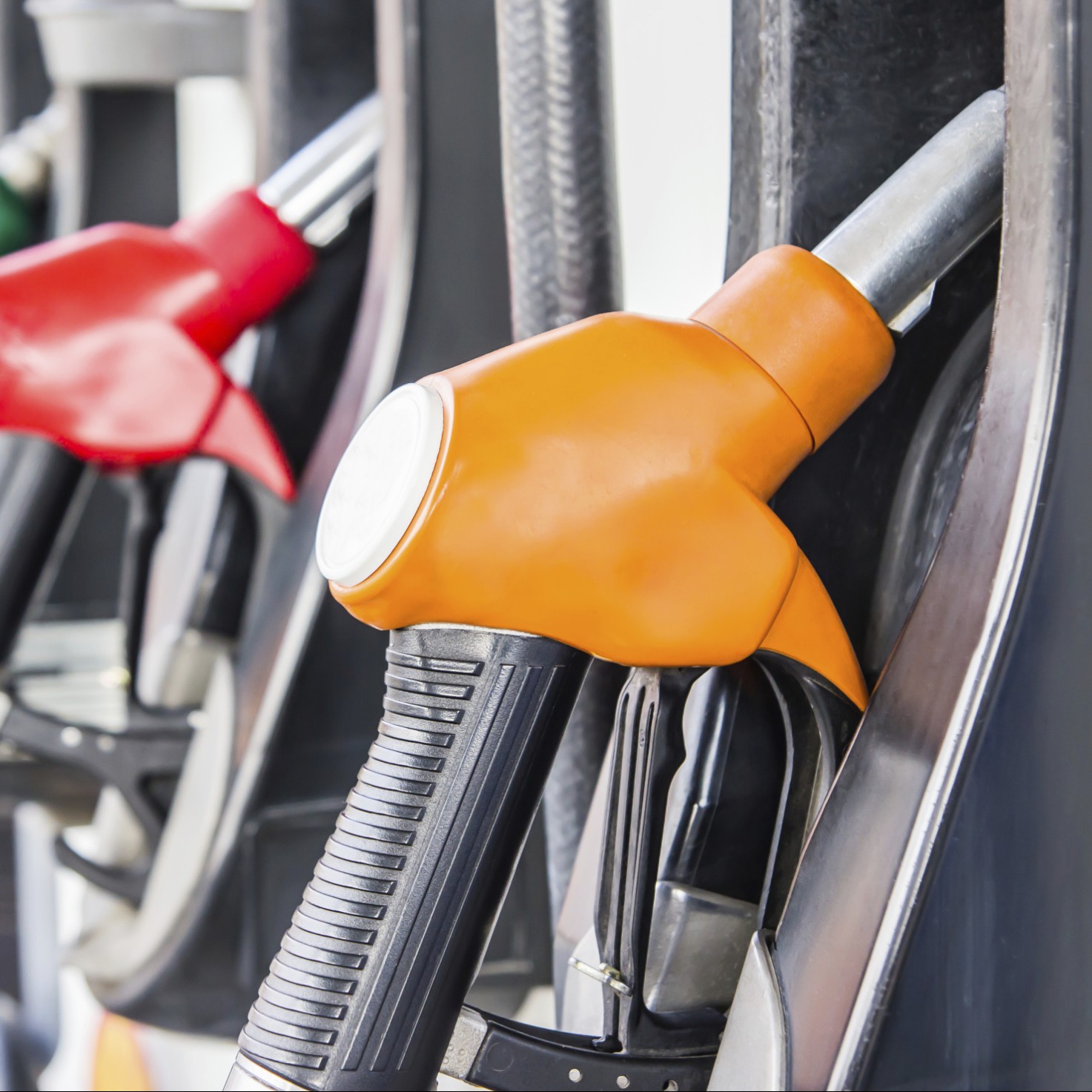
[cnxvideo id=”655423″ placement=”ros”]The price of gasoline on Monday morning fell by about two cents a gallon compared with last week’s national average pump price for regular gasoline. Compared with the same day last year, the national average price of $2.29 is 36.2 cents a gallon higher.
Last week’s 9% decline in benchmark West Texas Intermediate (WTI) crude oil prices to below a three-month range between $51 and $54 a barrel led to the drop in pump prices. WTI traded as low as $47.90 early Monday morning. Rising U.S. inventories coupled with increasing rig counts and higher U.S. onshore production combined to instill some bearish sentiment in oil traders.
Analysts at GasBuddy noted that historically a gallon of regular gas in the United States rises by an average of 59 cents a gallon between mid-February and Memorial Day.
[nativounit]
Patrick DeHaan, senior petroleum analyst at GasBuddy, said:
Fundamentals of oil have weakened, and with last week’s large 8.2 million barrel rise in crude oil inventories, the market has turned decidedly bearish for now. Naturally, when oil prices take a beating such as they did last week, one might expect gasoline prices to move in lockstep, but due [to] the complex relationship of oil and gasoline prices and the middleman — U.S. refineries — motorists may not see as large a decline at the pump as they may hope for — but certainly stay tuned. I remain optimistic that the annual spring rally at the pump could be less severe than expected, but remain cautious as it remains difficult to know where the new path will lead oil prices in the week ahead,
Gas prices rose in just 16 states over the past week. The five states taking the largest increases were Utah (up 8 cents a gallon), Oregon (8 cents), Alaska (5 cents), Washington (5 cents) and Idaho (3 cents).
The five states where prices fell the most were Indiana (down 12 cents), Kentucky (9 cents), Ohio (9 cents), Michigan (8 cents) and Illinois (6 cents).
No state showed an average of below $2.00 a gallon Monday morning. The five states with the lowest prices are South Carolina ($2.024 a gallon), Tennessee ($2.045), Alabama ($2.051), Mississippi ($2.061) and Oklahoma ($2.081). States posting the highest prices are Hawaii ($3.092 a gallon), California ($3.006), Washington ($2.832), Alaska ($2.764) and Oregon ($2.672).
The most common price across the country is $2.199, with the highest 5% of stations charging an average of $3.162 and the lowest 5% of stations charging $1.952. Nearly 10% of U.S. gas stations charged less than $2.00 a gallon, as of Monday morning.
WTI crude oil for April delivery traded down about 0.4% Monday morning, at $48.27 a barrel, nearly $5 a barrel less than a week ago. The contract closed at $48.49 on Friday.
[wallst_email_signup]







 Top Gaining Stocks
 Top Losing Stocks