


Despite OPEC agreeing to lift oil production, West Texas Intermediate crude continues to trade above $70 a barrel, closing Friday at $73.95, and has averaged $60 a barrel this year. While many people across Wall Street cite the lower levels of storage, the fact that the economy has started to reopen on a larger scale has been a big reason for the continued strength in black gold. The question for investors now, after a big run off the 2020 lows, is what is the best path to follow when investing in the energy sector.
[in-text-ad]
One very solid idea is to stick with the mega-cap integrated majors, and with good reason. They have diversified business models, the strength and leverage of their sheer size and, perhaps most importantly for those looking for income, they all pay solid and huge dependable dividends.
With three of the industry leaders posting solid results last week, and one set to report tomorrow, investors can still snag some of the best in the business at reasonable entry prices, and enjoy quarterly dividends that will help beef up the total return potential. Here we focus on four Buy-rated sector leaders, but it is important to remember that no single analyst report should be used as a sole basis for any buying or selling decision.
[nativounit]
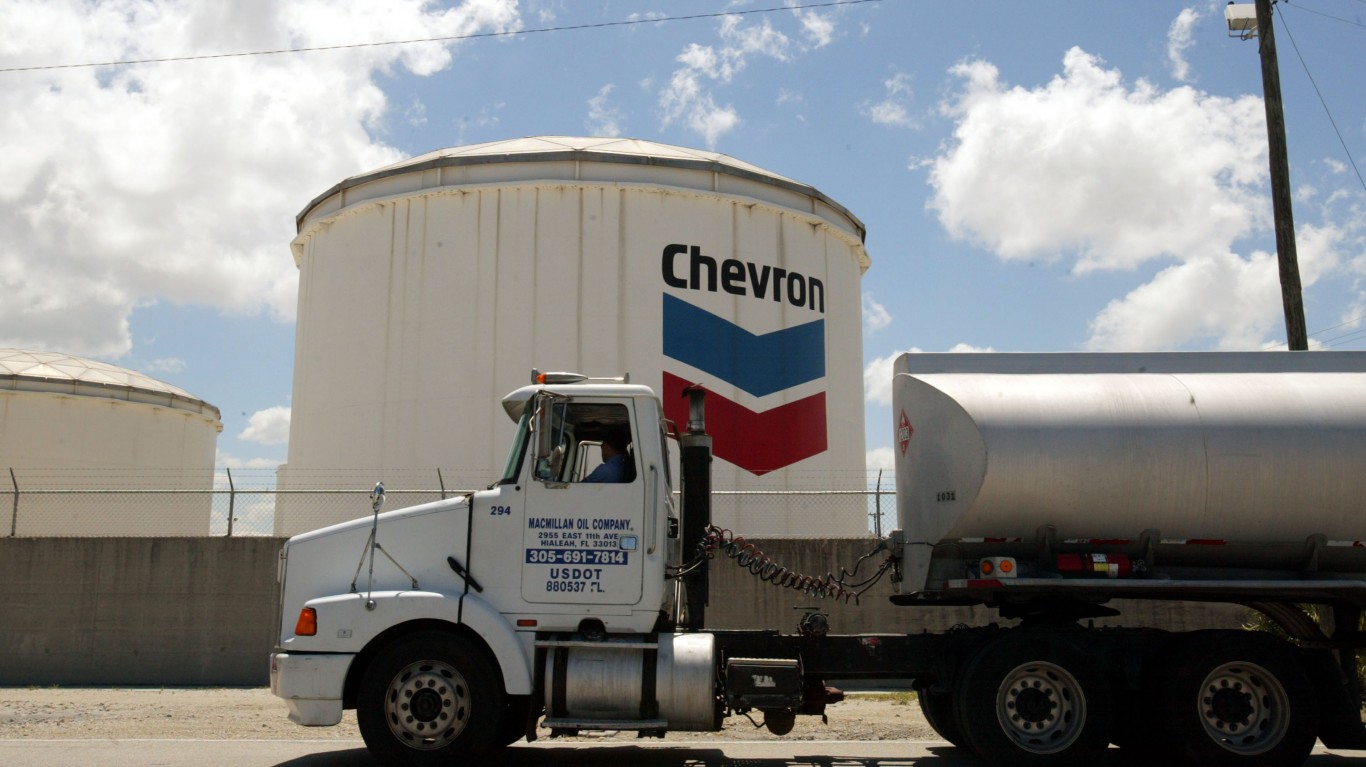
Chevron
This energy giant is a solid way for investors who are more conservative to be positioned in the sector. Chevron Corp. (NYSE: CVX | CVX Price Prediction) is a U.S.-based integrated oil and gas company, with worldwide operations in exploration and production, refining and marketing, transportation and petrochemicals. The company sports a sizable dividend and has a solid place in the sector when it comes to natural gas and liquefied natural gas.
With the strongest financial base of the majors, coupled with an attractive relative asset base, many on Wall Street feel that Chevron offers the most straightforwardly positive risk/reward. Although current conditions do not warrant a large focus on production growth, Chevron possesses numerous medium-term drivers (Noble integration, Permian, TCO/WPMP expansion, Gulf of Mexico exploration, Vaca Muerta, and so on) that should support production levels in the coming years.
Chevron posted quarterly earnings of $1.71 per share, beating the consensus estimate of $1.54 per share. This compares to a loss of $1.59 per share a year ago. These figures are adjusted for non-recurring items. The report represents an earnings surprise of 11.04%.
Current shareholders receive a 5.26% dividend, which analysts feel comfortable will remain at current levels. The BofA Securities price target for the shares is $125. The consensus target across Wall Street is lower at $122.79. The final Chevron stock trade on Friday was reported at $101.81 a share.
[recirclink id=925072]
ConocoPhillips
This is another large-cap company that offers strong value for investors, and it reports earnings tomorrow. ConocoPhillips (NYSE: COP) explores for, produces, transports and markets crude oil, bitumen, natural gas, liquefied natural gas and natural gas liquids worldwide.
[in-text-ad]
Conoco’s portfolio includes resource-rich North American tight oil and oil sands assets; lower-risk legacy assets in North America, Europe, Asia and Australia; various international developments; and an inventory of conventional and unconventional exploration prospects.
Many Wall Street analysts feel Conoco can accelerate growth from a reloaded portfolio depth in the Bakken and Eagle Ford, with visibility on future growth from a sizable position in the Permian. Goldman Sachs is very positive and said this when discussing the prospects for big oil:
While we expect upstream oil/gas producers to inflect positively quarter over quarter given stronger pricing realizations as commodity prices recover, we expect refining to act as a headwind and chemicals a tailwind to earnings/cash flow for more integrated companies.
Investors receive a 3.07% dividend. The Goldman Sachs price target is $68, which is lower than the consensus target of $73.86. Conoco stock was closed at $56.06 on Friday.
[recirclink id=924818]
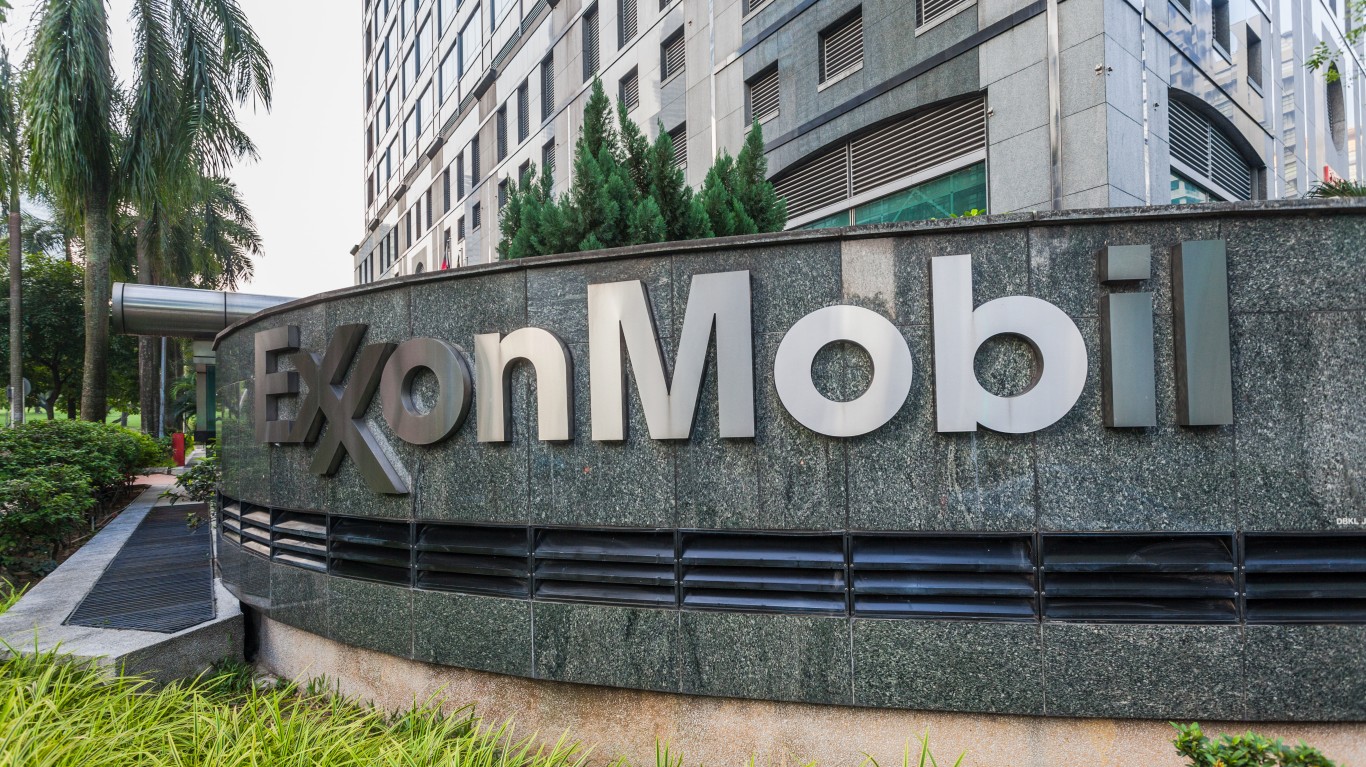
Exxon Mobil
Shares of this mega-cap energy leader have been on fire, and with people still hitting the road for summer travel and vacations, there could be some big gasoline consumption through Labor Day. Exxon Mobil Corp. (NYSE: XOM) is the world’s largest international integrated oil and gas company. It explores for and produces crude oil and natural gas in the United States, Canada, South America, Europe, Africa and elsewhere.
Exxon also manufactures and markets commodity petrochemicals, including olefins, aromatics, polyethylene and polypropylene plastics, and specialty products, and it transports and sells crude oil, natural gas and petroleum products.
Exxon also posted stellar results for the second quarter. Its upstream segment net income came in above consensus estimates, rebounding sharply from the year-ago quarter’s pandemic-depressed lows. The upstream segment is involved in the exploration and development of oil and natural gas properties, as well as the extraction and production of crude oil and natural gas. It benefits from higher oil prices. Earnings and revenue continue to rebound as the global economy recovers from last year’s pandemic-induced shock.
The company pays investors a 6.04% dividend, which will continue to be defended. The huge $90 BofA Securities price target compares with a $66.34 consensus target. Exxon Mobil stock ended trading on Friday at $57.57 a share.
[in-text-ad]
Royal Dutch Shell
This is a top international play for investors looking to add energy exposure and is yet another company that posted solid results. Royal Dutch Shell PLC (NYSE: RDS-A) operates as an independent oil and gas company worldwide through its Upstream and Downstream segments. The company explores for and extracts crude oil, natural gas and natural gas liquids.
Shell also converts natural gas to liquids to provide fuels and other products; markets and trades crude oil and natural gas; transports oil; liquefies and transports gas; extracts bitumen from mined oil sands and converts it to synthetic crude oil; and generates electricity from wind energy.
In addition, the company engages in the conversion of crude oil into a range of refined products, including gasoline, diesel, heating oil, aviation fuel, marine fuel, liquefied natural gas for transport, lubricants, bitumen and sulphur; production and sale of petrochemicals for industrial customers; refining; trading and supply; pipelines and marketing; and alternative energy businesses.
Shell posted a net profit of $5.5 billion for the second quarter of the year on the back of stronger oil prices and said it will buy back $2 billion worth of shares. The company also booked free cash flow of $9.7 billion for the period, up from $200 million a year earlier, and reduced its net debt to $65.7 billion from $77.8 billion for the second quarter of 2020.
Holders of Royal Dutch Shell stock receive a 3.12% dividend. BofA Securities has set a $57 price objective. The consensus figure is $54.60, and shares closed on Friday at $40.62 apiece.
[recirclink id=924031]
With air travel climbing and the busy summer driving season still in full swing, consumers can bet on continued higher prices at the pump. That noted, with dependable dividends and long histories of market dominance, these top stocks make good sense for growth and income investors looking to add energy but who are wary due to the big run-up in oil pricing over the past year.
[wallst_email_signup]







 Top Gaining Stocks
 Top Losing Stocks