


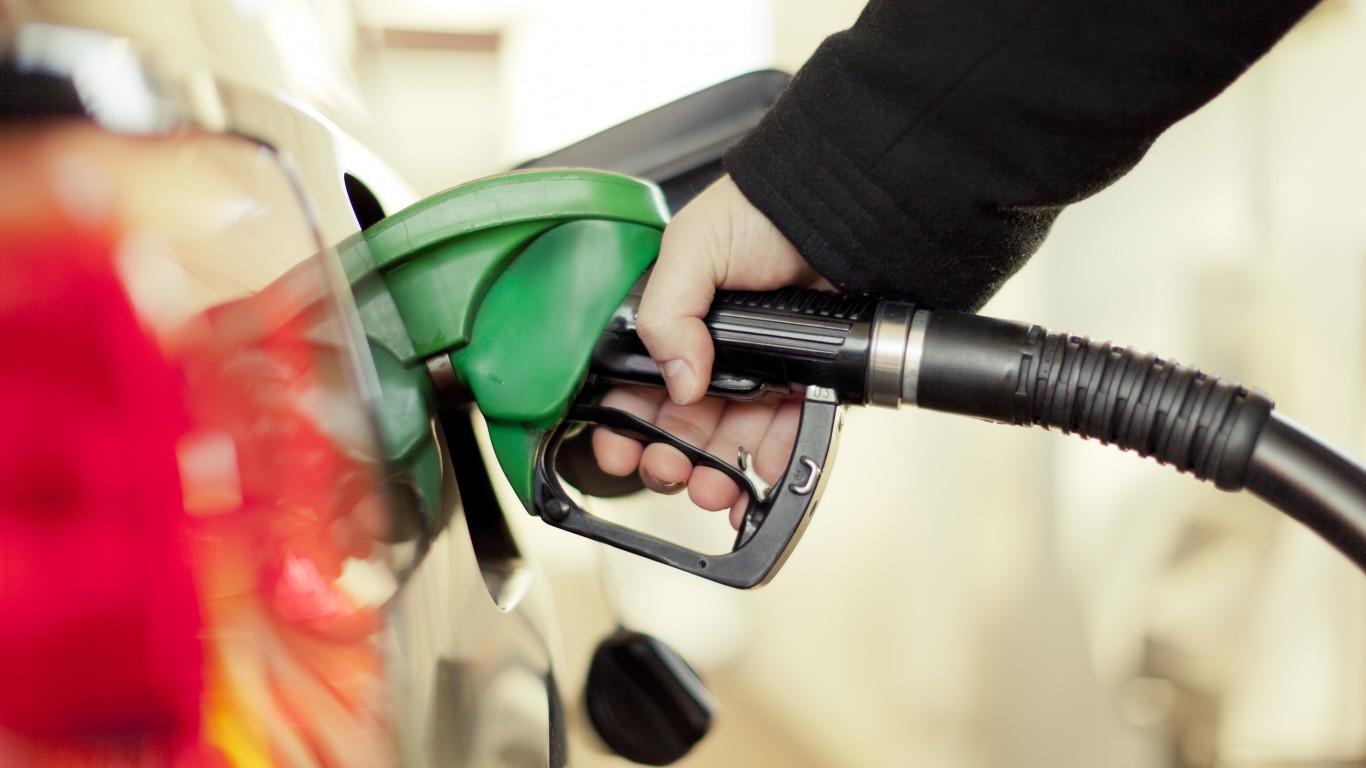
In the aftermath of Hurricane Sandy in 2014, the U.S. Congress created a 1 million-barrel emergency stockpile of gasoline to prevent shortages of fuel in the event of another disaster. Some gas stations in New York were unable to get gasoline for 30 days.
The million-barrel cache has never been used, and now both congressional Democrats and Republicans have agreed to sell off the Northeast Gasoline Supply Reserve. According to Bloomberg, legislation to fund the operations of the U.S. Department of Energy has been introduced in both the House oof Representatives and the Senate, and one thing the two pieces of legislation agree on is selling the gasoline in the reserve.
According to EIA data, in 2021, New York State consumers used more than 124 million barrels of gasoline, so reducing that total by a million barrels is not going to have any significant impact on rising pump prices. As one energy consultant put it, “[The reserve] is too small to make a difference and too big to be cheap.” (These states have the highest and lowest gas taxes.)
Renewables, however, are cheap and are on their way to getting cheaper. Wind and solar generation is already cheaper on a levelized cost per megawatt hour basis than either natural gas or coal-fired electricity generation. The following chart from Canary Media, an independent affiliate of RMI (once known as the Rocky Mountain Insitute), shows how costs for renewables have dropped since 2016 while costs for coal declined by much less and natural gas costs have risen.
[nativounit]
According to the International Energy Agency's Electricity Market Report 2023 released last week, renewables will produce 35% of the world's electricity by 2025, overtaking coal, which is forecast to meet 33% of demand for electricity.
[wallst_email_signup]
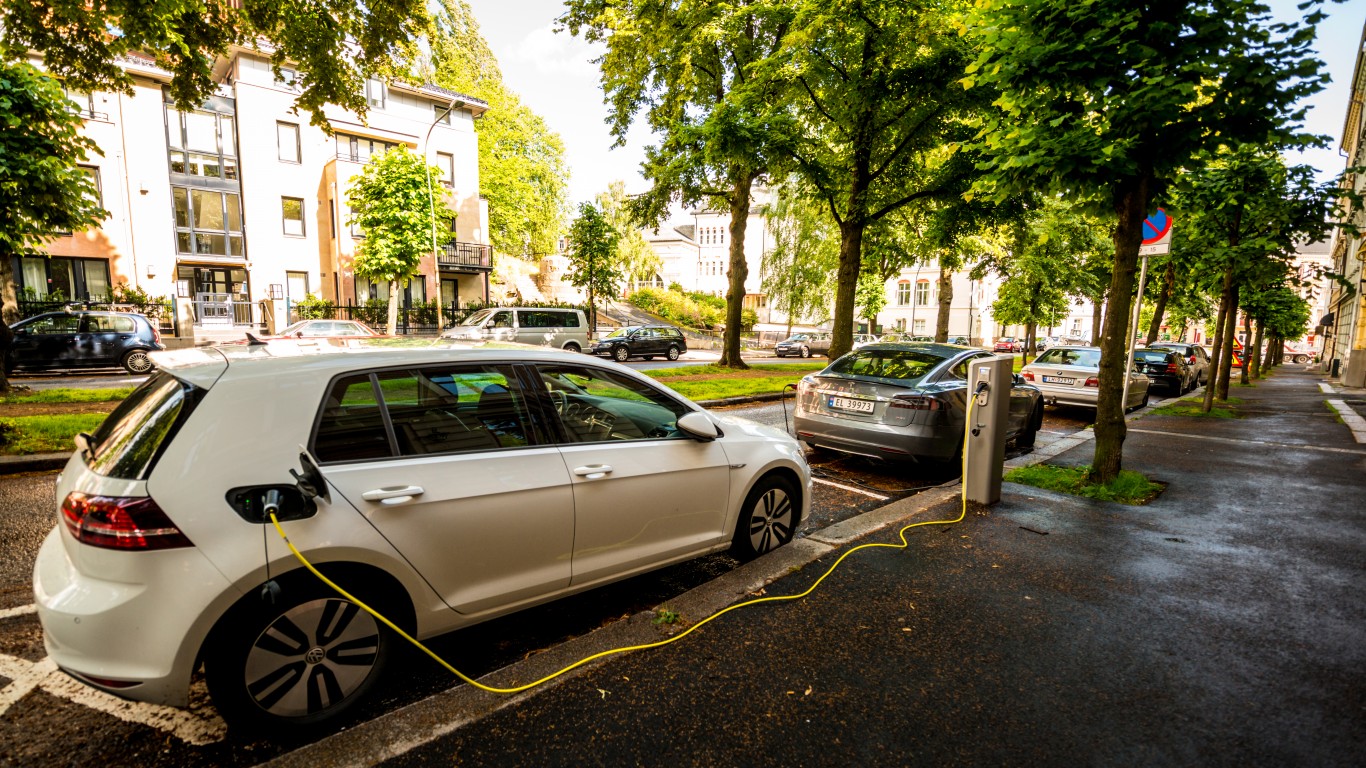
That may be great for electricity generation, but what about transportation fuel? According to a report from Bloomberg Green, 23 countries have reached electric vehicle (EV) penetration of 5% or more of new car sales, a tipping point for EV adoption. The United States passed that tipping point in 2021, and now 6.7% of new car sales are EVs. China passed that point in 2020, and EVs now account for 17.5% of new car sales. In Iceland, which passed the 5% tipping point nearly six years ago, EVs account for 48% of new car sales.
Rising demand for oil used in transportation has already plateaued in some U.S. states and is expected to reach a nationwide peak in 2027. By 2029, the use of oil for road transport will peak at about 48.3 million barrels a day, according to BloombergNEF, declining to 19.9 million barrels a day in 2050. Total oil demand for all purposes (air travel, sea transport, railroads, plastics) will also begin to decline in 2029, from 105.4 million barrels a day to 87.7 million barrels.
In the short term, however, rising gasoline pump prices outweigh all the other relatively good news about the U.S. economy. The average price of regular gasoline has risen from a low of around $3.18 a gallon in January to $3.79 as of Wednesday morning, according to GasBuddy. That is a bit lower than the yearly high of $3.86 posted in August and well below the 2022 high average of $5.03 a gallon.
[recirclink id=1213143]
Job growth remains strong, and inflation has tumbled in the past 18 months. So while the economy is in decent shape, consumer confidence remains at low levels. And while economists may be able to ignore or at least soft-pedal consumer confidence, politicians know that it's all about perception and, finally, about votes.








 Top Gaining Stocks
 Top Losing Stocks