


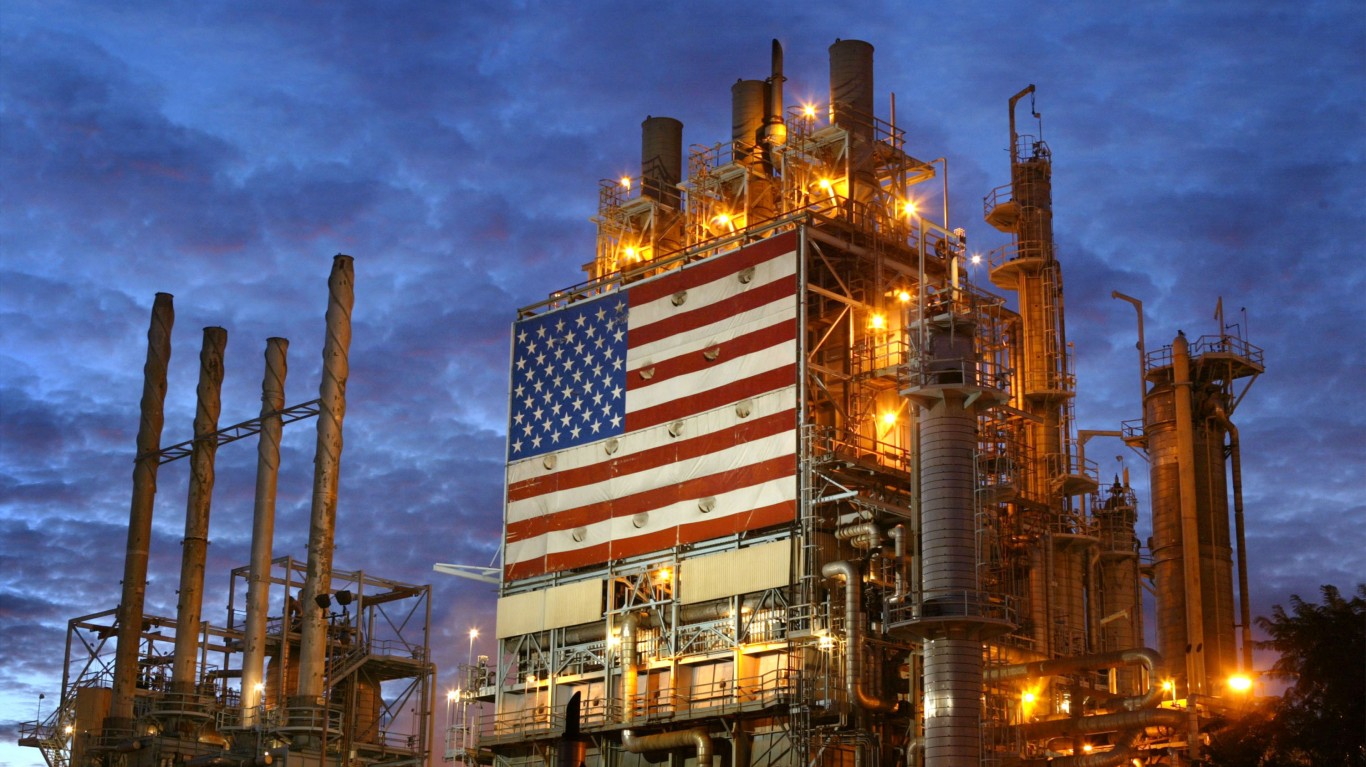
Since topping out at $120 in the summer of 2022, the major oil benchmarks had traded down every month until bottoming at the beginning of December that year. The decline from the top in June of 2022 was a staggering 40%, and while the oil majors can still make money at that level, with a declining price, many opted to slow or halt production. By March of last year, West Texas Intermediate had dropped to $67.61, a bottom that stayed in place until late June when oil broke out.
After the breakout and move to over $90 per barrel, oil hit a wall in late September and had dropped 22% until recently. Brent Crude has traded back over the $89 level in a solid move higher, while West Texas Intermediate is back over $85.
This all occurred despite war breaking out in the Middle East after the devastating Hamas attack on Israel last October. Now that war has expanded, there are worries that Iran could become more involved as Israel turns its attention to Hezbollah. If oil supplies are threatened in the region, which many now fear, prices could explode.
Investors who feel they have missed the proverbial boat can be happy because the recent rise in the major oil indices has not been dramatic. Instead of a parabolic jump out of the park, it has been a slow but steady price increase. The recent API data also show inventory draws across the board.
With the benchmarks hitting 2024 highs and the best levels since last November, it makes sense for investors to consider buying some of the biggest and best mega-cap integrated leaders. Five stocks make sense now; all pay dependable dividends, and all are rated at major Wall Street firms.
BP
BP p.l.c. is one of the oil and gas “supermajors” and one of the world’s largest companies, as measured by revenues and profits.
This company is a premier European integrated oil giant, paying shareholders a hefty 4.72 % divided. BP p.l.c. (NYSE: BP) engages in the energy business worldwide.
It operates through:
- Gas & Low Carbon Energy
- Oil Production & Operations
- Customers & Products
- Rosneft segments
BP produces and trades natural gas, offers biofuels, operates onshore and offshore wind and solar power generating facilities, and provides de-carbonization solutions and services, such as hydrogen and carbon capture, usage, and storage.
The company is also involved in the convenience and mobility business, which manages the sale of fuels to wholesale and retail customers, convenience products, aviation fuels, and Castrol lubricants; refining, supply, and trading of oil products; and operation of electric vehicle charging facilities.
In addition, it produces and refines oil and gas and invests in upstream, downstream, and alternative energy companies, advanced mobility, bio and low-carbon products, carbon management, digital transformation, and power and storage areas.
Chevron
Chevron is the second-largest direct descendant of Standard Oil and was initially known as the Standard Oil Company of California.
This integrated giant is a safer way for investors looking to get positioned in the energy sector and has a sweet 4.10% dividend. Chevron Corporation (NYSE: CVX | CVX Price Prediction) engages in integrated energy and chemicals operations worldwide through its subsidiaries.
The company operates in two segments:
- Upstream
- Downstream.
The Upstream segment is involved in the following:
- Exploration, development, production, and transportation of crude oil and natural gas
- Processing, liquefaction, transportation, and regasification associated with liquefied natural gas
- Transportation of crude oil through pipelines; and transportation, storage
- Marketing of natural gas, as well as operating a gas-to-liquids plant
The Downstream segment engages in:
- Refining crude oil into petroleum products
- Marketing crude oil, refined products, and lubricants
- Manufacturing and marketing renewable fuels
- Transporting crude oil and refined products by pipeline, marine vessel, motor equipment, and rail car
- Manufacturing and marketing of commodity petrochemicals, plastics for industrial uses, and fuel and lubricant additives
It also involves cash management, debt financing, insurance operations, real estate, and technology businesses.
Chevron Corporation announced last fall that it has entered into a definitive agreement with Hess Corporation (NYSE: HES) to acquire all of the outstanding shares of Hess in an all-stock transaction valued at $53 billion, or $171 per share based on Chevron’s closing price on October 20, 2023. Under the terms of the agreement, Hess shareholders will receive 1.0250 shares of Chevron for each Hess share. The transaction’s total enterprise value, including debt, is $60 billion.
ConocoPhillips

ConocoPhillips is Alaska’s largest crude oil producer and largest owner of exploration leases, with approximately 1.2 million net undeveloped acres.
This is another large-cap company that offers substantial value for investors and a solid 2.78% dividend. ConocoPhillips (NYSE: COP) explores for, produces, transports, and markets crude oil, bitumen, natural gas, liquefied natural gas, and natural gas liquids worldwide.
Conoco’s portfolio are:
- Resource-rich North American tight oil and oil sands assets
- Lower-risk legacy assets in North America, Europe, Asia, and Australia
- Various international developments and an inventory of conventional and unconventional exploration prospects
Many Wall Street analysts feel Conoco can accelerate growth from a reloaded portfolio depth in the Bakken and Eagle Ford with visibility on future growth.
Exxon Mobil
ExxonMobil Corporation is an American multinational that is the most prominent direct descendant of John D. Rockefeller’s Standard Oil.
The slow rise in oil prices offers investors an excellent entry point, and they will gladly grab a strong 3.25% dividend. Exxon Mobil Corporation (NYSE: XOM) is the world’s largest international integrated oil and gas company, exploring for and producing crude oil and natural gas in the United States, Canada/South America, Europe, Africa, Asia, and Australia/Oceania.
Exxon Mobil also manufactures and markets commodity petrochemicals, including olefins, aromatics, polyethylene and polypropylene plastics, and specialty products, and transports and sells crude oil, natural gas, and petroleum products.
Top Wall Street analysts expect the company to remain a key beneficiary in a higher oil price environment, and most remain very optimistic about the company’s sharp positive inflection in capital allocation strategy,
Upstream portfolio and leverage to a further demand recovery. ExxonMobil offers greater Downstream/Chemicals exposure than its peers.
Exxon Mobil announced last year that it is purchasing oil shale giant Pioneer Natural Resources Company (NYSE: PXD) for $59.5 billion in an all-stock purchase. The deal will create the largest U.S. oil field producer and guarantee a decade of low-cost production.
Total Energies
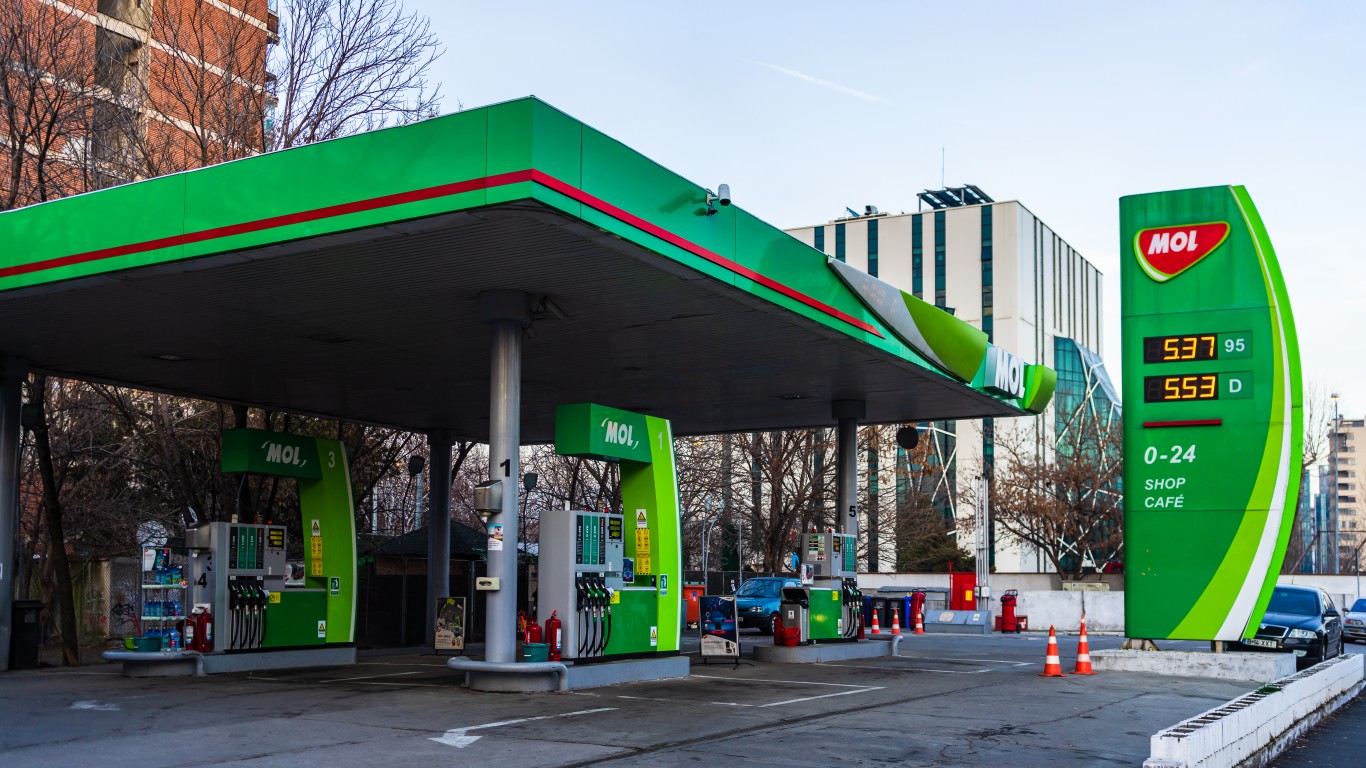
TotalEnergies SE is a French multinational integrated energy and petroleum company founded in 1924 and is one of the seven supermajor oil companies.
This French-integrated giant is another excellent way to play the energy sector from the European side. It sports a hefty 4.68% dividend. TotalEnergies SE (NYSE: TTE) is an integrated oil and gas company worldwide.
The company operates through four segments:
- Exploration and production
- Integrated Gas,
- Renewables and power,
- Refining and chemicals and marketing and services
The company’s Exploration & Production segment involves oil and natural gas exploration and production activities in approximately 50 countries.
Its Integrated Gas, Renewables & Power segment engages in:
- Liquefied natural gas (LNG) production
- Shipping, trading, and regasification activities
- Trading of liquefied petroleum gas (LPG), petcoke and sulfur, natural gas, and electricity
- Transportation of natural gas
- Electricity production from natural gas, wind, solar, hydroelectric, and biogas sources
- Energy storage activities; and development and operation of biomethane production units, as well as provides energy efficiency services
The TotalEnergies Refining & Chemicals segment refines petrochemicals, including olefins and aromatics, and polymer derivatives, such as polyethylene, polypropylene, polystyrene, and hydrocarbon resins. It also converts biomass and processes elastomers. This segment also trades and ships crude oil and petroleum products.
Its Marketing & Services segment produces and sells:
- Lubricants
- Supplies and markets petroleum products, including bulk fuel, aviation and marine fuel, special fluids, compressed natural gas, LPG, and bitumen; and fuel payment solutions
It also operates approximately 15,500 service stations.









 Top Gaining Stocks
 Top Losing Stocks