


Today, we start a list of the worst CEOs in America. There will be an all-time winner later in the year. The way these CEOs are picked stems from major strategy stumbles. It also included a series of decisions we made that affect three groups. These are shareholders, customers, and employees. Some of these CEOs are fairly new to the public corporations they run. Others have had their jobs for years.
(NASDAQ: SBUX | SBUX Price Prediction) CEO Brian Niccol is first on the list.
Starbucks Corp.’s share price suggests the company’s best year is well behind it, based on its performance over the last five years. The stock is down 16% while the S&P 500 is up 84%.
The coffee store company has had a series of chief executives over the period. Kevin Johnson, Howard Schultz, Laxman Narasimhan, and Brian Niccol have all held the job. Schultz has had the job twice recently. He did not found the company, but his success in its early days made him close to one. His net worth has been pegged at $3 billion.
Niccol is the board’s latest CEO experiment. After a little more than a year, it has already failed, particularly for those who look at the stock price. In March, it topped $117. Today, it trades at $83. Based on three quarters of earnings and a set of announcements about planned improvements, investors have lost whatever patience they had.
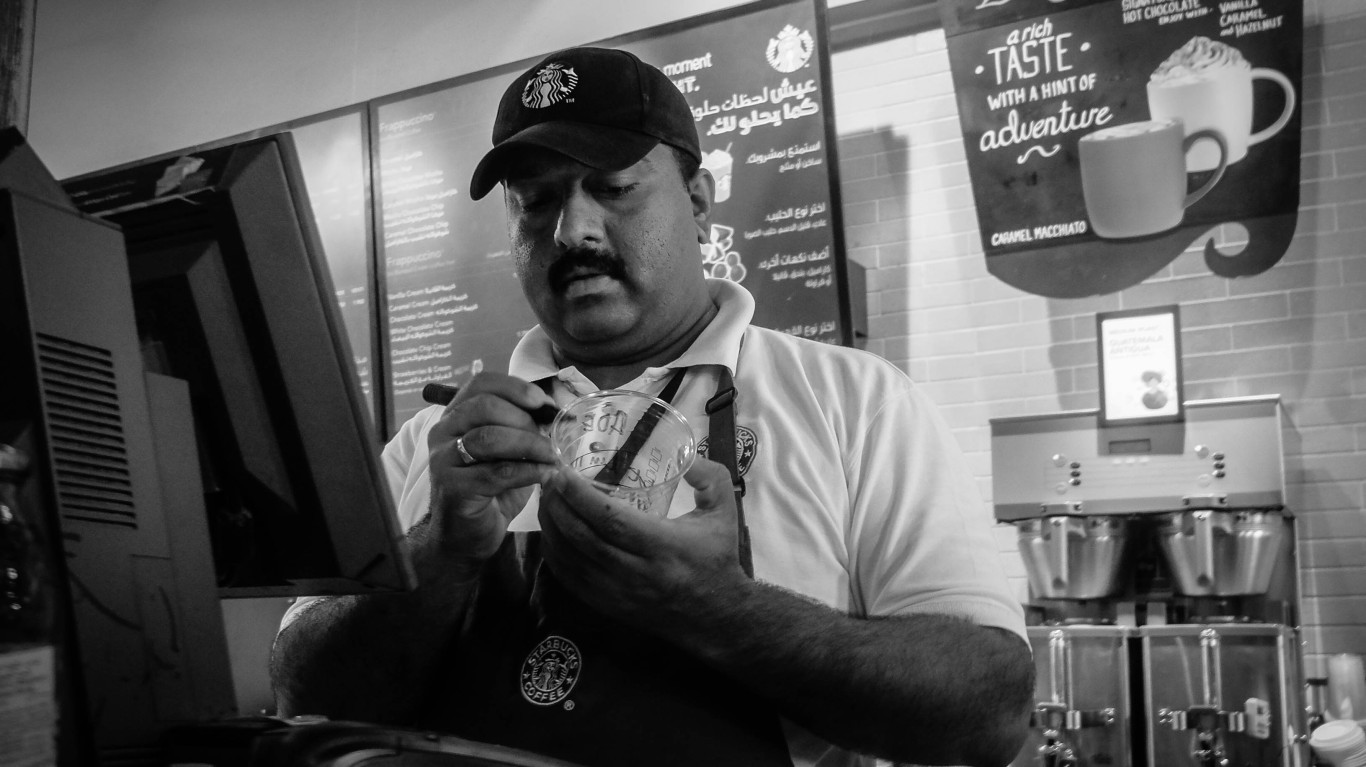
Niccol was expected to be a turnaround artist due to his track record at Taco Bell and Chipotle (NYSE: CMG). His lack of success at Starbucks has included a line of statements primarily about how Starbucks might return to its roots as a community coffeehouse where baristas are friendly and well-dressed. When people order, their orders will come fast, his plan said. That is because he has streamlined the menus. The baristas will also remember people’s names and sometimes write them on cups
What does Niccol have to show for his plans? He dumped Starbucks operations in China, which was supposed to be its fastest-growing market and eventually, perhaps, its largest. Starbucks sold 40% of its China operations for $4 billion, plus brand licensing and some upside. The buyer was Boyu Capital, which, while local, does not appear to have deep roots in the coffee shop business. It is rare for a company to walk away from such a strategic asset, even if it faces a long repair job.
Without China, most of Starbucks’ future is in the United States.
For the year ended September 29, Starbucks’ revenue increased 3% to $37.2 billion. Earnings fell from $3.31 a share to $1.63. Niccol made a statement without offering proof: “We’re a year into our ‘Back to Starbucks’ strategy, and it’s clear that our turnaround is taking hold.”
Starbucks has yet another way to alienate customers. It sometimes runs out of food on its menu. That is a sure way to get people to go to McDonald’s (NYSE: MCD).
Finally, some Starbucks workers went on strike. Many of these people can’t accept that Starbucks will not come to the table to negotiate better pay and work conditions. The strike, which began this month, expanded to over 95 stores in 65 cities. This represents a small number of stores. However, the news has appeared in almost every major news outlet in the country. It is a bad look. And, the number of unhappy employers could grow.







 Top Gaining Stocks
 Top Losing Stocks