



“There’s a great future in plastics,” Mr. McGuire (Walter Brooke) told young Benjamin (Dustin Hoffman) in “The Graduate,” in one of the most often-quoted exchanges in 20th-century movies. He presumably didn’t mean ingesting them — but that’s what we all do, every day.
According to a just-published paper in the American Chemical Association’s journal Environmental Science & Technology, the average American consumes more than 70,000 particles of microplastics every year.
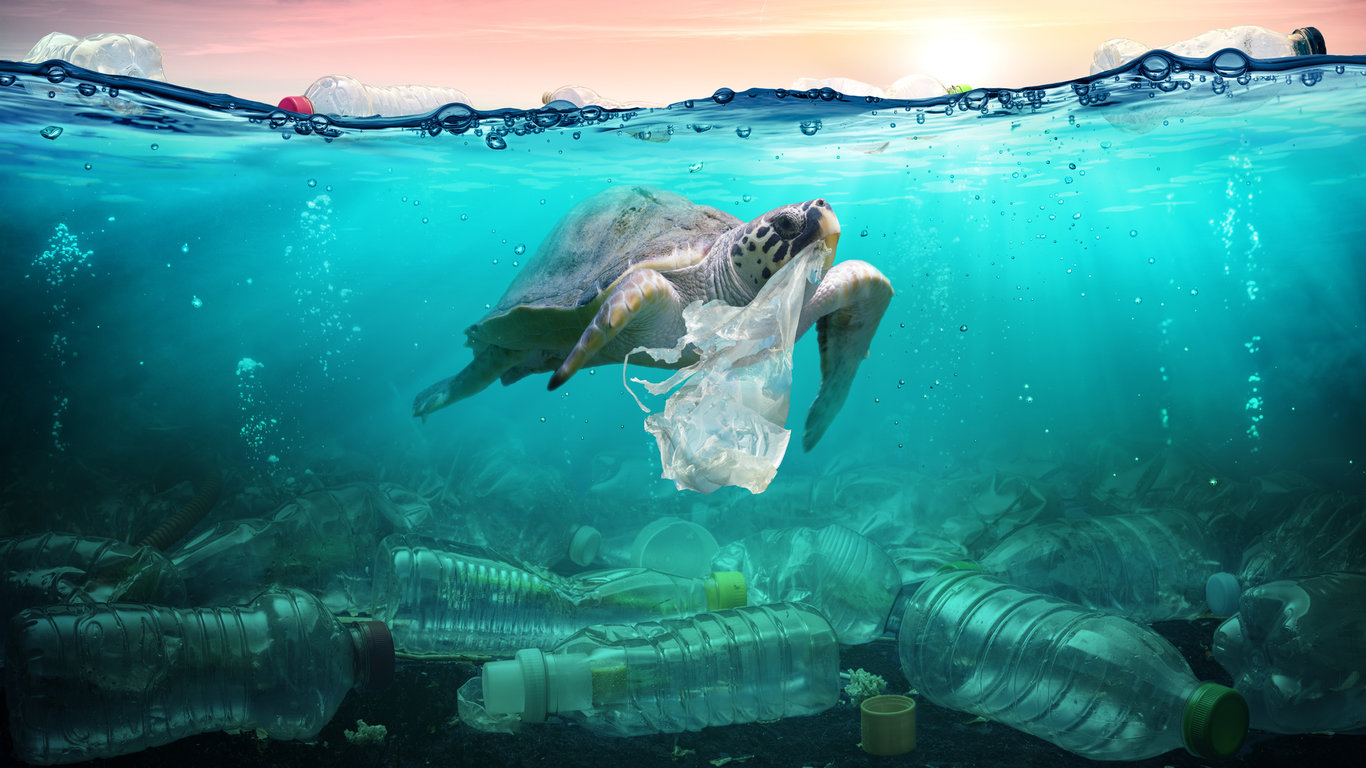
Microplastics are extremely small, often microscopic, bits of plastic that come from a number of sources, including our food and water packaging and the environmental degradation of plastic products. We ingest them both by nose and mouth. This will presumably continue to be a problem until we start using more of the genius inventions that can stop us from using so much plastic.
To arrive at their estimate of microplastic consumption, researchers reviewed 26 studies analyzing the microplastic content found in seafood, salts and sugars, alcohol, and both tap and bottled water. They then estimated the consumption of these items based on the U.S. government’s Office of Disease Prevention and Health Promotion’s 2015-2020 Dietary Guidelines for Americans. (Estimates of the particles in the air were included.)
Based on their computations, Americans ingest between 74,000 and 121,000 microplastic particles annually, depending on age and sex. People who drink only bottled water could consume an additional 90,000 particles compared with those who drink only tap water. And the researchers note that because data was available for only about 15% of our caloric intake, the estimated numbers are likely far too low.
What nobody knows yet is exactly how all this plastic affects our health, though the study notes that some of the particles are small enough to enter human tissue, where they could spark immune reactions or release toxins.
It might be time to gear up production of a plastic-consuming enzyme that was one of the most amazing scientific discoveries of 2018.













 Top Gaining Stocks
 Top Losing Stocks