


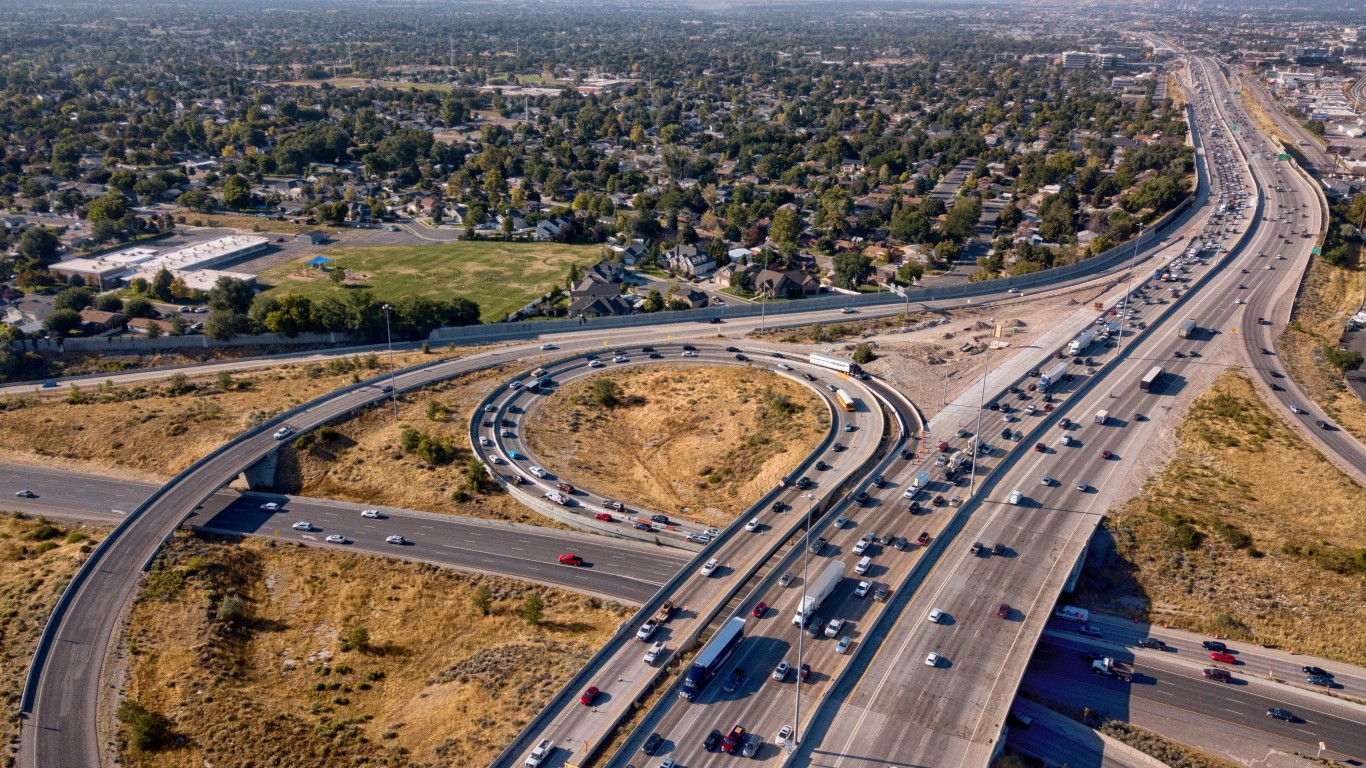
Commuting changed almost entirely in most cities in the earliest months of the COVID-19 pandemic, and occasionally after that period. As offices closed, in some metro areas commuting traffic was cut by more than half. In more than one city air pollution dropped significantly. Most data show that the majority if not all of that traffic has returned as offices and restaurants reopen.
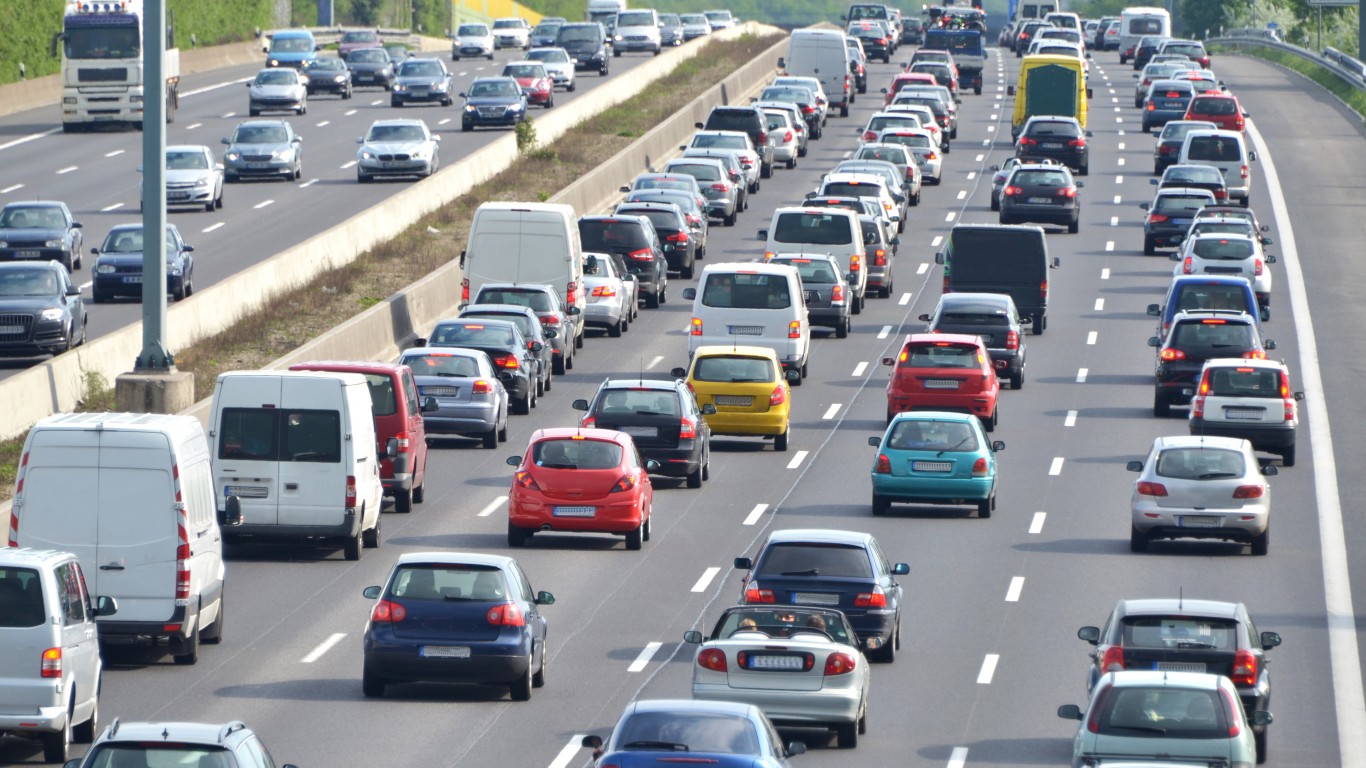
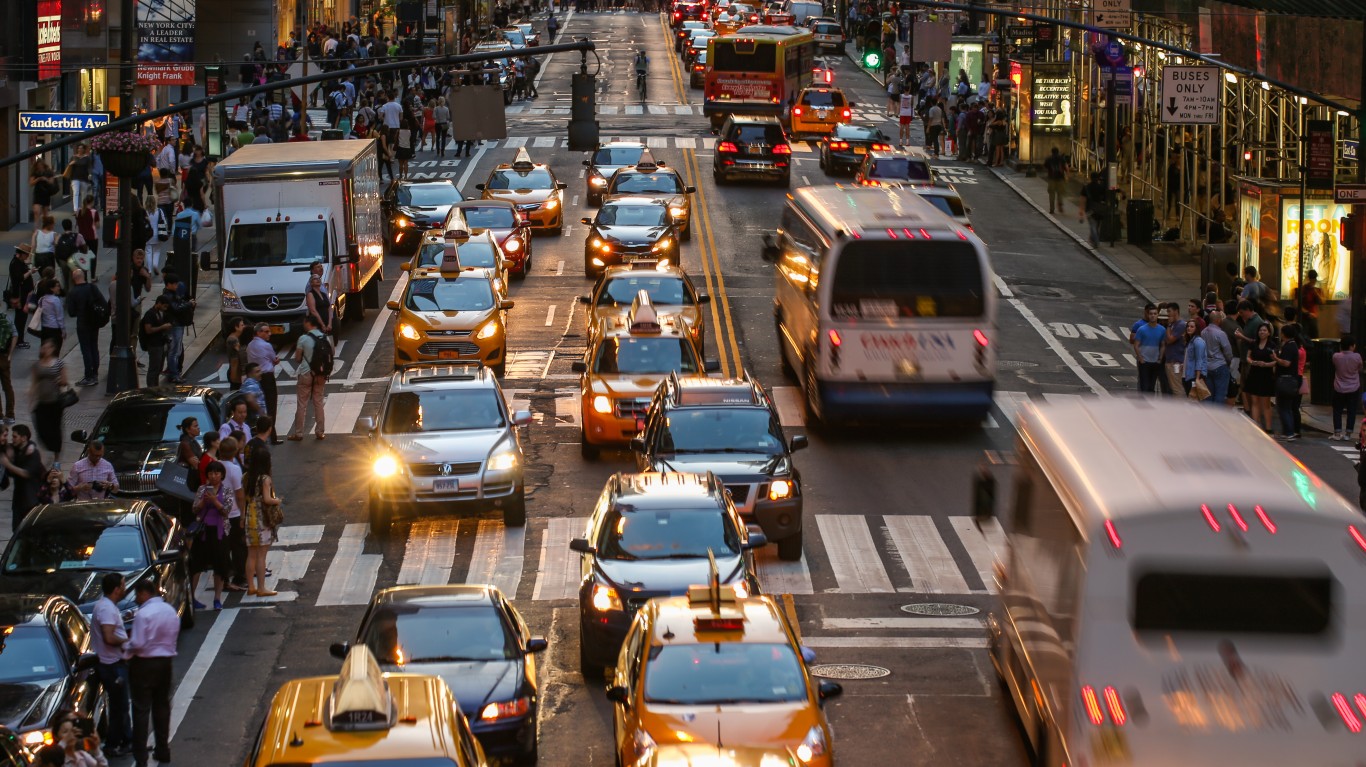
Both pre and post pandemic commuting times were different two years ago and are different now from city to city. Some metros have highway systems which can accommodate current traffic volumes. Others have road systems that were built decades ago and have since been overwhelmed by increased use, particularly during peak commuting times.
According to the U.S. Census Bureau, the average commute time in the United States is 26.9 minutes. For those who travel to and from work every Monday through Friday, this translates to about 4.5 hours per week, or nearly 10 days a year.
[nativounit]
Commute times even vary from person to person, but in some parts of the country, workers who are still commuting tend to have far less travel time than others. Using census data, 24/7 Wall St. identified the U.S. city with the shortest commute.
In every city we considered, average commute times are about 15 minutes or less. This adds up to less than three hours per week, and less than six days per year.
The largest share of cities we reviewed are in the Midwest. In most of these cities the share of commuters using public transit is below the 4.6% national average. In most cases, public transportation is less direct than simply driving from door to door, adding to overall commute time.
The city where people spend the least time getting to work is Aberdeen, South Dakota. Here are the details:
> Avg. commute time (minutes): 10.9
> Share of commuters driving alone: 82.1% — 332nd highest of 1,789 cities
> Share of commuters carpooling: 7.1% — 392nd lowest of 1,789 cities
> Share of commuters using public transit: 0.0% reported — the lowest of 1,789 cities (tied)
Methodology: To determine the city with the shortest commute, 24/7 Wall St. reviewed five-year estimates of average commute time from the U.S. Census Bureau’s 2020 American Community Survey.
Cities were ranked based on their average commute time. To break ties, we used the share of workers with a commute of 15 minutes or less.
We used census “place” geographies — a category that includes incorporated legal entities and census-designated statistical entities. We defined cities based on a population threshold — census places needed to have a population of at least 25,000 to be considered.
Cities were excluded if average commute time estimates were not available in the 2020 ACS, if there were fewer than 1,000 workers 16 years and over who did not work from home, or if the sampling error associated with a city’s data was deemed too high.
The sampling error was defined as too high if the coefficient of variation — a statistical assessment of how reliable an estimate is — for a city’s average commute time was above 15% and greater than two standard deviations above the mean CV for all cities’ average commute times. We similarly excluded cities that had a sampling error too high for their population, using the same definition.
Additional information on the share of commuters driving alone, carpooling, and using public transit are also five-year estimates from the 2020 ACS.
Click here to read Cities Where People Spend the Least Time Getting to Work
[wallst_email_signup]










 Top Gaining Stocks
 Top Losing Stocks