


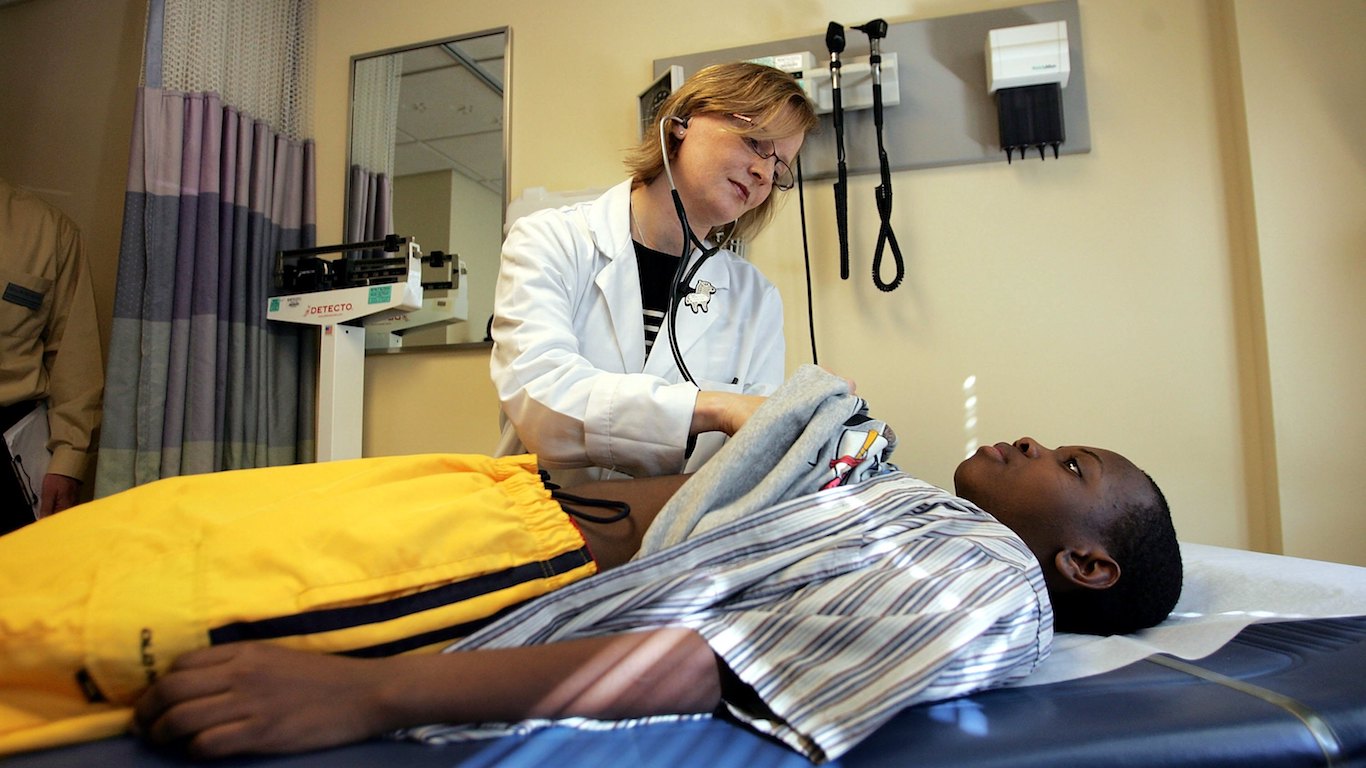
Health care costs in the United States are generally measured as the highest in the world. Last year, many Americans could not afford their health care costs and so borrowed $88 billion to pay for that portion they could not afford.
According to a new West Health and Gallup poll, in a new report titled “The U.S. Healthcare Cost Crisis,” the $88 billion was borrowed in the year before the survey, which was done from January 14 to February 20. The poll was conducted via a random group of 3,537 adults over 18 living in the 50 states and the District of Columbia.
Gallup reported that among the 36 Organisation for Economic Co-operation and Development (OECD) nation members, the United States had the highest health care costs in 2017. The total was $3.7 trillion nationwide, which translates to $10,739 per person.
Another major personal financial concern among Americans is that 45% worry that a “major health care event” would leave them bankrupt. Additionally, in the past year, 41% said they did not visit an emergency room due to cost. Fifteen million Americans “deferred” purchasing prescription drugs in the past year because of costs as well. Finally, 76% believe the problem will become worse because health care costs will rise more over the next two years.
[nativounit]
Americans are worried about more than their personal health care costs. Some 77% are concerned that rising health care costs will cause “significant and lasting damage” to the American economy. However, 48% of Americans think the quality of care in the United States is either the “best in the world” or “among the best.” Ironically, 76% of Americans say they pay too much compared to the quality of care they receive. Gallup points out, however, that this perception of quality is not true when measured against data collected by the OECD that indicate that America lags behind many of the other 36 nations in terms of health care outcomes. For example, the authors of the study pointed out that the United States is 31st out of 36 countries in terms of infant mortality.
Commenting on the results of the “The U.S. Healthcare Cost Crisis,” Dan Witters, Gallup senior researcher, said:
The impact of out-of-control healthcare costs is indisputable, although Americans’ feelings about their healthcare system are complicated and at times conflicted. At a macro level, large numbers think healthcare in America is among the best in the world, but on an individual basis, most agree they are paying too much and getting too little in return, and they are worried not only for themselves but for the country.
The last outcome the survey’s authors reported is that the perceptions of health care costs vary between the two major political parties. When answering the question about whether the United States has the best or among the best health care systems in the world, 67% of self-identified Republicans believe this compared with just 38% of Democrats. Even so, a majority of members of both parties do not think their elected officials can solve the cost problems. This included 67% of all Democrats and 70% of all Republicans.
What the Gallup study shows that is beyond dispute is that U.S. health care costs have become a huge burden to millions of Americans.
[recirclink id=460938]
[wallst_email_signup]










 Top Gaining Stocks
 Top Losing Stocks