


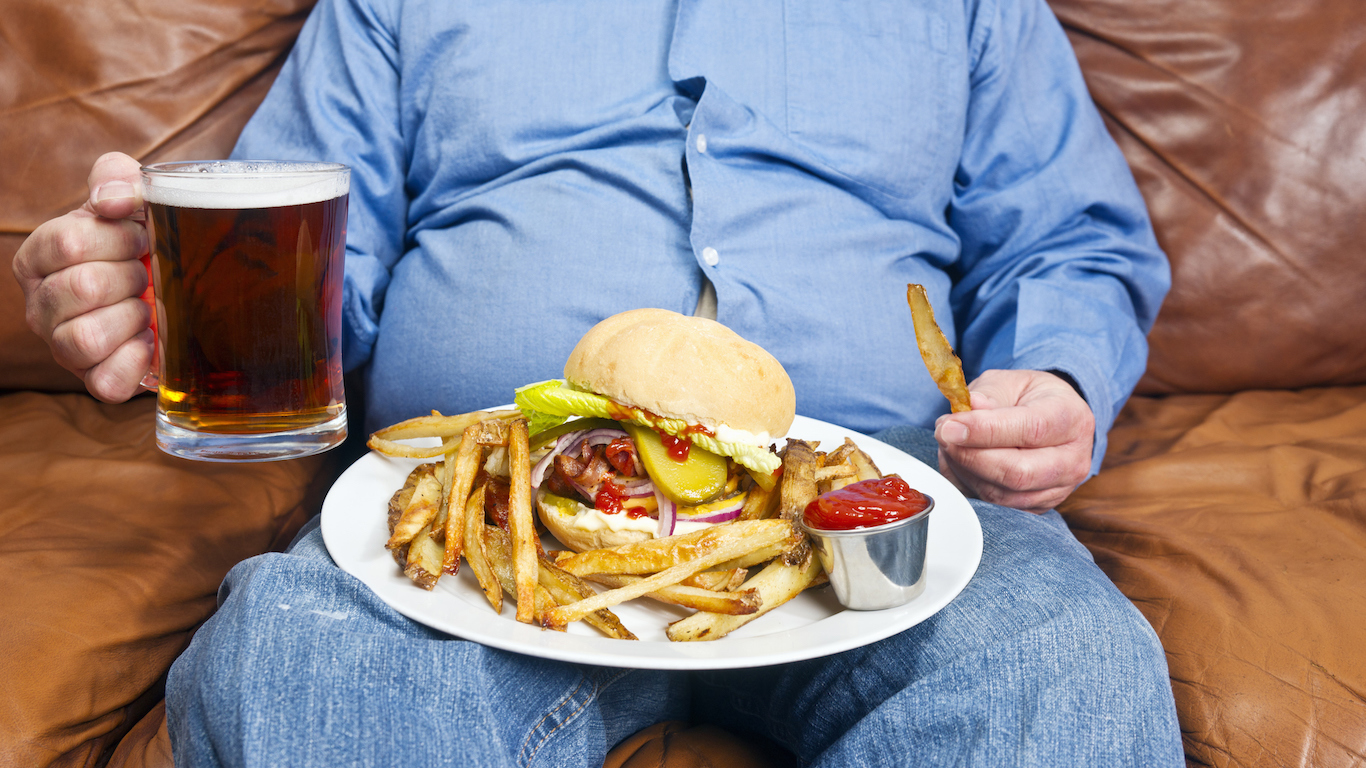
Poor diet has long been linked with cancer risk. Although the risk of 13 different cancers is known to increase due to obesity, for example, the actual impact has not been quantified by researchers. Nor have disparities of age, sex, race, or ethnicity.
A new research report from the JNCI Cancer Spectrum compared nationally representative U.S. data on diet, national cancer incidence, and estimated associations of diet with cancer risk in a meta-analysis of other research studies. The authors estimated the annual number and proportion of new cancer cases attributable to suboptimal intakes of 7 dietary factors among U.S. adults ages 20+ years, and by population subgroups.
An estimated 80,110 new cancer cases in 2015 were associated with low intake of vegetables, fruits, and whole grains and high intake of processed meat, red meats, total dairy products, and sugar-sweetened beverages (SSBs). These 7 factors were associated with 52,225 cases of colorectal cancer or about two-thirds of all new cancer cases that year. More than a third (38%) of colorectal cancer cases were associated with poor diet.
[nativounit]
Of the seven factors, the three that were most highly associated with cancer cases were low whole grain intake, insufficient dairy intake, and excess intake of processed meats. In low-income cities, fresh produce and fruits is typically more expensive than the less healthful food available at the local fast-food joint. This may contribute to why many of them are among the cities with the worst diets.
According to the new research, by diet, low consumption of whole grains were associated with 27,763 (1.8%)of 2015’s new cancer cases, low consumption of dairy products was associated with 17,692 (1.2%), and high intake of processed meats with 14,524 (1.0%).
More diet-associated cancers were estimated for males than for females, reflecting “both the worse dietary intake and higher cancer incidence in men.” Middle-age Americans (45 to 64) had higher proportions of poor diets than either younger or older people. Poor diet also accounted for a higher proportion of cancer in non-Hispanic blacks, Hispanic and others than non-Hispanic whites “largely due to suboptimal diet in racial/ethnic minorities.”
The researchers also estimated that long-term changes in body-mass index (BMI) as a result of changes in diet were associated obesity and approximately 16% of the new cancer cases. Cancer risk related to obesity is among the many problems faced by Americans living in high poverty regions — these are the places where poverty is causing bad diets.
In McDowell County, West Virginia, for example, the obesity rate is more than 45% which leads to more problems than cancer. The county is among the least healthy counties in America.










 Top Gaining Stocks
 Top Losing Stocks